
Sugar for sauces is the refined white cane sugar, and sometimes brown sugar, that ketchup, barbecue sauce, sweet chili, teriyaki, sweet-and-sour and other condiment makers buy in bulk. In most sauces sugar balances acidity and heat, adds body and gloss, and helps glazes brown. For clear and bright sauces the usual choice is a low-colour grade such as ICUMSA 45. For dark sauces, ICUMSA 100, 150 or raw brown sugar often works just as well for less money. We sell sugar for sauces to condiment manufacturers, food service suppliers and distributors worldwide, in 50 kg bags or 1 MT jumbo bags, shipped by container.
This guide is for sauce factory owners, production managers, QA teams and buyers. It covers what sugar does in different sauces, how much goes in, which grade suits which product, the numbers that matter on a spec sheet, food safety points, storage, and how to buy sugar at a fair delivered price. We link to official standards where we use them. Where something is our own view as a sugar supplier, we say so.
Sugar for sauces: what we sell
These are the grades sauce and condiment makers buy from us. Each product page has the full specification sheet.
- Refined ICUMSA 45 sugar: 45 IU max, polarization 99.80% min, moisture 0.04% max, ash 0.04% max. For sweet chili, sweet-and-sour, clear glazes and light dressings.
- Refined sugar ICUMSA 35: 35 IU max, polarization 99.80% min, SO₂ 20 mg/kg max. For the clearest sauces and syrups.
- Crystal white sugar: sparkling white, polarization 99.8% min, fine to medium crystal. Dissolves quickly in cooking vessels.
- Cane sugar ICUMSA 100: 100 IU max, polarization 99.8% min. For ketchup, tomato sauces and most red and brown sauces.
- ICUMSA 150 white sugar: 150 IU max. For barbecue, soy-based and other dark sauces where colour is hidden.
- Raw brown cane sugar Grade E: ICUMSA 600 to 1200. For barbecue sauce, hoisin, brown sauce and chutney where molasses flavour helps.
Packing: 50 kg PP bags with inner liner, 1 MT jumbo bags. Shipping: 20 ft containers, about 25 MT each. Terms: FOB or CIF your port. Ask for a sauce sugar quote.
See the full range on our products page.
Why sugar matters so much in sauces
Walk down any supermarket sauce aisle and read the labels. Sugar shows up in ketchup, barbecue sauce, sweet chili sauce, teriyaki, sweet-and-sour, hoisin, many salad dressings, brown sauce and plenty of pasta sauces. In some of these it’s a minor note. In others, like sweet chili, it’s one of the main ingredients.
For a sauce maker, that makes sugar for sauces one of the bigger raw material costs, and one that directly affects how the product tastes, looks and pours. Get the sugar right and the sauce is consistent from batch to batch. Get it wrong and you see it on the line: a dull colour, a thin body or a glaze that won’t shine.
What sugar does in a sauce
It balances acid, salt and heat
Most sauces are sharp. Vinegar, tomato, citrus and chili all bring acidity or heat, and soy brings salt. Sugar rounds those edges off. A ketchup without sugar tastes like seasoned tomato paste. A sweet chili sauce without sugar is just hot vinegar. This balancing job is the main reason sugar for sauces appears in so many recipes.
It adds body and gloss
Sugar thickens a sauce as it cooks down and gives it a glossy, coating texture. That’s especially visible in sweet chili, teriyaki and sweet-and-sour sauces, where the shine is part of the appeal.
It helps glazes brown
When a sauce is brushed on meat and cooked, the sugar in it browns. The European Food Information Council explains that sugars take part in the Maillard reaction with amino acids, and caramelise when heated, producing colour and flavour. That’s the sticky, browned finish on barbecue ribs or teriyaki chicken.
It supports shelf stability, but it isn’t the main safety barrier
Sugar binds water, and EUFIC notes that high sugar concentrations raise osmotic pressure and limit microbial growth. In very sweet products that helps. But most sauces aren’t sweet enough for sugar alone to keep them safe. Acid, salt, heat treatment and hygiene do most of that work. We’ll come back to this in the food safety section, because it’s an area where getting the facts right matters.
Sugar for sauces by product
Ketchup
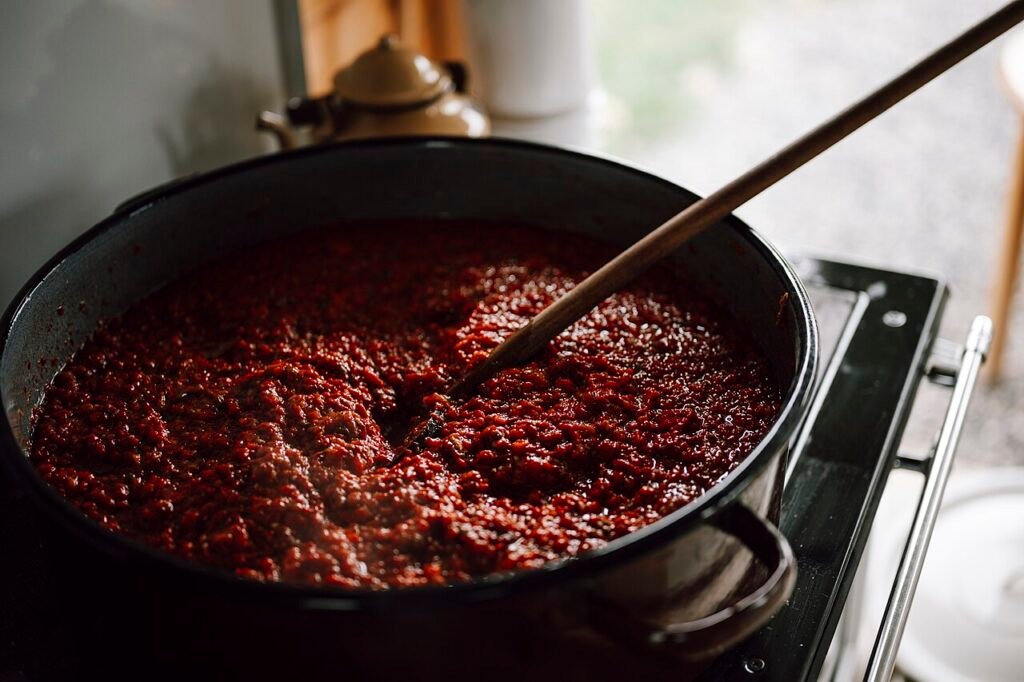
Probably the single biggest use of sugar for sauces worldwide. In the United States, the standard of identity for catsup allows nutritive carbohydrate sweeteners as optional ingredients, and the USDA grades ketchup partly on solids. Under the USDA standard, U.S. Grade A ketchup must have total solids of at least 33% by weight, and Grade B at least 29%. Sugar is a big contributor to those solids, alongside tomato.
Ketchup is red, so small differences in sugar colour don’t show. Many ketchup makers use ICUMSA 100 or even 150 and save money compared with ICUMSA 45. Others stick with ICUMSA 45 for a cleaner taste. Both are reasonable.
Barbecue sauce
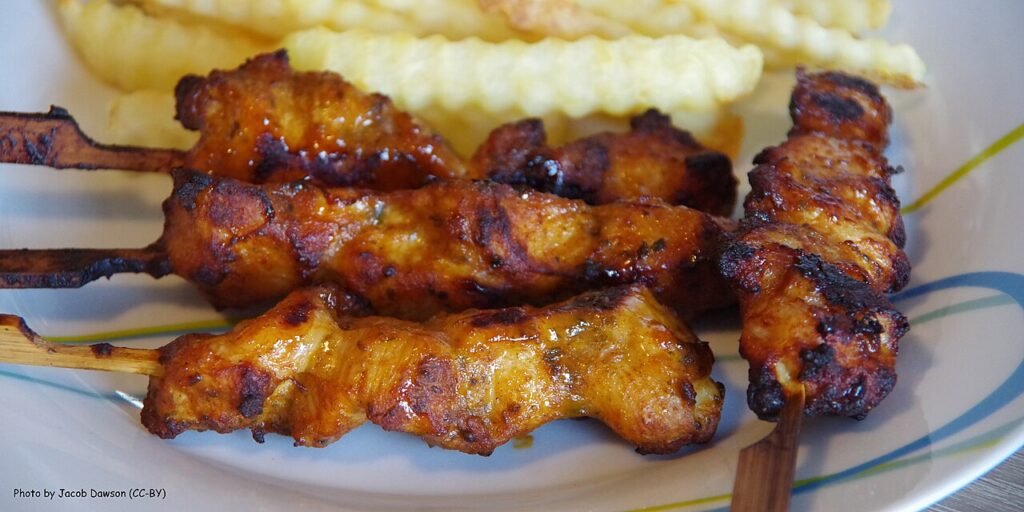
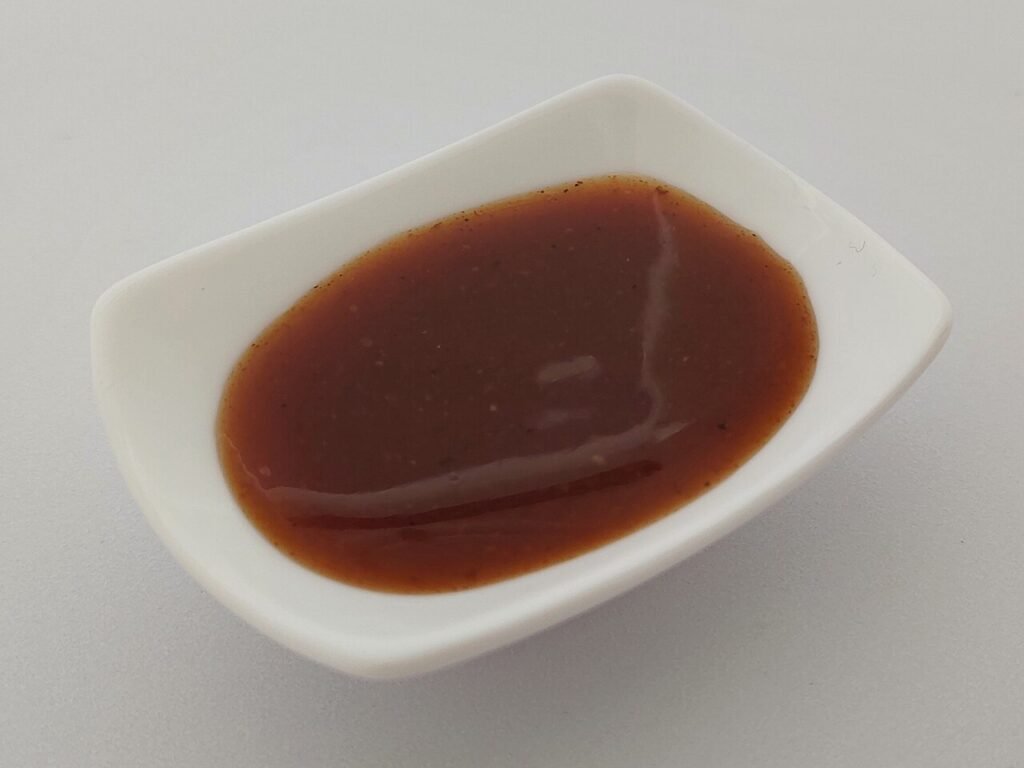
Usually sweet, smoky and dark. Many barbecue sauces use brown sugar or molasses for a deeper flavour, often blended with white sugar to control cost and consistency. Colour is not an issue, so ICUMSA 150 or raw brown sugar for sauces like this is common.
Sweet chili sauce
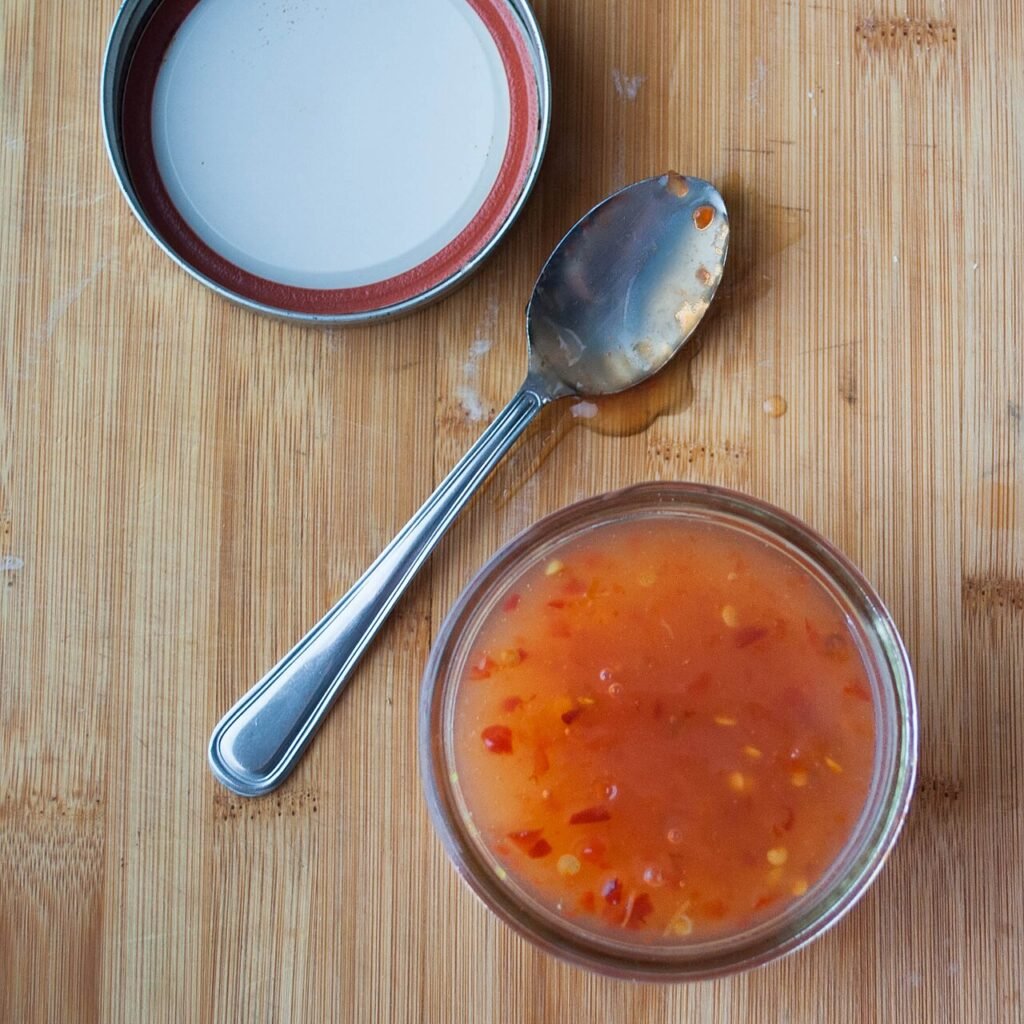
One of the most sugar-heavy sauces there is, and one of the most demanding for sugar quality. It’s usually translucent, with chili flakes suspended in a clear, glossy syrup. Any colour or haze in the sugar shows. This is where ICUMSA 45, or ICUMSA 35 for premium products, earns its price.
Teriyaki and soy-based glazes
Dark, salty and sweet. The soy hides colour, so ICUMSA 100 or 150 works. Sugar here is vital for the glaze and shine when the sauce is cooked onto meat or fish.
Sweet-and-sour sauce
Often bright red, orange or clear. Sugar balances vinegar and fruit. ICUMSA 45 keeps the colour bright.
Hoisin, brown sauce and chutney
Dark, rich and often fruity or spiced. Raw brown sugar for sauces like these adds depth that white sugar can’t.
Salad dressings and mayonnaise-based sauces
Smaller sugar levels, but white or pale products, so a low-colour grade is the safe choice. Fine crystals dissolve quickly in cold-process dressings.
Pasta and cooking sauces
Many tomato-based cooking sauces use a little sugar to take the edge off the acidity. Colour doesn’t matter much, so ICUMSA 100 or 150 is fine.
Which grade of sugar for sauces suits which product
| Sauce | Suggested grade | Why |
|---|---|---|
| Sweet chili sauce | ICUMSA 45 or 35 | Clear, glossy syrup shows any tint |
| Sweet-and-sour sauce | ICUMSA 45 | Bright colour |
| Ketchup | ICUMSA 100 or 45 | Red colour hides small differences |
| Tomato pasta and cooking sauces | ICUMSA 100 or 150 | Small amounts, colour hidden |
| Barbecue sauce | ICUMSA 150 or raw brown | Dark product, molasses flavour helps |
| Teriyaki, soy-based glazes | ICUMSA 100 or 150 | Soy colour hides sugar colour |
| Hoisin, brown sauce, chutney | Raw brown Grade E, often blended | Flavour |
| Salad dressings, white sauces | ICUMSA 45, fine crystal | Pale product, cold dissolving |
This is a starting point. Your own recipes and customers have the final say. For more on how the colour scale works, see our ICUMSA scale guide. Our posts on food grade ICUMSA 45 sugar, ICUMSA 35 sugar, ICUMSA 100 sugar and ICUMSA 150 sugar cover each grade. For brown sugar, see our bulk brown sugar guide.
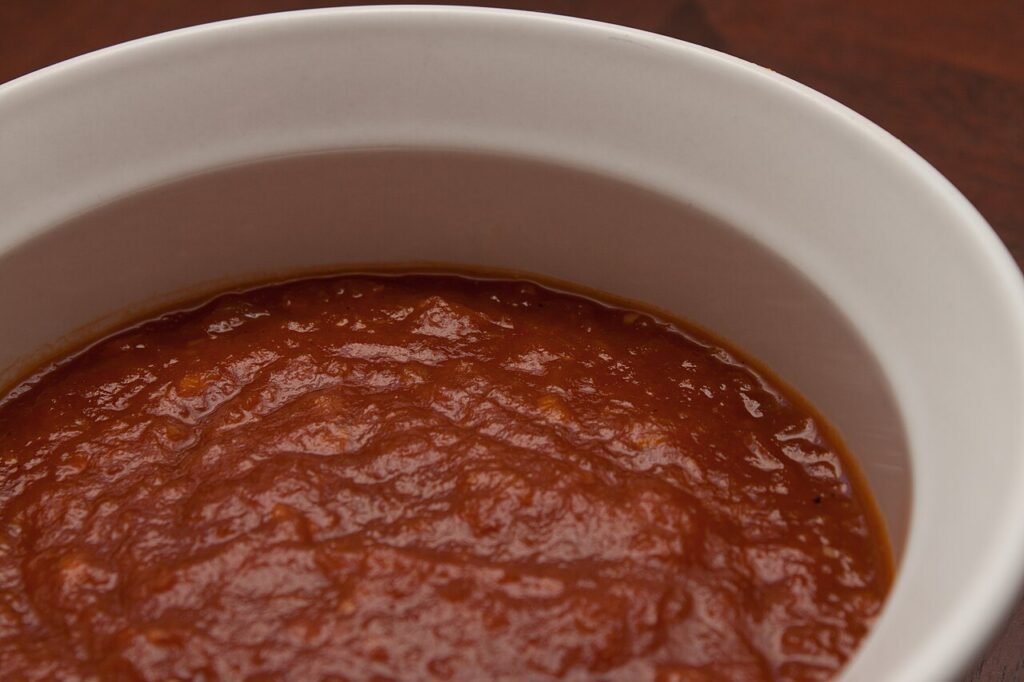
White or brown sugar for sauces?
A question we hear a lot. The honest answer is that it depends on the flavour you want and how much you care about consistency.
- White sugar gives clean sweetness and lets the other ingredients carry the flavour. It’s very consistent lot to lot, dissolves easily and stores well.
- Raw brown sugar adds caramel and molasses notes, which suit barbecue sauce, hoisin and chutney. It holds more moisture and can be stickier to handle, so it needs sealed storage.
- A blend of white and brown is common. It gives some of the brown flavour while keeping costs and handling under control.
Some manufacturers make their own “brown” flavour by using white sugar plus molasses or caramel. That gives tight control over colour and flavour, but adds an ingredient to manage. There’s no single right answer.
The spec sheet numbers to check on sugar for sauces
| Parameter | Typical for ICUMSA 45 | Why a sauce maker cares |
|---|---|---|
| Colour (ICUMSA) | 45 IU max | Clarity of sweet chili and light sauces |
| Polarization | 99.80% min | Sucrose purity; consistent sweetness and solids |
| Moisture | 0.04% max | Accurate weighing, no caking |
| Ash | 0.04% max | Mineral residue |
| SO₂ | 20 mg/kg max | Allergen labelling in some markets |
| Insoluble matter | None visible | Specks in clear sauces, nozzle blockage |
| Granulation | Fine to medium | Dissolving speed, especially in cold processes |
Colour
The number that matters most for clear and bright sauces. Ask for the actual ICUMSA reading on each lot’s certificate, not just the “max” figure. Our ICUMSA 45 specification guide explains how it’s measured.
Sulphur dioxide
Refined sugar can carry traces of SO₂ from processing. Some sauce ingredients, such as dried fruit, wine or certain vinegars, may carry sulphites too. In the EU and UK, labelling law lists sulphur dioxide and sulphites above 10 mg/kg in the product as eaten as an allergen. If your sauce has several sulphite sources, do the maths. Ask us for the actual SO₂ figure.
Granulation
For hot-cooked sauces, almost any granulation dissolves. For cold-process dressings and sauces, fine crystals dissolve faster and reduce the risk of gritty sauce.
Our bulk refined sugar guide covers the full list.
Food safety: where sugar fits and where it doesn’t
This is worth getting straight, because it’s easy to overstate what sugar does for safety.
Many shelf-stable sauces fall into a category regulators call acidified foods. In the United States, these are defined as low-acid foods to which acid is added, with “a water activity (aw) greater than 0.85 and a finished equilibrium pH of 4.6 or below.” For products like this, keeping the pH at or below 4.6 and processing correctly is what controls the main safety risks. Sugar helps with taste and texture, and a little with water activity, but it’s not the barrier you rely on.
What this means for a sauce maker:
- Don’t reduce acid because you’ve added more sugar. The pH still has to be right.
- Don’t assume a sweet sauce is safe because it’s sweet. Most sauces aren’t sweet enough for that.
- If you change sugar levels, check pH and, where relevant, water activity again.
- Follow the process rules in your own country. Many have specific rules for acidified or shelf-stable sauces.
What sugar for sauces does need, from a safety point of view, is to be clean: free of foreign matter, stored hygienically and backed by proper certificates. That’s where the supplier comes in.
Common sauce problems where sugar plays a part
Dull or brownish sweet chili sauce
Often a higher-colour sugar than usual, or overcooking. Compare the ICUMSA reading on the certificate with earlier lots.
Gritty texture in cold sauces
Undissolved sugar crystals. Use a finer granulation, dissolve the sugar in the liquid phase first, or warm the mix slightly if your process allows.
Sauce too thin
Could be lower solids than planned, from a weighing error, damp or lumpy sugar or a recipe change. Check your Brix or solids reading.
Glaze not browning
Too little sugar, too much water in the sauce, or cooking temperature too low. Sugar is part of what makes a glaze brown.
Specks in clear sauces
Foreign matter from the sugar or other ingredients, or burnt residue in the kettle. Keep retained samples of each sugar lot.
Crystals forming in storage
Very high sugar sauces can crystallise if sucrose levels are near saturation. Using some glucose syrup alongside sucrose, or adjusting acidity and cook time, can help.
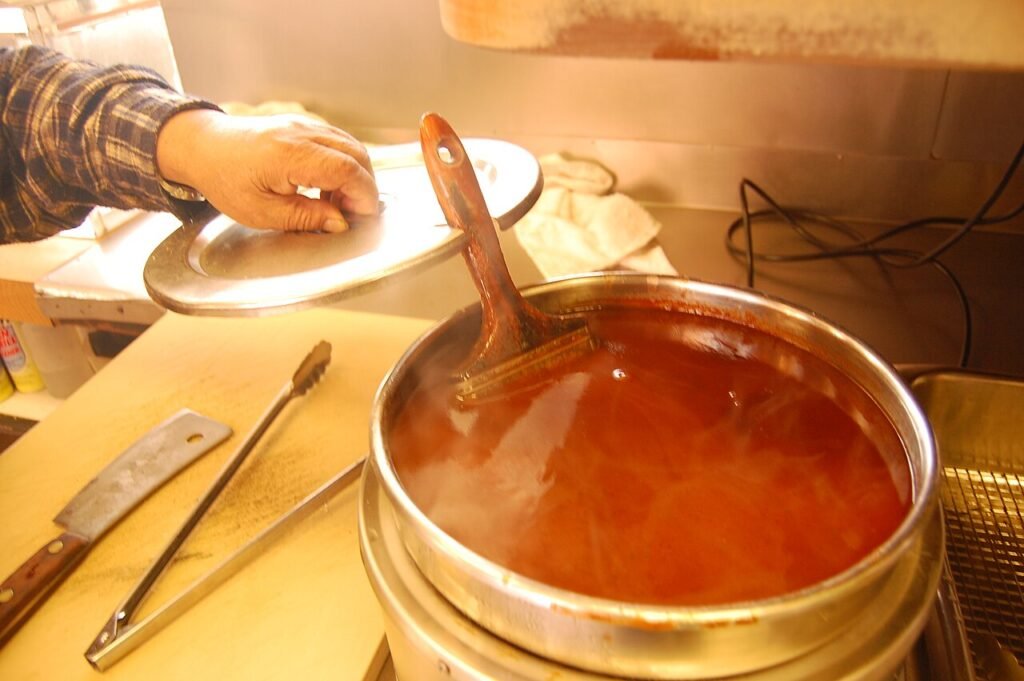
Storing sugar for sauces
Sauce plants are hot and humid: steam from kettles, vinegar in the air, frequent cleaning. Sugar doesn’t like any of that.
Research by Mathlouthi and Rogé, presented to the South African Sugar Technologists’ Association, found that white sugar cakes mainly because moisture moves in and out of the crystal surface as humidity and temperature change. Lumpy sugar weighs inaccurately and dissolves slowly.
- Keep sugar for sauces in a separate dry store, away from cooking areas, steam and wash-down zones.
- Keep the store temperature steady.
- Stack bags on pallets, off the floor and away from walls.
- Store brown sugar sealed so it doesn’t dry out or pick up moisture.
- Keep sugar away from vinegar, spices and other strong-smelling ingredients. Sugar picks up odours.
- Use stock first in, first out, and keep lot numbers on every pallet.
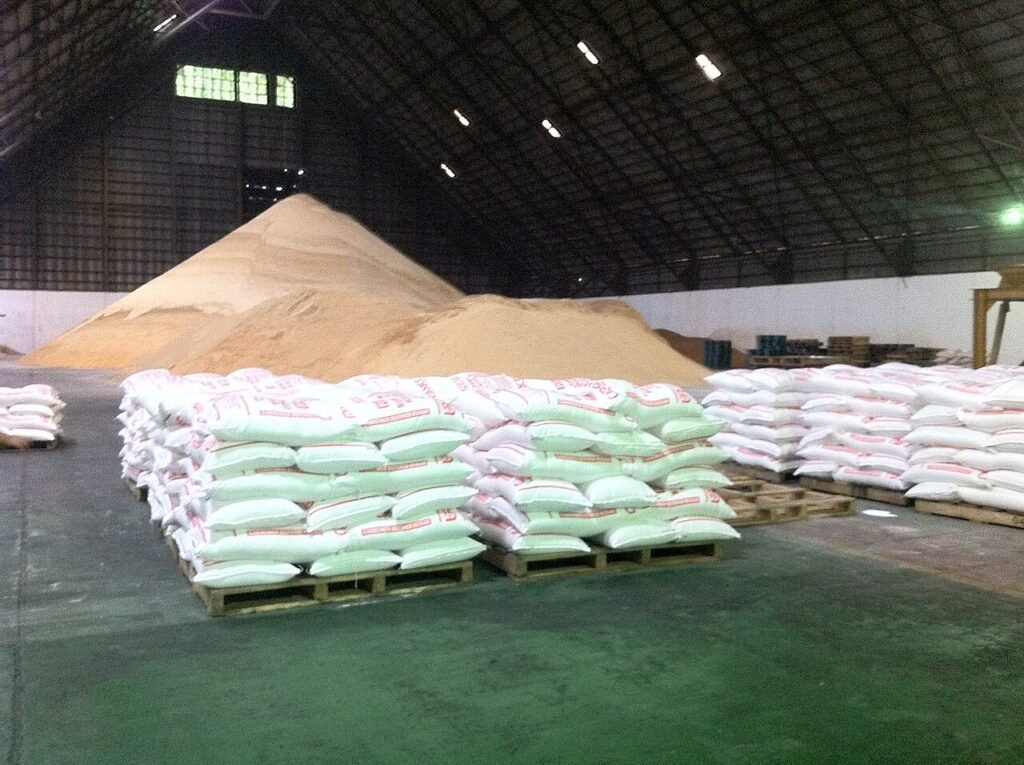
Bags, jumbo bags or syrup: receiving sugar for sauces
50 kg bags
Standard for small and medium plants. Easy to weigh into batches by hand.
1 MT jumbo bags
For plants with a hoist and a discharge station feeding a dissolver or a mixing tank. Less handling, less packaging waste.
Dissolving in-house
Many sauce plants dissolve granulated sugar into water or vinegar before adding other ingredients. It’s usually cheaper to buy granulated sugar and dissolve it yourself than to buy liquid sugar, because you aren’t paying to ship water.
Dissolving and batching sugar in a sauce plant
How sugar for sauces goes into the kettle affects the finished sauce almost as much as which grade you buy. A few habits make a real difference.
Dissolve before you thicken
Sugar dissolves best in a thin liquid. If starch or gum is added first and the sauce thickens, sugar crystals can stay suspended and undissolved, leaving a gritty mouthfeel. Many plants add sugar for sauces to the water, vinegar or tomato base early, stir until clear, then add thickeners.
Watch the order with acid
Heating sucrose in an acidic liquid slowly splits some of it into glucose and fructose, a change called inversion. A little inversion is normal in cooked sauces and can even help stop crystals forming in very sweet products. Too much, from long holds at high temperature, can change sweetness and colour. Keeping cook times and temperatures consistent keeps the result consistent.
Weigh, don’t scoop
Sugar in a damp plant can pick up moisture and form lumps, and lumps weigh differently from free-flowing sugar in a scoop. Weigh every addition by mass. If sugar arrives lumpy, sieve it or break it up before weighing, and look at your storage.
Use a sugar solution for big lines
High-volume plants often make a standard sugar solution in a dedicated dissolving tank, check its Brix, then dose it by volume or flow meter into each batch. That gives tight control and speeds up batching. It needs good hygiene, because a sugar solution left standing can ferment or grow moulds.
Check Brix on every batch
A refractometer reading of soluble solids, usually given in degrees Brix, is the simplest way to see whether the sugar and other solids in a batch are on target. It’s fast, cheap and catches weighing mistakes before the sauce is filled. The USDA ketchup standard itself uses a refractometric sucrose value of the filtrate as the basis for measuring total solids.
Sauces around the world and the sugar they use
We ship sugar for sauces worldwide, and sauce styles differ a lot from region to region. These are broad patterns, not rules, but they show how grade choice follows the product.
North America
Ketchup and barbecue sauce take most of the sugar for sauces here. Many barbecue styles are sweet and dark, using brown sugar or molasses, while ketchup uses white sugar or other sweeteners. Colour-tolerant grades such as ICUMSA 100 and 150 fit much of this volume.
Europe
Ketchup, brown sauce, curry ketchup, sweet mustard and a wide range of cooking sauces and dressings. Labelling rules are strict, so SO₂ figures and allergen declarations matter. Many buyers prefer ICUMSA 45 for pale dressings and mustards.
Asia
Sweet chili sauce, teriyaki, sweet soy sauce, hoisin, oyster sauce, plum sauce and sweet-and-sour sauce. The sugar for sauces in this region ranges from ICUMSA 45 for crystal-clear sweet chili to ICUMSA 150 for very dark soy-based sauces. Some sauces here use a lot of sugar per tonne of product.
Middle East
Tomato sauces, ketchup, date and pomegranate-based condiments, and growing volumes of Western-style sauces. Halal certification is usually required, so ask for it with your sugar documents.
Africa
Ketchup, chili sauces, peri-peri style sauces and tomato-based cooking sauces, often made by fast-growing local manufacturers. Port and inland logistics can matter as much as the sugar price.
Latin America
Ketchup, hot sauces, salsas and fruit-based sauces. Many hot sauces use little sugar, but sweet versions and fruit-based sauces use more.
Oceania
Buyers of sugar for sauces here make tomato sauce, barbecue sauce, sweet chili sauce and a strong range of Asian-style sauces. They often want consistent quality across several product lines.
Receiving and checking each lot of sugar for sauces
A short, routine check on each delivery of sugar for sauces catches most problems before they reach the kettle.
- Check documents first. Make sure the lot numbers on the bags match the inspection certificate, the packing list and the bill of lading.
- Look at the bags. Torn, wet or stained bags should be set aside. Check that liners are intact.
- Look at the sugar. It should be free-flowing, with even colour and no visible specks or lumps.
- Smell it. Sugar should smell of nothing. Any off-odour can come from a contaminated container or poor storage.
- Test a sample. Many sauce plants check colour on a simple solution, moisture and a quick dissolve test. Larger plants may test ICUMSA colour in their own lab.
- Keep a retained sample. Keep a sealed sample from each lot until well after the sauce made with it has sold.
- Record and release. Only release sugar to production once checks are done and recorded.
If a lot doesn’t meet the spec, tell your supplier right away, with photos, the certificate number and your test results.
Sugar compared with other sweeteners in sauces
Sauce makers sometimes ask whether they should use glucose syrup, high fructose corn syrup, honey or other sweeteners instead of sucrose. Each has a place.
- Sucrose (cane sugar). Clean, familiar sweetness, easy to store dry, easy to ship in containers, and widely accepted on labels. It’s the default sugar for sauces in most of the world.
- Glucose syrup. Less sweet, adds body and helps stop crystals forming in very sweet sauces. Often used alongside sucrose rather than instead of it.
- High fructose syrups. Used in some markets, mainly for cost reasons where they’re locally made. They’re liquids, so they need tank storage and are expensive to ship long distances.
- Honey, fruit and date syrups. Used for flavour and label appeal in premium sauces, but cost more and vary more.
For an importer, granulated cane sugar has a big practical advantage: it’s dry, stable and ships efficiently by container. Liquid sweeteners mean shipping water.
A worked example: sugar for sauces costs
A made-up plant to show the method. The figures are only examples.
Say a plant makes three products and uses 40 tonnes of sugar a month:
- Sweet chili sauce: 15 tonnes.
- Ketchup: 18 tonnes.
- Barbecue sauce: 7 tonnes.
Option one: ICUMSA 45 for everything. One grade, simple stock.
Option two: ICUMSA 45 for sweet chili, ICUMSA 100 for ketchup, and a white and brown blend for barbecue sauce. If ICUMSA 100 lands at, say, US$25 a tonne below ICUMSA 45 at your port, the ketchup line alone saves about US$450 a month, or around US$5,400 a year. The trade-off is more stock lines and the need to keep them clearly separated.
For many plants, one grade is simpler. For high-volume ketchup or barbecue lines, splitting can pay. Do the sum with your own prices.
What sugar for sauces really costs
To compare offers properly, work out the delivered cost: the sugar price, ocean freight, insurance, import duty, port and clearing fees, and transport to your plant. Duty on refined sugar can be high in some countries and may matter more than small differences between suppliers.
Refined sugar prices follow the ICE White Sugar futures contract in London. Many food manufacturers fix prices for several months to protect margins on products with fixed retail prices.
The wider market matters too. In its May 2026 Sugar: World Markets and Trade report, the USDA forecasts world sugar production for 2026/27 at about 184.9 million tonnes, with Brazil producing slightly less as more cane goes to ethanol. That’s not a shortage, but prices can move. Our posts on sugar wholesale prices, sugar import prices and the sugar HS code explain the cost lines.
Reduced-sugar sauces and what they mean for buying
Many sauce makers are under pressure to cut sugar, from retailers, consumers or government programmes. Some are launching reduced-sugar ketchups and barbecue sauces alongside their standard lines.
- Less sugar, not none. Most reduced-sugar sauces still contain sugar. Your total volume may dip, but you’ll still need a reliable supply.
- Texture changes. Taking sugar out reduces body and gloss, so recipes often need thickeners or other solids.
- Taste balance changes. With less sugar to soften acid and heat, the rest of the recipe usually needs adjusting.
- Safety still depends on pH and process. Reformulating doesn’t change the acidified food rules.
For most sauce makers, full-sugar products are still the bulk of the business. A steady, well-specified supply of sugar for sauces remains the foundation.
Checklist before you sign a contract for sugar for sauces
- Grade named, with maximum ICUMSA colour.
- Polarization, moisture and ash limits in writing.
- SO₂ limit stated, if your market has sulphite labelling rules.
- Granulation described, especially for cold-process products.
- Packing agreed: bag type, liner, marking and pallets.
- Independent inspection at loading, with the certificate in the document set.
- Food safety certificates from the producing mill.
- Certificate of origin, plus halal or kosher certificates if your markets need them.
- A delivery schedule that matches your production plan.
- Secure payment terms, such as a letter of credit for a first order.
Our page on the certificate of origin explains that document, and our guide to which certifications prove food grade covers the rest.
7 tips for buying sugar for sauces
1. Match colour to the sauce
Clear and bright sauces need ICUMSA 45 or 35. Red and brown sauces can use ICUMSA 100, 150 or brown sugar.
2. Ask for actual certificate readings
The “max” on a spec sheet isn’t what you’ll get. The certificate is.
3. Think about granulation for cold processes
Fine crystals dissolve faster in dressings and cold-mixed sauces.
4. Keep sugar consistent across batches
Changing grade or supplier mid-run makes colour, sweetness and body drift.
5. Trial before switching
Run new sugar through your most sensitive product, usually sweet chili, and compare side by side.
6. Store it dry and away from odours
Steam and vinegar fumes are bad for sugar. A separate store pays for itself.
7. Check your supplier
Ask where the sugar comes from, which mill, which port and who inspects it. Our guides on checking a sugar exporter before you pay and how to spot a real sugar trader list the warning signs.

Who buys sugar for sauces from us
- Ketchup and tomato sauce manufacturers.
- Barbecue and grilling sauce makers.
- Asian sauce producers: sweet chili, teriyaki, hoisin, sweet-and-sour.
- Dressing and condiment makers.
- Ready-meal and cooking sauce producers.
- Food service suppliers making sauces for restaurants and caterers.
- Distributors supplying smaller sauce makers. Our sugar distributor guide is written for them.
If you also make jams, dairy, bakery or confectionery products, see our guides to sugar for jam, sugar for dairy, bakery sugar and sugar for confectionery. Our guides to industrial sugar and wholesale food sugar cover other food uses.
Where our sugar comes from and how it ships
We source refined white and raw brown cane sugar mainly from Brazil and Thailand, two of the world’s largest sugar exporters according to the USDA. Our guides to Brazilian sugar, Thai sugar and Indian sugar explain what each origin offers.
Sugar for sauces ships in clean, dry 20 ft containers, lined and fitted with desiccant. Our post on what a sugar logistics supplier handles covers loading and arrival checks, and our shipping policy sets out the terms.
How to order sugar for sauces from us
- Tell us what you make. Products, monthly volume, current sugar grade, port and bag size. Use our contact form.
- Get a recommendation and quote. We’ll suggest a grade for each product and quote FOB or CIF with the full spec sheet.
- Trial if needed. Run the sugar through your most demanding sauce first.
- Agree the contract. Grade, limits, packing, inspection, documents and payment in writing.
- Loading and inspection. Each lot is inspected at loading and the certificate goes with the documents.
- Regular supply. Set up a schedule around your production plan.
Our FAQ page answers common questions, and our guide to buying sugar in bulk covers the basics for first-time importers.
Frequently asked questions about sugar for sauces
What is the best sugar for sauces?
It depends on the sauce. ICUMSA 45 refined white sugar suits clear and bright sauces like sweet chili and sweet-and-sour. ICUMSA 100 or 150 works for ketchup, tomato and soy-based sauces. Raw brown sugar suits barbecue sauce, hoisin and chutney.
Why do sauce makers add sugar?
To balance acidity, salt and heat, add body and gloss, help glazes brown and round out flavour.
How much sugar is in ketchup?
Recipes vary, but sugar is a major part of the solids. The USDA requires Grade A ketchup to have at least 33% total solids and Grade B at least 29%, with sugar and tomato making up most of those solids.
Does sugar make sauces safe to store?
Only partly. In most shelf-stable sauces, acidity, salt, heat processing and hygiene do the main safety work. Sugar helps, but don’t rely on it alone.
Should I use white or brown sugar in barbecue sauce?
Brown sugar adds molasses flavour; white sugar gives clean sweetness and consistency. Many makers blend the two.
Does sugar for sauces contain sulphites?
Some refined sugars contain traces of SO₂. ICUMSA 45 is typically 20 mg/kg max. Check your labelling rules and other sulphite sources in your recipe.
How should I store sugar in a sauce plant?
Dry, at steady temperature, on pallets, away from steam, vinegar fumes and strong spices.
What is the minimum order for sugar for sauces?
Usually one 20 ft container, about 25 tonnes.
What packing do you offer?
50 kg PP bags with inner liner and 1 MT jumbo bags.
Do you ship sugar for sauces worldwide?
Yes, to ports across Asia, Africa, Europe, the Middle East, the Americas and Oceania. Ask for a quote.
Key takeaways
- Sugar for sauces balances acid and heat, adds body and gloss, and helps glazes brown.
- Clear sauces like sweet chili need ICUMSA 45 or 35; red and brown sauces can use ICUMSA 100, 150 or brown sugar.
- USDA Grade A ketchup needs at least 33% total solids, and sugar is a big part of that.
- In most sauces, pH and process, not sugar, are the main safety controls.
- Check colour, polarization, SO₂ and granulation on every lot.
- Store sugar dry and away from odours, and compare suppliers on delivered cost.
Ready to buy? Request a sugar for sauces quote or see our full product range. Our guides to bulk white sugar and bulk granulated sugar are also worth a look.
Sources and References
- 21 CFR 155.194: Catsup standard of identity
- USDA Agricultural Marketing Service: Grades of tomato ketchup
- USDA: United States Standards for Grades of Tomato Ketchup (2026)
- 21 CFR Part 114: Acidified foods
- European Food Information Council: What is the role of sugar in the food industry?
- Regulation (EU) No 1169/2011, Annex II: substances causing allergies or intolerances
- Mathlouthi and Rogé: Caking of white sugar and how to prevent it (Proc. S. Afr. Sug. Technol. Ass., 2004)
- ICE: White Sugar Futures contract specifications
- USDA Foreign Agricultural Service: Sugar: World Markets and Trade (May 2026)
Photo credits: Shixart1985 (CC BY 2.0); RudolfSchreier (CC0); ImpromptuKitchen (CC BY 2.0); Joey Doll (CC BY 2.0); bjacobdawson (CC BY-SA 2.0); Southern Foodways Alliance (CC BY 2.0); Markadan (CC BY-SA 3.0); Lauri Andler (CC BY-SA 3.0); all via Wikimedia Commons.