Industrial sugar is sugar bought in bulk by factories as a raw material rather than sold to shoppers in kitchen packs. In practice it means refined white cane sugar (ICUMSA 35, 45, 100 or 150) or raw brown sugar, delivered in 50 kg bags, 1 MT jumbo bags or bulk, for food, drink, dairy, bakery, confectionery and pharmaceutical production. The right industrial sugar is the one whose colour, purity, moisture and crystal size match your process, at a delivered price that makes sense. We supply all of these grades from Thailand and Brazil and ship to manufacturers worldwide.
This guide is for buyers, production managers and QA teams at factories that use sugar every day. It covers what industrial sugar actually is, how it differs from retail sugar, the grades and specifications, which grade suits which industry, what sugar does inside your product, how to store it without caking, how to buy it and what drives the price. Standards and research are linked in the text. Where something is our own view from supplying factories, we say so.
The industrial sugar we sell at a glance
Every grade below is supplied to food and drink manufacturers in container lots. These are the short specs; each product page carries the full sheet.
- Refined sugar ICUMSA 35: 35 IU max, polarization 99.80% min, SO₂ 20 mg/kg max. For clear drinks and pharma.
- Refined ICUMSA 45 sugar: 45 IU max, polarity 99.80% min, moisture 0.04% max, ash 0.04% max.
- Crystal white sugar: sparkling white, polarity 99.8% min, fine to medium crystals.
- Cane sugar ICUMSA 100: 100 IU max, polarity 99.8% min, moisture 0.04% max.
- ICUMSA 150 white sugar: 150 IU max, polarization 99.80% min, SO₂ 20 mg/kg max.
- Raw brown cane sugar Grade E: ICUMSA 600 to 1200, polarization 96° to 98°, moisture 0.4% max.
Packing: 50 kg PP bags with inner liner or 1 MT jumbo bags. Inspection: SGS or equivalent at loading. Origins: Thailand, Brazil or India. Shipping: worldwide by sea.
Prices for industrial sugar are quoted on request, because they follow the world sugar market every trading day. Send us your grade, monthly volume and port and we will come back with a delivered price.
What is industrial sugar?
There is no separate chemical product called “industrial sugar”. It is ordinary sucrose, made from cane or beet, bought in the quantities and packing that factories need. What changes is the way it is specified, packed and delivered.
A household buys a 1 kg bag and cares about price and looks. A biscuit plant buys several containers a month and cares about the numbers on the certificate: colour, polarisation (sucrose content), moisture, ash, crystal size and sulphur dioxide. If those drift from lot to lot, the product drifts too. That is the real difference between industrial sugar and retail sugar: consistency against a written specification.

Industrial sugar vs retail sugar
| Industrial sugar | Retail sugar | |
|---|---|---|
| Who buys it | Food, drink, dairy, bakery, pharma plants; repackers | Households, small cafés |
| Packing | 50 kg bags, 1 MT jumbo bags, bulk | 500 g to 5 kg packs |
| Bought by | Specification on a contract | Brand and price on a shelf |
| Paperwork | Inspection certificate, certificate of origin, invoice, bill of lading | None |
| Volume | Containers or shiploads | Single packs |
| Price basis | World futures plus premiums and freight | Retail shelf price |
The sugar in the jumbo bag can be exactly the same as the sugar in the supermarket pack. Many repackers buy industrial sugar in 50 kg bags and pack it into retail sizes themselves. Our guide to bulk granulated sugar covers that side of the trade.
How big is the industrial sugar market?
Big. The USDA forecasts world sugar consumption at about 180 million tonnes in 2026/27, and production at 184.9 million tonnes. A large share of that is used by manufacturers rather than bought directly by households, although the exact split varies a lot from country to country and is rarely published.
Thailand is one country that does publish it. Figures from the Thai cane and sugar board, reproduced in the USDA’s April 2026 Thailand Sugar Annual, show how much sugar each Thai industry used in 2025:
| Industry (Thailand, 2025) | Refined sugar (t) | White sugar (t) | Total (t) |
|---|---|---|---|
| Beverages (non-alcoholic) | 175,654 | 151,792 | 327,446 |
| Fruit and food products | 64,162 | 215,942 | 280,104 |
| Dairy products | 21,995 | 159,901 | 181,896 |
| Cake, bread and alcoholic drinks | 19,282 | 51,677 | 70,959 |
| Pharmaceutical and miscellaneous | 12,335 | 18,794 | 31,130 |
| Confectionery | 934 | 14,627 | 15,561 |
Look at the split. Beverage makers used more refined than white sugar, because colour shows in a clear drink. Dairy and food processors leaned heavily on white sugar, where a little colour makes no difference. That pattern, seen in one country’s real data, is a good guide for any factory choosing an industrial sugar grade: pay for whiteness only where your customer can see it.

Industrial sugar grades and what the numbers mean
Every industrial sugar contract should carry a short list of numbers. If you understand these, you can compare any two offers and know what you are actually buying.
Colour (ICUMSA units)
Colour is measured in solution using methods published by ICUMSA, the International Commission for Uniform Methods of Sugar Analysis. The result is in ICUMSA units (IU): the lower the number, the whiter the sugar. Refined white grades run from about 35 to 150 IU; raw brown sugar sits between 600 and 1200. Our ICUMSA scale guide explains the whole range, and the colour and purity guide goes deeper.
Polarisation (sucrose content)
Polarisation, often shortened to “pol”, is a measure of sucrose content taken with a polarimeter. Refined industrial sugar is usually 99.8% or higher; raw sugar is lower because some molasses remains. Read our polarisation explainer for how it is tested.
Moisture, ash and invert sugar
Moisture affects how well sugar flows and keeps. Ash is the mineral residue left after burning, a sign of how thoroughly the sugar was refined. Invert sugar (glucose and fructose formed when sucrose breaks down) should be very low in white sugar.
Sulphur dioxide and magnetic particles
Sulphur dioxide (SO₂) is sometimes used in processing; beverage and pharma buyers often want it low. Magnetic particles are tiny bits of metal picked up in processing, controlled to a few milligrams per kilo.
How official standards define white sugar
Food law sets minimum standards for anything sold as white sugar. The EU sugar directive, for example, defines “white sugar” as purified, crystallised sucrose with polarisation of at least 99.7°Z, invert sugar of no more than 0.04% and loss on drying of no more than 0.06%. It also defines “semi-white sugar” at 99.5°Z minimum with up to 0.1% invert sugar and 0.1% loss on drying, and “extra-white sugar” with tighter limits again. Many national standards elsewhere are built on the international Codex Alimentarius sugar standard, so check which version your food authority applies.
Commercial contracts usually go further than the legal minimum. Here is what we contract on for each industrial sugar grade:
| Parameter | ICUMSA 35 | ICUMSA 45 | ICUMSA 100 | ICUMSA 150 | Raw brown |
|---|---|---|---|---|---|
| Colour (IU) | 35 max | 45 max | 100 max | 150 max | 600 to 1200 |
| Polarisation | 99.80% min | 99.80% min | 99.8% min | 99.80% min | 96° to 98° |
| Moisture | 0.04% max | 0.04% max | 0.04% max | 0.04% max | 0.4% max |
| Ash | 0.04% max | 0.04% max | 0.04% max | 0.04% max | 0.15% max |
| SO₂ | 20 mg/kg max | 70 mg/kg max | 70 mg/kg max | 20 mg/kg max | 70 mg/kg max |
| Magnetic particles | 4 mg/kg max | 4 mg/kg max | 4 mg/kg max | 4 mg/kg max | 4 mg/kg max |
For context, the London white sugar futures contract, the world benchmark for white sugar, specifies minimum polarisation of 99.8 degrees, moisture of 0.06% maximum and colour of 45 ICUMSA units maximum. Our specifications and standards guide explains each line in more detail.

What sugar does inside your product
Before choosing a grade, it helps to remember why the sugar is in the recipe at all. Sweetness is only one job. The European Food Information Council lists several technical roles sugar plays in food manufacturing:
- Bulk and texture. EUFIC notes that “sugars play a major role in defining the bulk (volume) and texture (mouthfeel) of foods”, from the crumb of a cake to the set of a jam.
- Preservation. In jams and syrups, a high sugar content limits microbial growth by raising osmotic pressure.
- Colour and flavour. The golden crust on biscuits and bread comes from the Maillard reaction between sugars and amino acids; caramelisation adds further colour and flavour.
- Fermentation. Yeast converts sugar to carbon dioxide and alcohol, which matters in bread and brewing.
- Freezing and boiling points. Sugar lowers the freezing point, keeping ice cream soft, and raises the boiling point, which confectioners rely on.
- Moisture control. Sugar binds water, which affects both texture and shelf life.
This matters for buying because some of those jobs care about colour and some do not. In a dark biscuit, Maillard browning will swamp any difference between ICUMSA 45 and ICUMSA 150 industrial sugar. In a clear lemonade, the difference is visible in the bottle.

Choosing industrial sugar by industry
Here is how we match grades to factories. Treat it as a starting point for your own trials rather than a rule, because every recipe and line is different.
| Industry | Usual industrial sugar grade | Why |
|---|---|---|
| Clear soft drinks, juices, syrups | ICUMSA 35 or 45 | Colour and haze show in the bottle |
| Pharmaceutical syrups | ICUMSA 35 | Tight colour, SO₂ and purity limits |
| Dairy, ice cream, yoghurt | ICUMSA 45 or crystal white | Clean taste, white product |
| Bakery, biscuits, cakes | ICUMSA 100 or 150 | Baking hides colour; cost matters |
| Jams, sauces, ketchup | ICUMSA 100 or 150 | Cooked and coloured products |
| Confectionery | ICUMSA 45 for clear sweets; 100 or 150 for coloured | Depends on whether the sugar shows |
| Brewing, rum, brown sugar products | Raw brown cane sugar | Molasses flavour and colour wanted |
| Repacking for retail | ICUMSA 45 or crystal white | Shoppers judge table sugar by eye |
Industrial sugar for beverages
Drinks are the most demanding users of industrial sugar. A clear soda, tonic or sports drink shows every trace of colour, and haze or floc in the finished drink is a quality failure. Bottlers usually specify refined sugar ICUMSA 35 or ICUMSA 45, with tight limits on SO₂ and ash, and they test syrup made from each lot. Our guide to ICUMSA sugar for beverage industry buyers covers the extra checks.
Tax is another factor. Several countries now tax drinks by sugar content. Thailand’s excise, for example, charges drinks with more than 10 grams of sugar per 100 ml up to 5 baht per litre, and the USDA reports that Thai drink makers have reformulated close to the practical limit. Rules like this change how much sugar a beverage plant buys, though not the grade it needs.
Industrial sugar for bakery and biscuits
In baked goods, sugar is mixed, creamed and heated, and browning during baking covers small colour differences. That makes bakeries one of the best places to save money by moving from ICUMSA 45 to cane sugar ICUMSA 100 or ICUMSA 150 white sugar. Crystal size matters more here than colour: fine crystals cream faster with fat and dissolve more evenly in doughs.

Industrial sugar for confectionery
Confectioners need two things from industrial sugar: purity and predictable behaviour when boiled. Invert sugar and ash affect how a sugar syrup boils and crystallises, so clear hard candy and fondants call for low-colour, low-ash refined sugar. Coloured or chocolate-coated products can use cheaper grades. Our refined sugar quality checklist lists the tests worth running.
Industrial sugar for dairy and ice cream
Dairy plants usually want a clean, white industrial sugar with no off-flavours, because milk products are mild and pale. ICUMSA 45 or crystal white sugar is the common choice. Sugar also lowers the freezing point in ice cream, so consistent dosing matters for texture.
Industrial sugar for jams, sauces and preserves
Here sugar works as a preservative as well as a sweetener, and the product is cooked and often coloured. ICUMSA 100 or 150 industrial sugar is usually the sensible buy. What matters most is that the sugar dissolves fully and does not bring in foreign matter.
Industrial sugar for pharmaceuticals
Pharmaceutical syrups and suspensions need high-purity, low-colour sugar with tight limits on SO₂ and contaminants. Most pharma buyers specify ICUMSA 35 and add their own pharmacopoeia tests on arrival. If your process needs pharmacopoeia-grade sucrose, tell us at the start so we can confirm what can be documented for that lot.
Raw brown sugar for brewing and specialty foods
Brewers, rum distillers and makers of brown-sugar products want the molasses that refining removes. Raw brown cane sugar at ICUMSA 600 to 1200 brings that flavour and colour. Our guide to bulk brown sugar has more on how it behaves in production.
Crystal size: the spec buyers forget
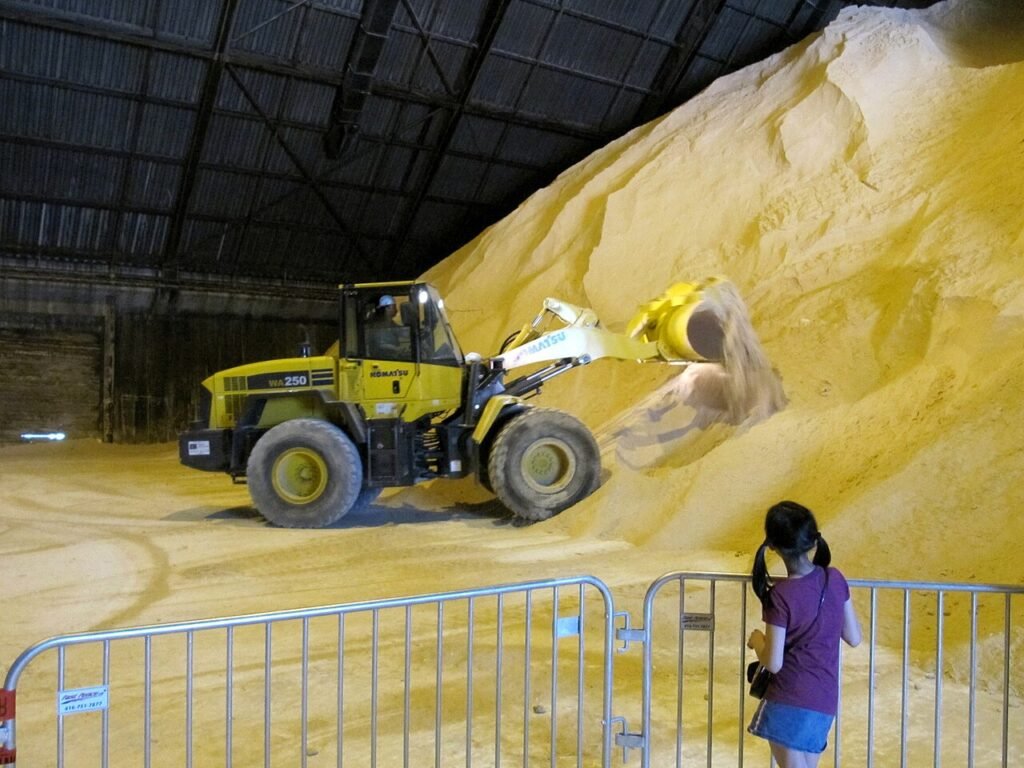
Colour gets all the attention, but crystal size (granulation) often decides how well industrial sugar works on the line. Fine crystals dissolve faster and cream better; coarse crystals flow better and cake less. Mixed sizes are the worst of both, because fines collect in hoppers and segregate during transport.
Research backs this up. A study on caking presented to the South African Sugar Technologists’ Association found that fine particles below about 250 µm act as a cement between larger crystals, and that sugar particles below 400 µm became unstable from around 40% relative humidity, while coarse crystals stayed free-flowing up to about 82%. The authors recommended a mean aperture above 0.63 mm, a coefficient of variation below 30 and fewer than 5% fines for sugar that stores well.
Our refined grades are fine to medium. If your process needs a particular granulation, put it in the contract and ask for a screen analysis on the inspection certificate.
Packing options for industrial sugar
How your industrial sugar arrives should match how your plant handles it.
| Packing | Typical size | Best for | Watch out for |
|---|---|---|---|
| PP bags with PE liner | 50 kg | Manual dosing, smaller plants, repackers | Labour to open and tip bags |
| Jumbo bags (FIBC) | About 1 MT | Plants with bag-discharge stations or silos | Need a hoist or forklift |
| Bulk | Shipload | Refiners and very large users with silos | Needs port and silo infrastructure |
A 20 ft container usually carries about 25 MT of bagged sugar. Jumbo bags, known in the trade as flexible intermediate bulk containers, save handling time at plants that tip straight into a silo. Our guide to ICUMSA 45 sugar in 50 kg bags covers bagged supply in more detail.

Storing industrial sugar without caking
Caking is the most common complaint we hear from factories, and it is nearly always a storage problem rather than a quality one. Sugar crystals carry a very thin film of syrup on their surface. When humid air adds moisture and then dry air takes it away, that film recrystallises into solid bridges between crystals, and free-flowing sugar becomes a block.
The Mathlouthi study puts some numbers on it. Temperature drops make things worse: the authors note that “temperature decrease favours the increase in water content”, and they warn that cooling below 20°C in a silo raises the risk of reaching the dew point. They also found that sugar dried too quickly during conditioning can cake later, and that cycles of humid then dry air form hard surface crusts.
What that means on the factory floor, in our experience:
- Keep the store cool, dry and stable. Big swings in temperature and humidity do more harm than a steady, slightly warm room.
- Keep bags off the floor and away from walls. Pallets stop moisture wicking up from concrete; a gap from walls avoids condensation.
- Keep bags closed. An open bag in a humid plant will crust within days.
- Let cold sugar warm slowly. Sugar arriving from a cool hold into a warm, humid plant can sweat. Leave bags sealed until they reach room temperature.
- Use first in, first out. Refined white sugar keeps well for around two years in good conditions, but there is no reason to test that.
- Keep it away from strong smells. Sugar picks up odours from spices, fuel and chemicals.
Soft lumps that break apart in your hand after a long, humid voyage are normal. Hard blocks, wet bags, yellowing or smells are not. Photograph them and report them to us and the carrier within 48 hours of receipt, as our shipping policy sets out.

Food safety, inspection and paperwork
A factory’s auditors will want to see how each lot of industrial sugar was checked. With every shipment we provide:
- Commercial invoice and packing list
- Bill of lading
- Certificate of origin (see our certificate of origin guide)
- Quality and inspection certificate from SGS or an equivalent firm at loading (see what an SGS sugar certificate shows)
Customs will want the tariff code: refined sugar falls under HS 1701.99 and raw cane sugar under HS 1701.14, as listed in the USDA’s sugar trade report. Our sugar HS code guide covers the detail.
We would add one practical point. An inspection certificate tells you the sugar met the spec when it was loaded. Your own incoming check, even a simple one, tells you it still meets your needs when it reaches your plant. Keep a retained sample from every delivery; if a later lot ever behaves differently, you will have something to compare it with.
An incoming check for industrial sugar
- Paperwork. Check the lot number, origin and inspection results against the contract.
- Visual. Open a few bags from the front and back of the container. Look for colour, lumps, foreign matter and wet patches.
- Colour in solution. If you have a lab, run an ICUMSA colour test and compare with the certificate.
- Moisture and flow. Confirm the sugar flows through your hopper or dosing system.
- Process trial. For a new supplier or grade, run a small batch before releasing the lot to full production.

What industrial sugar costs, and why
Industrial sugar is priced off the world futures markets, not off a list. White sugar follows the London white sugar contract, quoted in US dollars per tonne on lots of 50 tonnes. Raw sugar follows ICE Sugar No. 11 in New York, quoted in cents per pound on raw cane sugar of 96 degrees average polarisation. A supplier’s price is the relevant futures level plus or minus a premium for grade, packing, port and timing, with freight and insurance added if you buy CIF.
The main things that move the price of industrial sugar you buy are:
- Grade. ICUMSA 35 usually costs more than ICUMSA 45, which costs more than 100 or 150, because more refining is needed.
- Volume and regularity. A monthly programme is easier to price well than a one-off container.
- Packing. Jumbo bags and 50 kg bags cost different amounts to fill and handle.
- Origin and freight. Thai sugar often lands cheaper in Asia; Brazilian sugar is the volume leader for most other routes.
- The world market. Weather, Brazil’s sugar-versus-ethanol mix and export policy in India and Thailand all move futures prices.
We don’t post a fixed price for industrial sugar, because it would be out of date within days. Our guide to sugar pricing factors shows how a quote is built, and our pages on sugar wholesale prices and sugar import prices explain the landed cost.
Where the savings really are
In our experience, the biggest saving for most factories is not haggling over a few dollars a tonne. It is buying the right grade. A biscuit plant paying for ICUMSA 45 when ICUMSA 150 industrial sugar would do the same job is overpaying on every tonne, every month. Run a side-by-side trial; if your customers cannot tell the difference, switch.

Where industrial sugar comes from
Most of the cane industrial sugar traded internationally comes from a handful of countries. The USDA’s May 2026 forecasts for 2026/27 put Brazil’s sugar exports at 33.6 million tonnes, Thailand’s at 6.0 million and India’s at 3.6 million, out of world exports of 62.3 million tonnes.
| Origin | Strength for industrial buyers | Read more |
|---|---|---|
| Brazil | Largest volumes, steady supply, big export ports | Brazilian sugar guide |
| Thailand | Short freight to Asia, halal standard, high stocks | Thai sugar guide |
| India | Close to South Asia and East Africa, mostly white sugar | Depends on government export quotas |
We supply industrial sugar from Thailand and Brazil, and India when export quotas allow. For a factory that buys every month, splitting purchases between two origins smooths out harvest timing and protects you if one country has a bad season.
How to buy industrial sugar the right way
Here is the process we would follow if we were a buyer setting up a new industrial sugar supply.
- Write the specification first. Colour, polarisation, moisture, ash, SO₂, granulation and packing. Base it on what your process needs, not on habit.
- Estimate your volume. Monthly tonnage and how much buffer stock you can hold. Four to six weeks of stock covers most voyages and port delays.
- Ask for samples. Test them in your real process, not just in water.
- Compare offers on a delivered basis. Same grade, same packing, same Incoterm, same inspection.
- Agree the paperwork. Inspection company, certificate of origin, and any halal or other certificates your market needs.
- Start with a trial container. Then move to a regular programme once quality is proven.
- Review every quarter. Check quality records, price against the market, and whether a cheaper grade would now work.
For the contract side, see our sugar contract negotiation tips and our payment terms guide. For shipping, our container shipping guide explains what happens between loading and arrival.

Building a 12-month industrial sugar plan
Factories that buy sugar container by container, only when stock runs low, tend to pay more and worry more. A simple yearly plan fixes most of that. This is the outline we suggest to manufacturers; adjust it to your volumes.
- Map your usage. Take last year’s sugar consumption by month and by product line. Most plants find two or three grades cover everything.
- Group lines by grade. Put clear drinks and white products on ICUMSA 35 or 45, baked and cooked lines on 100 or 150, and specialty lines on raw brown. Fewer grades means simpler storage.
- Set a monthly base volume. Contract this as a regular programme of industrial sugar, with shipments spread out so stock never runs dry.
- Keep a flexible top-up. Buy seasonal peaks, such as summer drinks or festive baking, as extra containers when the market looks reasonable.
- Split origins. Use Thai sugar early in the year and Brazilian sugar later if both land competitively, so harvest timing works in your favour.
- Fix the paperwork once. Same specification, packing, inspection company and document set for every lot, so receiving and audits become routine.
A plan like this also gives your supplier something to work with. When we know a factory’s monthly industrial sugar needs in advance, we can line up lots, shipping space and paperwork earlier, which usually means fewer surprises for everyone. Our sugar logistics guide explains what happens behind the scenes once a programme is in place.
Questions to ask an industrial sugar supplier
A serious seller answers these quickly and in writing.
- Which mill or refinery produced this lot, and which crop year is it from?
- Can you send the full specification and a recent independent analysis?
- What granulation do you supply, and can you include a screen analysis?
- Which inspection company checks the cargo at loading, and can I nominate my own?
- What packing is offered, and how are the bags marked?
- Which documents come with each shipment?
- Can you hold a fixed specification for a 6 or 12 month programme?
- Can I speak to someone at your company by phone or video?
If a seller dodges any of these, take note. Our guide on how to spot a real sugar trader and verify them lists the checks we would run ourselves before paying anyone.
Common mistakes when buying industrial sugar
- Buying by name instead of by number. “White sugar” can mean anything from ICUMSA 45 to 150. Put the figures in the contract.
- Over-specifying. Paying for ICUMSA 35 or 45 in products where colour never shows.
- Ignoring granulation. A lot with too many fines can bridge in hoppers and cake in storage.
- Comparing FOB with CIF. A cheap FOB price can cost more delivered. Compare landed costs only.
- No buffer stock. One late ship can stop a production line. Hold enough industrial sugar to cover the voyage plus delays.
- Poor storage. Good sugar can cake in a damp, unstable warehouse within weeks.
- Skipping the trial. A courier sample and a test batch cost little compared with a container of the wrong grade.

Why factories buy industrial sugar from Global Sugar Supplies
We are not going to claim we are the cheapest in the world; nobody honest in sugar can, because the market moves daily. What we can tell you is how we work with manufacturers:
- Six grades from one supplier. From ICUMSA 35 to raw brown, so you can buy different industrial sugar grades for different lines under one relationship.
- Two main supply bases. Thailand and Brazil, which helps keep cargo available through more of the year.
- Specs on the contract. Every lot inspected at loading by SGS or an equivalent firm.
- One team from quote to bill of lading. You deal with the same people for the price, contract, inspection and shipment.
- Trial first. One container to prove the grade, then a regular programme if it works for your plant.
You can see every grade on our products page and read more about Global Sugar Supplies. Our guides to food grade ICUMSA 45 sugar, industrial ICUMSA 45 sugar, wholesale food sugar and bulk refined sugar go deeper into specific grades.
How to order industrial sugar from us
- Send your inquiry. Grade, monthly tonnage, packing, destination port and Incoterm. Tell us what you make if you are unsure of the grade.
- Get samples and a quote. We courier samples and send a delivered price, then a pro forma invoice and sales contract with the specification attached.
- Payment. By bank transfer, as set out in our billing policy.
- Loading and inspection. Orders are usually processed within two to four business days of payment clearing, with inspection at loading.
- Shipping. We email the bill of lading and tracking details. Sea freight typically takes three to six weeks, depending on your port.
Orders normally start at one 20 ft container of about 25 MT. Go to our contact page to request a quote for industrial sugar, or read our bulk sugar buying guide first. Our refund policy explains what happens if a delivery has a genuine problem.

Industrial sugar quick reference
- What it is: bulk refined or raw sugar bought by manufacturers against a written specification.
- Main grades: ICUMSA 35, 45, 100, 150 and raw brown (600 to 1200).
- Key specs: colour, polarisation, moisture, ash, SO₂, granulation.
- Packing: 50 kg bags, 1 MT jumbo bags, bulk.
- Price basis: London white sugar (refined) or ICE No. 11 (raw), plus premiums and freight.
- Storage: cool, dry, stable conditions; pallets; closed bags; first in, first out.
- HS codes: 1701.99 refined, 1701.14 raw cane.
Frequently asked questions about industrial sugar
What is industrial sugar?
Industrial sugar is sugar bought in bulk by factories as a raw material, usually refined white cane sugar or raw brown sugar in 50 kg bags, jumbo bags or bulk, supplied against a written specification.
Is industrial sugar different from table sugar?
Chemically it is the same sucrose. The difference is packing, volume, paperwork and the fact that it is bought to a contract specification rather than off a shelf.
Is industrial sugar safe to eat?
Yes. Refined industrial sugar is food-grade sugar meant for food and drink production. “Industrial” refers to how it is bought and used, not to a lower safety standard.
Which industrial sugar grade should a beverage plant buy?
Usually refined ICUMSA 35 or 45, because colour and haze show in clear drinks.
Which grade is best for bakeries?
Many bakeries use ICUMSA 100 or 150, because baking hides small colour differences and these grades cost less.
What does ICUMSA mean on an industrial sugar contract?
It is the colour of the sugar in solution, measured by ICUMSA methods. Lower numbers mean whiter sugar.
How should industrial sugar be stored?
In a cool, dry store with stable temperature and humidity, on pallets, away from walls and strong smells, with bags kept closed and stock used first in, first out.
Why does my sugar cake?
Usually because of swings in humidity and temperature, or a high share of fine particles. Moisture moves in and out of the crystal surface and forms solid bridges.
What is the minimum order for industrial sugar?
With us, normally one 20 ft container of about 25 MT.
Can I get a sample first?
Yes. We courier samples so you can run a trial batch before ordering.
How is the price set?
Against world sugar futures, plus a premium for grade, packing and timing, with freight added for delivered prices.
Do you ship industrial sugar worldwide?
Yes, to major ports in Asia, Africa, Europe, the Middle East, the Americas and Oceania.
Key takeaways
- Industrial sugar is ordinary sucrose bought in bulk against a written specification.
- Choose the grade by whether your customer can see the sugar: ICUMSA 35 or 45 for clear drinks and white products, 100 or 150 for baked and cooked foods.
- Colour, polarisation, moisture, ash, SO₂ and granulation are the numbers that matter.
- Most caking comes from unstable storage and too many fines, not from bad sugar.
- Compare offers on a delivered basis, trial before you commit, and verify any supplier before paying.
Sources and References
- USDA Foreign Agricultural Service: Sugar: World Markets and Trade (May 2026)
- USDA Foreign Agricultural Service: Thailand Sugar Annual (April 2026)
- Council Directive 2001/111/EC relating to certain sugars intended for human consumption
- European Food Information Council: What is the role of sugar in the food industry?
- Mathlouthi and Rogé: Caking of white sugar and how to prevent it (Proc. S. Afr. Sug. Technol. Ass., 2004)
- ICE: White Sugar Futures contract specifications
- ICE: Sugar No. 11 Futures contract specifications
- ICUMSA: International Commission for Uniform Methods of Sugar Analysis
- FAO/WHO Codex Alimentarius
Photo credits: John Bradley (CC BY-SA 3.0); Loozrboy (CC BY-SA 2.0); Cjp24 (CC BY-SA 3.0); OSU Special Collections & Archives (no known restrictions); Main Archive Department of Moscow (CC BY 4.0); Tobias Erbsland (CC BY-SA 4.0); all via Wikimedia Commons.