VHP sugar (very high polarization sugar) is raw cane sugar with a polarization of about 99.2° to 99.4°, a colour of roughly 600 to 1,200 ICUMSA units and low moisture. It is the main raw sugar traded between countries, and almost all of it is bought by refineries that melt it down and turn it into white sugar. We sell VHP sugar from Brazil in bulk vessel lots, and in 50 kg or 1 MT bags for buyers who need smaller parcels, and we ship it to refiners and processors worldwide.
This guide is written for refinery buyers, procurement teams and importers who are about to buy their first or their fiftieth cargo. It covers what VHP sugar actually is, the specification you should write into the contract, how the price is built from the raw sugar futures market, how it is shipped and inspected, and the mistakes we see buyers make. Industry rules and official data are linked in the text. Where something is our own view as a supplier, we say so plainly.
VHP sugar for sale: what we supply
Here is the short version of our offer. The full spec sheet and the contract terms come with every quote.
Product: VHP sugar (very high polarization raw cane sugar), Brazilian origin, current crop
- Polarization: 99.20° minimum (typical 99.3°)
- Colour: 600 to 1,200 ICUMSA units
- Moisture: 0.15% maximum
- Ash: 0.15% maximum
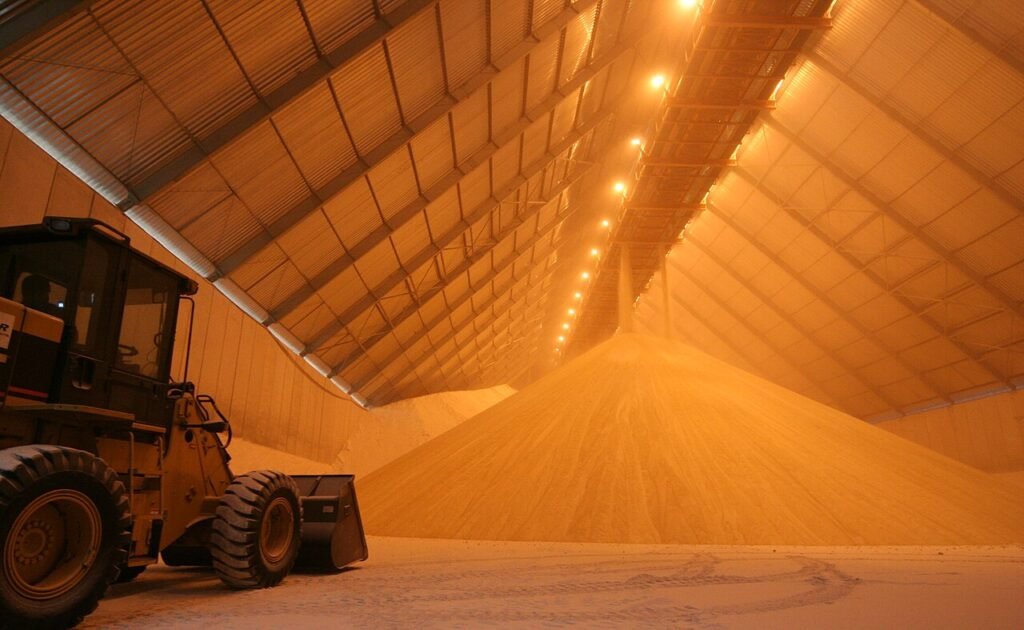
- Appearance: light golden-brown crystals with a thin molasses film, free flowing
- Packing: loose in bulk carriers, or 50 kg PP bags and 1 MT jumbo bags in containers
- Inspection: independent weight and quality survey at loading, certificate supplied with documents
- Terms: FOB Brazilian port or CFR/CIF your discharge port
Ask for a VHP sugar quote with your quantity, port and preferred packing.
If your plant does not refine, VHP sugar is probably not the product you want. Food and drink makers usually buy white sugar such as refined ICUMSA 45 sugar, ICUMSA 35 beverage grade sugar, cane sugar ICUMSA 100, ICUMSA 150 white sugar or crystal white sugar. Buyers who want a brown raw sugar for brewing or brown sugar foods, with a lower polarization, should look at our raw brown cane sugar Grade E (ICUMSA 600-1200). The whole range is on our products page.
What VHP sugar actually is
Sugar mills crush cane, clean the juice, boil it down and crystallise it. What comes out of the centrifuge at a raw sugar mill is a crystal of sucrose wrapped in a thin skin of cane molasses. The Codex Alimentarius committee on sugars describes raw cane sugar in much the same terms: partially purified sucrose crystallised from partially purified cane juice, with the crystals covered by a film of cane molasses.
VHP sugar is the cleanest version of that product. Mills run their boiling and washing so that the molasses film is thinner, which pushes the sucrose reading up to around 99.3°. Older style raw sugar, the kind the benchmark futures contract is still priced on, sits at 96°. That gap of three degrees or so sounds small. For a refinery it is a big deal, because every degree is sucrose they can sell and non-sugar they do not have to remove.
A few names you will see on offers and in contracts mean slightly different things:
- Raw sugar (96° basis): the standard grade behind the ICE Sugar No. 11 contract.
- VHP sugar: very high polarization raw, around 99.2° to 99.4°. This is the grade most Brazilian mills export.
- VVHP: very, very high polarization raw, usually 99.5° or a little above, with lower colour. Made by only some mills and priced higher again.
- Raw brown sugar for food use: lower polarization (96° to 98°), more molasses, used for flavour and colour rather than refining.
One thing to clear up early, because we get asked about it every week: there is no such thing as “ICUMSA 45 VHP”. ICUMSA 45 is a white refined sugar. VHP sugar is raw and brown. They are different products made at different stages, and an offer that mixes the two names is a warning sign. Our article on Brazilian sugar grades goes through this in more detail.

Why refineries buy VHP sugar instead of 96° raw
The short answer is cost per tonne of white sugar out the other end. A refinery pays for sucrose and pays again to strip away everything that is not sucrose. VHP sugar gives it more of the first and less of the second.
Look at it as simple arithmetic. Polarization is a close stand-in for sucrose content. So 1,000 tonnes of VHP sugar at 99.3° carries roughly 993 tonnes of sucrose by polarimetry, while 1,000 tonnes at 96° carries about 960. That is about 33 extra tonnes of sugar in every thousand, before you count the lower processing load. The figures are rough, since polarization is not a perfect sucrose measure, but the direction is clear.
The processing side matters as much. In a typical cane refinery, the first step is affination: the raw crystals are mixed with warm syrup and spun in a centrifuge to wash off the molasses film. According to Purolite’s description of the cane refining process, affination removes around half of the raw sugar’s colour, and clarification then removes around 40% of what remains in the melt. With VHP sugar there is less film to wash off. A paper on refinery operations published through the South African Sugarcane Research Institute notes that refineries there skip affination altogether because they run on VHP sugar as feedstock. Fewer steps means less energy, less syrup recycling and less sugar lost along the way.
So when a refinery buyer pays a premium for VHP sugar, they are not paying for a label. They are paying for higher yield and a shorter process. Whether the premium is worth it depends on how the refinery is set up, and that is something your process engineers should confirm before you change feedstock.

VHP sugar specification: the numbers to put in your contract
A VHP sugar contract lives or dies on its specification. If a number is not written down, you cannot reject a cargo for missing it. Below is the specification we offer, followed by notes on what each line means in practice.
| Parameter | Our VHP sugar offer | Why it matters |
|---|---|---|
| Polarization | 99.20° min, typical 99.3° | Drives price and refinery yield |
| Colour (ICUMSA) | 600 to 1,200 IU | Sets decolourisation load |
| Moisture | 0.15% max | Storage life, caking, microbial risk |
| Ash | 0.15% max | Minerals that hold sugar in molasses |
| Crystal form | Medium, free flowing | Handling and melting rate |
| Crop | Current Brazilian crop | Age affects colour and moisture |
| Packing | Bulk, 50 kg bags or 1 MT bags | Matches your discharge set-up |
Polarization
Polarization is read with a polarimeter on a sugar solution and reported in degrees Z (°Z) on the international sugar scale. The test methods are set by ICUMSA, the International Commission for Uniform Methods of Sugar Analysis. For VHP sugar the contract minimum is usually 99.20°, and most cargoes test close to 99.3°. Put the minimum in writing, say which method decides it, and agree what happens to the price if it lands under. We explain the measurement itself in our post on sugar polarization.
Colour
Colour on VHP sugar is measured in ICUMSA units, the same scale used for white sugar, only much higher. A reading of 600 to 1,200 IU is the normal range. Some refineries set a lower cap, say 900 IU, because their decolourisation stage is the bottleneck. If that is you, say so before you sign. Our ICUMSA scale guide shows where VHP sugar sits against white grades.
Moisture and ash
Low moisture keeps raw sugar stable in a ship’s hold and in a warehouse. Wet raw sugar cakes, darkens and can start to lose sucrose. Ash is the mineral content, mostly potassium and calcium salts from the cane. These salts hold sugar back in the final molasses, so more ash means less white sugar recovered. A 0.15% cap on both is common for VHP sugar.
What is usually left out (and maybe should not be)
Many VHP sugar offers stop at four lines. Depending on your plant, you may want to add a limit on reducing sugars, on starch and dextran (which slow filtration and cause problems in boiling), or on grain size. Not every mill will accept extra limits, and each one you add can cost a little. Our view is that it is worth adding only the ones your process has actually struggled with.
How VHP sugar is priced
Almost every VHP sugar deal is priced off the ICE Sugar No. 11 futures contract in New York. That contract is the world’s benchmark for raw sugar. Per ICE’s own product page, it prices raw cane sugar delivered FOB the buyer’s vessel at a port in the country of origin, on a basis of 96 degrees average polarization. The contract size is 112,000 pounds, which is 50 long tons.
The polarization premium
Because the futures price is set at 96°, sugar above that earns a premium. The Sugar No. 11 rulebook lays out the scale: add 1.00% of the price at 97°, another 1.25% for the degree from 97° to 98°, another 1.50% for the degree from 98° to 99°, and then 0.15% for each tenth of a degree from 99.0° up to 99.3°.
Add those up and VHP sugar at 99.3° earns 4.20% over the 96° price under the exchange rules. At 99.0° the figure is 3.75%. The premium stops climbing at 99.3°, which is one reason so much Brazilian VHP sugar is made to that number. The scale was revised for contracts from March 2016, when the exchange changed the premiums to better match commercial practice and set the top premium at 99.3°.
One change is coming that buyers who hedge should know about. From the March 2028 delivery month, the rulebook drops the deduction for sugar between 96° and 95° and moves the damages threshold up, so that the seller becomes responsible for sound sugar testing below 97° rather than 95°. For VHP sugar at 99°-plus this changes nothing on paper. It does show which way the market is heading: higher quality raws are becoming the norm.
A worked price example
Here is a rough sketch using a made-up futures price. It is not a quote, just a way to see how the pieces fit.
- Say the front-month No. 11 trades at 15.00 US cents per pound.
- One metric tonne is about 2,204.6 pounds, so that is roughly US$331 per tonne at 96°.
- Add the 4.20% polarization premium for 99.3° VHP sugar: about US$344 per tonne.
- Add or subtract the physical premium or discount that Brazilian VHP sugar is trading at for that shipment period. This moves with the season, port line-ups and demand.
- That gives an FOB price. Ocean freight, insurance, any bagging cost and your own port charges then take you to a landed cost.
The physical premium is the part most first-time buyers miss. The screen price is only the starting point. Our posts on sugar export prices and sugar import prices walk through the costs between the mill and your gate.
How VHP sugar relates to white sugar prices
White refined sugar trades on a separate London contract with a 99.8° minimum. The gap between the two, the “white premium”, is roughly what a refinery earns for turning raw into white. Analysts at Czarnikow explain it as the London white price minus the New York raw price, and they note that Brazilian VHP sugar at around 99.3° earns a bonus under the raw contract. When the white premium is wide, refiners buy more VHP sugar. When it narrows, some plants slow down. Watching that spread tells you a lot about where demand for VHP sugar is going.
Where VHP sugar comes from
Brazil dominates. In its May 2026 Sugar: World Markets and Trade report, the USDA Foreign Agricultural Service puts Brazil’s sugar exports for 2026/27 at 33.6 million tonnes, raw value, out of a world total of 62.3 million. That is more than half of all sugar traded across borders, and most of Brazil’s share leaves as VHP sugar.
You can see this in the weekly ship line-ups. A report by Brazilian consultancy SAFRAS & Mercado for the week to 26 August 2026 counted 54 ships waiting to load 2.26 million tonnes of sugar, of which about 2.05 million tonnes was VHP sugar in bulk and another 48,500 tonnes was VHP sugar in bags. White A45 and B-150 crystal sugar made up only a small part of that line-up. Santos handled the great majority, with Paranaguá second.
Thailand, Australia, Guatemala and others also export raw sugar, and some of it reaches VHP quality. Thai raws, for example, often go to refiners in Asia, which we cover in our Thai sugar buying guide. Our own VHP sugar offer is Brazilian, because that is where the volume, the port capacity and the consistency are.
The USDA report also flags a supply point worth watching: Brazil’s 2026/27 production is forecast lower as mills lean toward ethanol, with the mix expected at 52% ethanol to 48% sugar. That does not mean VHP sugar will be scarce. It does mean buyers who leave their purchases late in the season may find fewer mills with sugar to spare.

Who buys VHP sugar
Most VHP sugar goes to destination refineries. These are plants built near ports in countries that consume a lot of sugar but grow little cane, or that prefer to refine at home. The USDA data shows the big importers clearly: China, Indonesia, the UAE, the EU, India, Bangladesh, Algeria, Nigeria, Malaysia, Morocco and Saudi Arabia all import well over a million tonnes a year. The same report notes that India’s imports are mostly raw sugar from Brazil, and that Indonesia cut raw sugar allocations for its refineries in 2025/26. Policy like that can change a refiner’s buying plans overnight.
Smaller groups buy VHP sugar too:
- Re-melt and liquid sugar plants that dissolve raw sugar, clean it and sell syrup to drink makers.
- Fermentation users such as yeast plants and some distilleries, where colour does not matter but sucrose does.
- Traders and stockists who hold raw sugar in bonded warehouses and sell it on to refiners.
What VHP sugar is not, in general, is a food ingredient straight out of the bag. It is sold for further processing. If you want sugar you can put straight into a product, buy a white grade or a raw brown grade made for food use. Our guide to industrial sugar helps factories pick the right one.
Bulk or bagged VHP sugar: which suits you
How VHP sugar travels depends on how much you buy and what your port can handle.
Bulk vessels
The normal way. VHP sugar is poured loose into the holds of a bulk carrier, usually a Handymax or Supramax, and discharged by grab or conveyor at a refinery berth. Cargo sizes run from about 12,500 tonnes up to 50,000 tonnes or more. Bulk is the cheapest way to move VHP sugar per tonne, by a wide margin, but it needs a port with suitable discharge gear and a covered store at the other end.

Bagged in containers
For buyers who need a few thousand tonnes rather than a shipload, VHP sugar can be packed in 50 kg polypropylene bags or 1 MT jumbo bags and shipped in 20 ft containers, each holding roughly 25 tonnes. It costs more per tonne because of the bagging and container freight, but it opens up ports without bulk sugar facilities and lets smaller plants buy direct. The SAFRAS line-up figure above shows bagged VHP sugar is a real, regular trade, not a special request. Our container shipping guide covers loading, liners and paperwork.
Our honest take
If you can take 12,500 tonnes or more and you have a bulk berth, buy bulk. If you cannot, bagged VHP sugar is a sensible way in, and many buyers start that way before moving to vessel lots once they have built a relationship with a supplier.
Inspection, documents and HS classification
Weight and quality at loading
Under the No. 11 rules, final settlement is based on weights and tests taken at the loading port, supervised by an independent inspection company. Samples are drawn during loading, with each lot of 2,000 tonnes represented, sealed and split between seller and buyer. If the two polarization results differ by 0.15° or more, a third lab decides. Many physical VHP sugar contracts copy this system, and we think buyers should insist on it. It is fair to both sides and it leaves a paper trail. See our post on the inspection certificate for what the document should show.
The document set
For a VHP sugar shipment, expect a full set of clean on-board bills of lading, a commercial invoice based on the actual polarization, weight and quality certificates, and a certificate of origin. Phytosanitary and fumigation certificates are added where the destination asks for them. Your bank and customs broker will tell you exactly which ones your country needs.
HS code
Customs classify sugar under heading 1701. The Harmonized System notes define “raw sugar” as sugar whose sucrose content in the dry state gives a polarimeter reading of less than 99.5°. VHP sugar at 99.2° to 99.4° therefore stays raw for customs purposes and normally falls under subheading 1701.14, other raw cane sugar. That can make a real difference to import duty in countries that tax white sugar more heavily. Check the national tariff line before you buy. Our sugar HS code guide explains the subheadings.
How to buy VHP sugar from us, step by step
- Send an inquiry. Quantity, discharge port, bulk or bagged, delivery window, and any special limits your refinery needs. Use our contact form.
- Receive an offer. We quote FOB or CFR/CIF, with the specification, the price basis (fixed or priced against No. 11), and the shipment period.
- Agree the contract. Specification, inspection company, tolerance on quantity, payment terms and laytime are all written down. Our notes on sugar contract negotiation are worth a read first.
- Arrange payment security. Most vessel lots run on a documentary letter of credit. Our guide to LC and TT payment terms sets out the options.
- Nominate the vessel or book containers. For FOB deals you nominate the ship; for CFR/CIF we do.
- Loading and inspection. The VHP sugar is weighed, sampled and tested as it loads.
- Documents and discharge. Documents go through the bank, the ship sails, and you clear the cargo at destination.
Shipping and billing rules are set out on our shipping policy and billing policy pages. Common questions are answered on our FAQ page.
Storing VHP sugar after it lands
Raw sugar is tougher than white sugar in some ways and more delicate in others. It does not show stains the way white sugar does, but the molasses film attracts moisture, and damp raw sugar loses quality faster than most buyers expect.
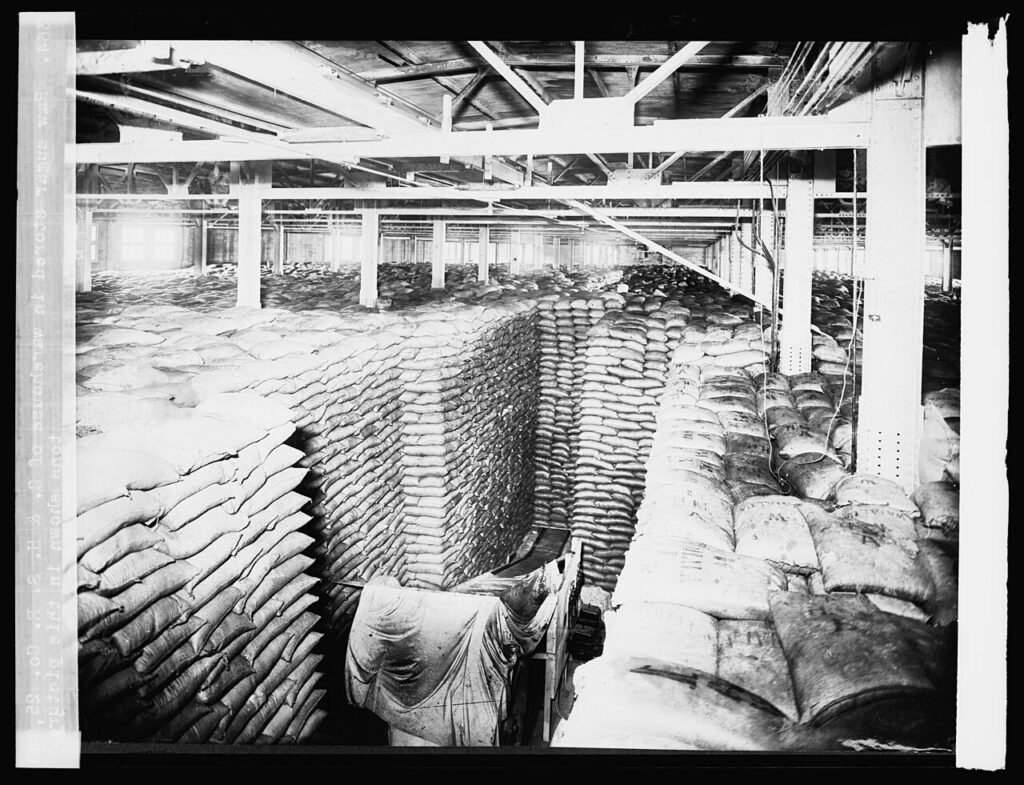
- Store VHP sugar loose in a covered, dry shed with a sound floor, or in bags on pallets off the ground.
- Keep the store as cool and stable as you can. Warm, humid air coming into contact with cooler sugar is what causes damp patches.
- Use stock first in, first out. Raw sugar slowly darkens with age, and that shows up as higher colour in your melt.
- Take your own samples on arrival and keep a retained sample from each cargo. Over time this becomes your own record of what works in your plant.
Mistakes we see buyers make with VHP sugar
Buying on the futures price alone
The No. 11 price is the base, not the deal. The physical premium, freight and port costs can swing your landed cost by more than the polarization premium itself. Always compare offers on a delivered basis.
Falling for offers that make no technical sense
“ICUMSA 45 VHP”, “VHP sugar, ICUMSA 45-1200”, huge monthly volumes at prices well under the market, a demand for upfront fees before any contract. These turn up again and again. Real VHP sugar is raw, brown, around 99.3° and priced near the No. 11 market plus a premium. Our article on how to spot a real raw sugar trader lists the checks we would run on any seller, including us.
Leaving the specification vague
“VHP sugar, standard quality” is not a specification. Write the numbers down, name the inspection company and say what happens if a parcel misses.
Ignoring the port
Draft, berth length, discharge rate and congestion all cost money. A cheap FOB price followed by three weeks of demurrage at your end is not cheap. Our sugar logistics post explains what a good supplier should help with here.
Buying the wrong product
Some buyers order VHP sugar because it is cheaper per tonne than white sugar, then find their plant cannot use it. If you do not have a refining stage, buy a white grade. It will cost less in the end.
VHP sugar compared with other raw and white grades
| Grade | Polarization | Colour (IU) | Main buyer |
|---|---|---|---|
| Raw sugar, 96° basis | around 96° | well over 1,200 | Refineries |
| VHP sugar | 99.2° to 99.4° | 600 to 1,200 | Refineries, re-melt plants |
| Raw brown Grade E | 96° to 98° | 600 to 1,200 | Brewers, brown sugar foods |
| ICUMSA 150 white | 99.8° min | 150 max | Bakery, cooked foods |
| ICUMSA 45 refined | 99.8° min | 45 max | Drinks, retail, food |
For more on the white end of the range, see bulk white sugar and bulk refined sugar. If you are weighing VHP sugar against the brown raw sugar we sell for food use, our post on raw brown sugar ICUMSA 600-1200 sets out the differences.

When to buy: the Brazilian season and your timing
Brazil’s sugar year runs from April to March. The main cane harvest in the centre-south starts in April, builds through the dry months and tails off toward the end of the year. That shapes availability. Mid-year is when mills are crushing hardest, line-ups at the export terminals are longest and new-crop sugar is easiest to find. Late in the season, unsold stocks thin out and the mills that still have sugar can be choosier about price.
For a buyer this means two things. First, if you need steady supply all year, it makes sense to agree a programme early, with shipments spread across several months, rather than buying cargo by cargo. Second, port congestion is part of the price in peak months. Long queues at the loading terminal mean waiting time for the ship, and someone pays for that. Read the laytime and demurrage terms closely when you buy for mid-year loading.
The weather adds noise. A dry spell can lift sugar content in the cane, while heavy rain stops harvesting for days. Policy in Brazil also matters: the government’s ethanol blending rules affect how much cane goes to fuel instead of sugar, which is exactly why the USDA expects a slightly smaller sugar share in 2026/27. None of this is something a buyer can control. It is something to watch, and a good supplier should keep you informed rather than surprise you a week before loading.
Questions to ask any VHP sugar seller on the first call
You will learn more from a seller’s answers to plain questions than from a glossy offer sheet. These are the questions we would ask if we were on your side of the table, and we expect buyers to ask them of us too.
- Who is the actual shipper? Is the seller the mill, a trading house, or an agent passing your inquiry along a chain? Chains add cost and risk.
- Which port and which terminal? A real seller knows where the sugar will load and roughly when.
- What is the price basis? Fixed price, or priced against a named No. 11 month plus or minus a premium? Either can be fine, but you should know which.
- Who inspects, and what happens if the sugar is off spec? Ask for the name of the inspection company and the price adjustment or rejection terms.
- Can I see a recent certificate? A past inspection certificate for a similar cargo, with commercial names covered if needed, tells you what the sugar really tests at.
- What payment do you need, and when? Be very careful with any request for money before a contract exists, or for “procedure fees” of any kind.
- Can you do a smaller first shipment? A bagged trial lot is a reasonable way to start with a new supplier.
If a seller dodges these, walk away. There is a lot of VHP sugar in the world, and you do not need to take a chance on one offer. Our longer guide to how a wholesale sugar trader sources and ships shows what a normal process looks like.
Is VHP sugar the right buy for you? A quick checklist
Run through these before you send an inquiry. If you can answer yes to most of them, VHP sugar is likely the right raw material.
- Your plant has a refining or melting stage that removes colour.
- You can receive at least one container lot, and ideally a bulk parcel.
- You have dry, covered storage for raw sugar.
- Your team, or your trading partner, can follow the No. 11 market.
- You have a bank that can issue a letter of credit for commodity trade.
- You know the import duty on raw sugar (HS 1701.14) in your country.
If several answers are no, talk to us anyway. We may suggest a white grade, a smaller bagged trial, or a different raw sugar instead. Selling you the wrong product helps nobody. You can also read our general guide to buying sugar in bulk first.
Frequently asked questions about VHP sugar
What does VHP sugar stand for?
VHP stands for very high polarization. It is raw cane sugar with a polarization of about 99.2° to 99.4°, compared with the 96° basis of standard raw sugar.
Is VHP sugar the same as brown sugar?
No. VHP sugar looks light brown because of its molasses film, but it is made as a raw material for refineries. Brown sugar sold for food is a finished product with its own specification.
Can VHP sugar be eaten directly?
It is sold for further processing, not as a ready-to-use food ingredient. Food makers should buy a white grade or a raw brown sugar made and certified for food use.
What ICUMSA colour is VHP sugar?
Usually 600 to 1,200 ICUMSA units. Some contracts set a tighter cap at the buyer’s request.
How is the price of VHP sugar set?
Against the ICE Sugar No. 11 raw sugar futures, plus a polarization premium (about 4.2% at 99.3° under exchange rules), plus or minus a physical premium for the origin and shipment period.
What is the minimum order for VHP sugar?
Bulk vessel lots usually start around 12,500 tonnes. Bagged VHP sugar can be shipped by the container, about 25 tonnes each, for trial or smaller orders.
What HS code does VHP sugar use?
Normally 1701.14, raw cane sugar other than non-centrifugal sugar, because its polarization is below 99.5°. Always confirm the national tariff line.
Where does your VHP sugar come from?
Brazil, loaded mainly through the main sugar terminals of the south-east coast.
Do you ship VHP sugar worldwide?
Yes. We ship to ports in Asia, the Middle East, Africa, Europe, the Americas and Oceania, subject to the usual trade rules for each destination.
How do I get a quote for VHP sugar?
Send your quantity, port, packing and delivery window through our contact page and we will reply with an offer and specification sheet.
Key takeaways
- VHP sugar is raw cane sugar at about 99.2° to 99.4° polarization and 600 to 1,200 ICUMSA, made for refineries.
- Its higher polarization gives refiners more sucrose and a shorter process, which is why it carries a premium.
- Prices start from ICE Sugar No. 11, add about 4.2% at 99.3°, then a physical premium, freight and port costs.
- Brazil supplies more than half of world sugar exports, and most of that leaves as VHP sugar.
- Write a full specification, use independent inspection at loading, and check every seller before you pay.
Ready to buy? Request a VHP sugar quote or browse our full sugar range. You may also find our guides to the international sugar trade, raw sugar export and choosing a global sugar exporter useful.
Sources and References
- ICE Futures U.S.: Sugar No. 11 Rules (polarization allowances, final weights and tests)
- ICE: Sugar No. 11 Futures contract specifications
- ICE Futures U.S. submission to the CFTC on revised Sugar No. 11 polarization premiums
- USDA Foreign Agricultural Service: Sugar: World Markets and Trade (May 2026)
- SAFRAS & Mercado: Brazilian sugar line-up, week to 26 August 2026
- FAO / Codex Committee on Sugars: definition of raw cane sugar
- World Customs Organization: HS Chapter 17 notes
- ICUMSA: International Commission for Uniform Methods of Sugar Analysis
- Purolite: Cane sugar refining process
- SASRI document library: separation processes in sugar refining
- Czarnikow (CZapp): The sugar futures contracts explained
Photo credits: Sabino Freitas Correa (CC BY-SA 4.0); Ervins Strauhmanis (CC BY 2.0); Geo Swan (public domain); National Photo Company Collection, Library of Congress (public domain); Mariordo Mario Roberto Duran Ortiz (CC BY 3.0); i_am_jim (CC BY-SA 3.0); Moe Rubenzahl (CC BY-SA 4.0); all via Wikimedia Commons.