
When someone says they need bulk white sugar, the first question we ask back is: white to what standard? Because “white” isn’t a spec, it’s a description, and two bags of bulk white sugar sitting next to each other can test at very different ICUMSA numbers even though they look identical to the eye. If a supplier quotes you “white sugar” without naming a color grade, polarization, or moisture figure, you’re buying on faith, and that’s not a great position to be in when a full container is on the line.
We supply bulk white sugar to food manufacturers, beverage producers, distributors, and traders across Africa, the Middle East, Asia, Europe, and the Americas. This page covers what actually separates white sugar grades, the specification you should get in writing, how we package and ship it, and the questions worth asking before you commit to an order. We’ve written it the way we’d actually explain the product to a buyer on a call, with the numbers that matter and the shortcuts to avoid, rather than a marketing overview that tells you nothing you couldn’t already guess.
What “White Sugar” Actually Means
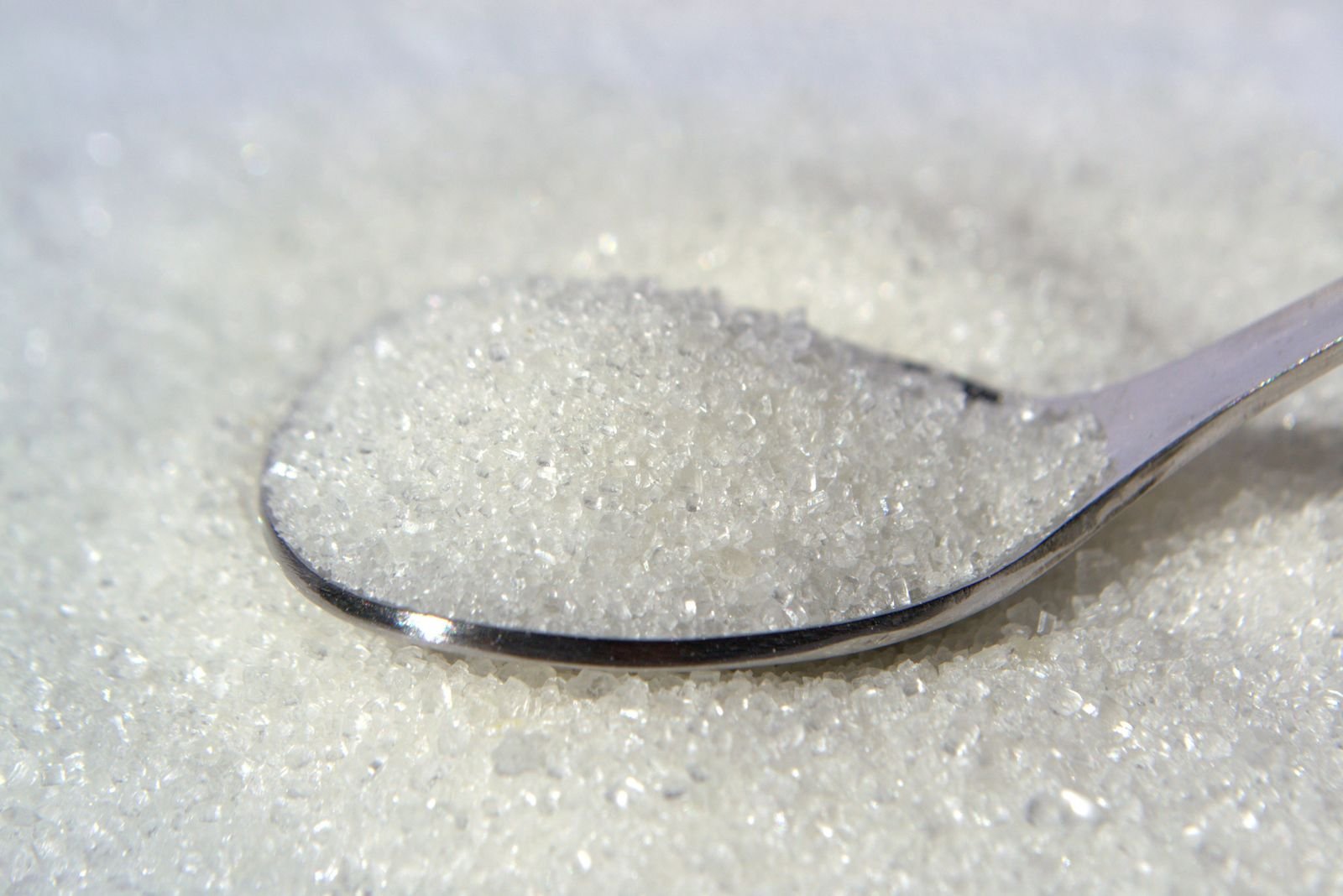
White sugar is refined sucrose that has gone through processing steps, usually clarification, filtration, and crystallization, that strip out the molasses coating raw sugar carries. The result is a clean, light-colored crystal with low moisture and minimal impurities. But “white” covers a range. Retail table sugar, food manufacturing sugar, and premium beverage-grade sugar can all be called white sugar while sitting at noticeably different ICUMSA color values, which is the industry scale used to measure how much color remains in the crystal.
Lower ICUMSA numbers mean whiter, more refined sugar. A batch at ICUMSA 45 is closer to pure white than one at ICUMSA 100, and both are meaningfully whiter than raw sugar sitting up around 600 to 1,200. When you’re buying bulk white sugar, the ICUMSA number is the single most useful figure for comparing suppliers on equal footing, more useful than the word “white” on its own.
Full Specification Table
| Parameter | ICUMSA 45 (Premium) | ICUMSA 100 (Standard) |
|---|---|---|
| ICUMSA color | 25 – 45 IU | 80 – 100 IU |
| Polarization | 99.8 min | 99.7 min |
| Moisture content | 0.04% max | 0.06% max |
| Ash content | 0.03% max | 0.04% max |
| Reducing sugars | 0.03% max | 0.05% max |
| Crystal size | 0.5 – 1.2 mm, uniform | 0.5 – 1.2 mm, uniform |
| Color/appearance | Bright white, free-flowing | White, free-flowing |
| Foreign matter | None detectable | None detectable |
Every order of bulk white sugar we ship comes with a certificate of analysis tied to that specific batch and loading date. If a supplier can only send a generic spec sheet that looks the same for every product they sell, treat that as a signal to keep comparing offers rather than a reason to sign.
Grades of Bulk White Sugar We Supply
- ICUMSA 45 – the premium retail and beverage grade, closest to pure white, used where appearance and clean flavor matter most
- ICUMSA 100 – the standard food manufacturing grade, the workhorse choice for bakeries, general food production, and blending
- ICUMSA 150 – a slightly lower grade suited to applications where color specification is less strict and cost matters more
- Crystal sizes on request – fine, medium, or coarse crystal, depending on your production line’s requirements
If you’re not sure which grade your process actually needs, describe the end use and we’ll recommend a grade rather than defaulting you to the most expensive option.
How We Package Bulk White Sugar
- Food-grade polypropylene bags, 25 kg and 50 kg standard sizes, with moisture-resistant inner liners
- 1,000 kg jumbo bags for buyers with mechanized unloading
- Bulk vessel loading for large-volume buyers
- Palletized loading inside containers, shrink-wrapped to prevent shifting
- Custom bag branding available on larger recurring orders
White sugar is just as hygroscopic as raw sugar, and clumping in a refined product is often more visible to your end customer than in a raw one, since expectations around a “clean” white product are higher. We adjust liner quality and ventilation by destination climate rather than treating every shipment the same.
Documentation Included With Every Shipment
- Commercial invoice
- Packing list with bag counts, container numbers, and weights
- Bill of lading
- Certificate of origin
- Certificate of analysis tied to the actual batch
- Health certificate confirming fitness for human consumption
- Phytosanitary and fumigation certificates where required by the destination
Flag any additional customs or import requirements before we confirm the order. It’s a quick conversation up front, and a much harder one once sugar is already loaded and the vessel has sailed.
Where Our Bulk White Sugar Comes From
- Brazil – large, consistent refining capacity and deep available stock
- India – strong for Asian and African destinations, competitive on freight
- Thailand – a reliable refined sugar origin for Southeast Asia and the Middle East
- European refineries – useful for buyers who want an EU-origin certificate for regulatory reasons
Origin shifts with production schedules and current stock levels. When you ask for a quote, we tell you what’s actually available that week rather than a hopeful estimate.
Shipping Terms for Bulk White Sugar Orders
- FOB (Free On Board) – we load at origin, you arrange freight and insurance from there
- CIF (Cost, Insurance, Freight) – we cover freight and insurance to your destination port, giving you one landed number to work from
Ports and Regions We Ship To
- Africa: Lagos, Dakar, Abidjan, Mombasa, Dar es Salaam, Tema
- Middle East: Jeddah, Jebel Ali, Muscat, Kuwait
- Asia: Singapore, Mumbai, Chennai, Colombo, Karachi, Chittagong
- Europe: Rotterdam, Hamburg, Antwerp, Barcelona
- Americas: Miami, Houston, Veracruz, Cartagena
Don’t see your port listed? Ask anyway. We ship bulk white sugar to most ports worldwide capable of handling commodity cargo.
Minimum Order Quantities and Lead Times
| Order Type | Typical Minimum |
|---|---|
| Container order | Roughly 24-26 metric tons per 20ft container |
| Multi-container order | 50+ metric tons |
| Bulk vessel | 2,000+ metric tons |
Lead time from confirmed order to loading runs 15-30 days for stock orders, longer for custom crystal sizes or private label bagging. We give you the honest figure upfront rather than the optimistic one.
Quality Control on Every Batch
- Pre-loading lab testing for color, polarization, moisture, and ash
- Visual inspection for crystal uniformity and color consistency
- Bag seal integrity checks before palletizing
- Container cleanliness and structural inspection before loading
- Third-party inspection (SGS, Bureau Veritas, or equivalent) available on request
Industries That Buy Bulk White Sugar From Us
- Beverage manufacturers – need consistent, clean-tasting sugar at volume, since even a slight variation in color or reducing sugars can affect flavor and shelf appearance across a large production run
- Bakeries and confectionery producers – rely on predictable crystal size and dissolve rate, particularly for products where sugar affects texture as much as sweetness
- Food distributors – buy bulk white sugar to repackage for retail and food service accounts, and typically need flexible bag sizing to match different downstream customers
- Pharmaceutical and nutraceutical manufacturers – use sugar as an excipient, where purity and consistency matter more than cost, and documentation requirements tend to be stricter
- Traders and repackagers – buy in bulk vessel or large container volume and break it down for smaller regional buyers who can’t meet our minimum order thresholds directly
Blending and Custom Specifications
Not every buyer’s process maps cleanly onto a standard ICUMSA 45 or ICUMSA 100 grade. Some food manufacturers need a specific combination of color, crystal size, and moisture that sits between our standard grades, particularly when a recipe was originally developed around a specific supplier’s product and the formulation is sensitive to substitution. We can discuss custom blending or a tighter specification band on larger recurring orders, though it’s worth being upfront that custom specs generally mean a longer lead time and a smaller pool of production windows that can accommodate the run. If your process genuinely needs a non-standard spec, tell us early, ideally before you’ve built a whole reorder cycle around an assumption of instant availability.
How to Vet a Bulk White Sugar Supplier
A handful of questions separate a real supplier from someone reselling a price list:
- Can they confirm the exact ICUMSA color, not just “white”?
- Will they provide a certificate of analysis tied to the actual batch you’d receive?
- Can they explain where the sugar was refined, not just the country of origin?
- Are they open to third-party inspection before loading?
- What’s their process if a shipment tests outside the agreed spec?
A supplier who hesitates on any of these, or gets vague when you push for specifics, is telling you something. Take the hint.
What Affects the Price of Bulk White Sugar
- ICUMSA grade – lower color numbers cost more, since reaching them requires additional refining and clarification steps that reduce overall yield at the refinery
- Global commodity pricing – white sugar tracks futures markets closely, and any quote you receive reflects where that market sits on the day of the offer, not some fixed catalog price
- Order volume – bigger, recurring orders generally secure better per-ton pricing, since fixed costs like documentation and inspection spread across more tonnage
- Packaging – bulk vessel loading is cheaper per ton than bagged shipments, since it removes bagging labor and materials from the cost structure entirely
- Freight route – distance, port congestion, and current fuel costs all factor into a CIF quote, and these can shift meaningfully week to week
- Payment terms – letters of credit versus advance payment can shift the final figure slightly, since financing cost gets baked into the quote either way
When you compare quotes, check whether freight, insurance, and documentation are included or listed separately. A quote that looks cheaper upfront sometimes isn’t once you add the pieces that got left off.
A Practical Example
A beverage producer we supply used to order bulk white sugar reactively, placing an order only when stock ran low. That meant paying whatever the spot price happened to be on a given week, sometimes at the worst point in the pricing cycle. Switching to a quarterly forecast with staggered delivery windows didn’t eliminate price movement, but it let them average their cost over the quarter instead of getting caught by a single bad week. Their finance team liked the predictability almost as much as the modest savings.
The bigger shift, though, was operational rather than financial. Once delivery timing became predictable, their warehouse team stopped scrambling to find space for an oversized emergency order and started planning storage around a known schedule. That’s a small thing on paper, but it removed a recurring headache that had nothing to do with the price of bulk white sugar itself and everything to do with how unpredictably it had been arriving before.
White Sugar Grade Comparison
| Grade | ICUMSA Range | Typical Use |
|---|---|---|
| ICUMSA 45 | 25 – 45 IU | Retail table sugar, premium beverages |
| ICUMSA 100 | 80 – 100 IU | Food manufacturing, general bakery use |
| ICUMSA 150 | 100 – 150 IU | Cost-sensitive bulk applications |
If your product is customer-facing and appearance matters, ICUMSA 45 is usually worth the premium. If the sugar disappears into a recipe where color isn’t visible to the end consumer, ICUMSA 100 or even 150 often does the job at a lower cost.
Spot Orders vs Standing Supply Agreements
Most new buyers start with a single spot order of bulk white sugar to test quality, communication, and whether the delivery date actually holds. That’s a sensible way to begin a relationship with any supplier. The downside is that spot pricing moves with the market on the day you order, so a poorly timed purchase can cost noticeably more than the same volume bought a few weeks earlier or later.
A standing supply agreement, typically structured around monthly or quarterly volume commitments, removes some of that timing risk. Pricing can be fixed for a set period, tied to a benchmark index with a cap, or reviewed on a fixed schedule. Buyers with predictable, recurring demand for bulk white sugar also tend to get priority scheduling at the refinery during tight production windows, which matters more than people expect when several buyers are competing for the same production slot. We’ll lay out both options and let you pick the one that fits your volume and risk appetite, rather than steering you toward whichever is simplest for us.
Private Label and Custom Packaging
Buyers reselling bulk white sugar under their own brand, whether to retail, food service, or a regional distribution network, often need custom bag printing rather than our standard packaging. We can print your branding on 25 kg or 50 kg bags for orders that meet a minimum production run, and we’ll tell you upfront what that minimum is rather than accepting a small order and quietly padding the lead time to make custom printing viable. If private label packaging matters to your order, raise it at the quoting stage so it can be built into the production schedule rather than added as an afterthought once the sugar is already earmarked for standard bags.
Sustainability and Traceability Questions Worth Asking
More buyers, especially larger food and beverage manufacturers with their own supply chain reporting requirements, want to know where their bulk white sugar was refined and what the underlying raw material sourcing looked like, not just the ICUMSA number on the certificate. A supplier with a real refinery relationship can answer questions about origin, water usage, and processing conditions directly. If your organization needs this kind of documentation for internal procurement policy or a retail partner’s audit, mention it when you request a quote so it can be prepared alongside the standard export paperwork instead of being chased down after the shipment has already left port.
Storage and Handling After Delivery
- Keep it dry and off the floor. Store on pallets in a space with stable humidity, away from exterior walls where condensation forms.
- Watch stack height. Standard guidance is no more than eight to ten bags high for 50 kg bags, to avoid compression and clumping at the base.
- Rotate stock on a first-in, first-out basis. Sugar sitting untouched for months in a humid corner is how clumping starts.
- Reseal opened jumbo bags immediately. Exposed surface sugar picks up moisture fastest.
Common Mistakes Buyers Make With Bulk White Sugar
- Assuming “white” is a specification. It isn’t. Always ask for the ICUMSA color number.
- Skipping a sample order. A small trial shipment is far cheaper than discovering a color or moisture problem after a full container lands.
- Not locking crystal size in writing. Some production lines need a specific crystal size range, and it’s easy to assume this is standard when it isn’t.
- Chasing the lowest quote without checking refining origin. A price well under market usually means a lower actual grade than advertised.
- Ignoring payment term flexibility. A real supplier with a track record is generally open to structured payment terms, not just full payment with nothing exchanged first.
Frequently Asked Questions
What’s the difference between bulk white sugar and raw sugar?
Raw sugar still carries a molasses coating and sits at a high ICUMSA color, typically 600 IU or above. Bulk white sugar has gone through refining steps to remove that coating, bringing the color down to a range roughly between 25 and 150 IU depending on grade.
What’s the minimum order quantity for bulk white sugar?
Container orders typically start around 24-26 metric tons. Send us your target volume and destination, and we’ll tell you what’s realistic for your timeline.
Can I request a specific crystal size?
Yes. Fine, medium, and coarse crystal sizes are available. Confirm your requirement when you request a quote, since it can affect lead time on custom orders.
Do you ship bulk white sugar worldwide?
Yes, we supply buyers across Africa, the Middle East, Asia, Europe, and the Americas, on FOB and CIF terms.
How is the ICUMSA color actually measured?
ICUMSA color is measured using standardized methods maintained by the International Commission for Uniform Methods of Sugar Analysis, the body that sets the testing protocols referenced across the global sugar trade. Ask any supplier for a certificate that references this method rather than an in-house visual estimate.
Is bulk white sugar food-grade by default?
Not automatically. Confirm the health certificate and applicable food safety documentation for your destination market before you order, especially if the sugar will go into a consumer food or beverage product.
Can bulk white sugar be shipped in bulk vessel form instead of bags?
Yes, for large-volume buyers moving several thousand tons at a time, bulk vessel loading is available and typically works out cheaper per ton than bagged shipments, since it removes bagging labor and materials from the cost. Container and bagged shipments remain the more practical option for most mid-size buyers.
Request a Quote
We supply bulk white sugar worldwide with verified ICUMSA specifications, complete documentation, and shipping terms that hold up once your order actually ships. Send your target grade, volume, and destination port, and we’ll respond with a formal offer and a current certificate of analysis.
Need something less processed instead? Our bulk cane sugar supplier page covers raw and semi-refined grades. If you’re sourcing for a food manufacturing line specifically, see our bulk refined sugar page for the full refined grade range, or check our existing ICUMSA 45 sugar for sale product page for current stock.