Bakery sugar is the sugar a bakery or baked-goods factory buys in bulk to make bread, cakes, biscuits, pastries and fillings. In most plants that means refined white cane sugar, usually ICUMSA 45, 100 or 150, plus some raw brown cane sugar for darker products, delivered in 50 kg bags or 1 MT jumbo bags. The right bakery sugar is the one whose colour, crystal size and moisture suit the products you make, at a delivered price that works. We supply every one of those grades and ship them to bakeries, distributors and food plants worldwide.
This guide is for bakery owners, purchasing managers and production staff who buy sugar by the tonne rather than by the kilo. It covers what sugar actually does in a recipe, which grade suits which product, why crystal size matters more than most people think, how to store sugar so it doesn’t set into blocks, and how to buy it without paying for things you don’t need. Research and standards are linked where we use them. Where something is our own opinion from supplying bakeries, we say so.

Bakery sugar we sell: the short specs
These are the grades bakeries order from us most. Each product page has the full specification sheet.
- Refined ICUMSA 45 sugar: 45 IU max, polarization 99.80% min, moisture 0.04% max, ash 0.04% max. Bright white. For icings, meringues, white cakes and anything where colour shows.
- Crystal white sugar: sparkling white, polarization 99.8% min, fine to medium crystals. A good all-round bakery sugar.
- Cane sugar ICUMSA 100: 100 IU max, polarization 99.8% min, moisture 0.04% max. For bread, buns, biscuits and most cakes.
- ICUMSA 150 white sugar: 150 IU max, slight cream tint. The budget choice for bread, doughnuts and baked goods where the sugar disappears.
- Raw brown cane sugar Grade E: ICUMSA 600 to 1200, polarization 96° to 98°, moisture 0.4% max. For gingerbread, dark cakes, granola and toppings.
- Refined sugar ICUMSA 35: 35 IU max. Mostly bought by drinks makers, but some bakeries use it for clear glazes and syrups.
Packing: 50 kg PP bags with inner liner, 1 MT jumbo bags, smaller bags on request. Loading: 20 ft or 40 ft containers. Terms: FOB or CIF your port. Ask for a bakery sugar quote.
The full range is on our products page.
What sugar actually does in baking
Most people think of sugar as the sweet part. In a bakery it does a lot more than that, and this is why switching grades or cutting sugar can wreck a product that ran fine for years.
It feeds the yeast
In bread and sweet doughs, sugar is food for the yeast. The European Food Information Council lists this as one of sugar’s basic jobs in food: it provides the substrate for yeast fermentation in rising bread. A little bakery sugar gets fermentation moving. A lot, as in brioche or sweet buns, slows yeast down because the dough pulls water away from the yeast cells. That’s why rich doughs often use more yeast or a yeast strain bred for high sugar.
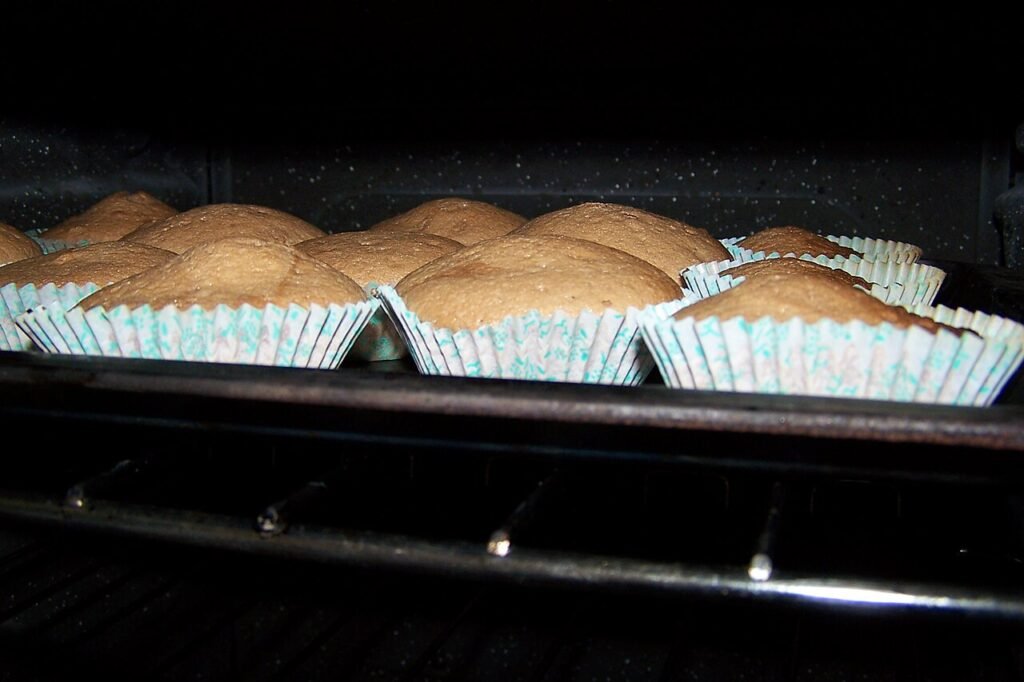
It holds back the oven set, so cakes rise
This one surprises people. Sugar raises the temperature at which starch gelatinises and egg proteins set. In a cake batter that matters, because it gives the air bubbles time to expand before the structure locks. Senay Simsek, writing in Baking Business in January 2025, explains that without enough sugar the starch can gelatinise too early and give a dense, dry cake, while too much sugar can hold back the set so long that the cake spreads or loses volume.
It keeps baked goods soft
Sugar holds onto water. A cake with the right amount of sugar stays soft for longer on the shelf because the crumb loses moisture more slowly. The same Baking Business piece describes sugar as a staling inhibitor for this reason. For a bakery selling packed cakes with a shelf life of a week or more, that is not a small thing.
It gives colour and flavour
The golden crust on bread and biscuits comes partly from the Maillard reaction between sugars and proteins, and partly from caramelisation of the sugar itself. EUFIC points to the golden-brown crust of baked products as a classic example. Glucose and fructose brown faster than plain sucrose, which is why a splash of invert syrup or honey darkens a crust so quickly.
It builds texture in biscuits and cookies
Creaming sugar with fat cuts tiny air pockets into the mix. In cookies, sugar that hasn’t fully dissolved controls how far the dough spreads and how crisp the result is. That’s where crystal size comes in, and we deal with it further down.
Which grade of bakery sugar suits which product
The ICUMSA number on a bag of sugar is a colour reading. Lower means whiter. It says nothing about sweetness, which is the same across white grades. Our ICUMSA scale guide explains the scale itself. For a bakery the useful question is simple: can your customer see the sugar?
| Product | Bakery sugar grade we’d suggest | Why |
|---|---|---|
| White icing, buttercream, fondant, meringue | ICUMSA 45 | Any tint shows up against white |
| Sponge, vanilla and white cakes | ICUMSA 45 or crystal white | Light crumb, clean flavour |
| Bread, buns, rolls | ICUMSA 100 or 150 | Small amounts, colour hidden by crust |
| Biscuits, cookies, crackers | ICUMSA 100, fine crystal | Browning hides colour; crystal size matters more |
| Doughnuts (dough) | ICUMSA 150 | Fried colour covers everything |
| Chocolate and dark cakes | ICUMSA 100 or 150 | Cocoa dominates colour |
| Gingerbread, granola, crumble toppings | Raw brown Grade E | You want the molasses flavour |
| Sugar syrups and clear glazes | ICUMSA 35 or 45 | Clarity of the finished syrup |
This is our rule of thumb, not a law. Plenty of bakeries run ICUMSA 45 across every line because it’s simpler to stock one product, and they’re happy to pay a little more for that. Others split their buying: ICUMSA 45 for the decorating room, ICUMSA 150 for the bread line. If you use several tonnes a month, splitting is usually where the savings are.
ICUMSA 45 bakery sugar
The whitest grade most bakeries will ever need. It’s the safe choice for anything white or pale, and for products sold in clear packaging where customers look closely. Our post on food grade ICUMSA 45 sugar covers its safety and quality limits in detail.
ICUMSA 100 and 150 bakery sugar
These are white sugars with a touch more colour left in. In a loaf or a chocolate muffin nobody can tell. They usually cost less per tonne than ICUMSA 45, and the saving adds up fast on a bread line. Read more in our guides to ICUMSA 100 sugar and ICUMSA 150 sugar.
Brown bakery sugar
Raw brown cane sugar keeps part of its molasses, so it’s sticky, golden-brown and tastes of light caramel. Bakers use it on purpose for flavour. It also holds more moisture, which keeps soft cookies soft. See our bulk brown sugar guide for how to order it consistently.

Crystal size: the bakery sugar detail most buyers miss
Two bags of bakery sugar can share the same ICUMSA number and still behave differently in your mixer, because the crystals are different sizes. Colour is on every offer sheet. Grain size often isn’t, and it should be.
The research here goes back a long way. A 1973 study in Cereal Chemistry by Kissell, Marshall and Yamazaki found that cookie spread increased as the average sugar particle size decreased, and that a standard cookie test worked best with sugar averaging 200 to 250 microns. More recent work by Hüseyin Boz, published in the Czech Journal of Food Sciences in 2019, found that smaller sugar particles made cookies harder, and that sugar particle size had a clear effect on how cookie dough handled: its hardness, stickiness and the force needed to push it through an extruder.
What does that mean in a working bakery? A few things, in our experience:
- Cookies and biscuits are the most sensitive. If a new delivery of bakery sugar has a coarser grain, cookies may spread less, look paler and bake up with a different snap. Many “the flour has changed” complaints are really sugar complaints.
- Creamed cakes like a fine to medium crystal. It cuts air into the fat well and dissolves during mixing.
- Bread doughs don’t much care. The sugar dissolves in the water early.
- Toppings and sparkle finishes want a coarser crystal so it stays visible after baking.
- Extruded and wire-cut doughs on a production line can change how they cut and release when the crystal size shifts, which matches what the 2019 study measured.
Our advice: once you find a bakery sugar that works, ask your supplier what grain size it is, and put that into the contract alongside colour. Then keep a small retained sample from every delivery. When a product goes wrong, you’ll have something to compare against.

What about icing sugar and caster sugar?
Icing sugar (powdered sugar) is simply white sugar milled to a fine powder, usually with a little starch added so it doesn’t clump. Caster sugar is a fine-grained white sugar. We sell granulated white grades, not milled powder. Larger bakeries often mill their own icing sugar from ICUMSA 45 on site, because the powder cakes in storage and is expensive to ship. If you only need small amounts of icing sugar, buying it locally ready-milled is usually the smarter move, and we’ll tell you that honestly.
The quality numbers on a bakery sugar spec sheet
A specification sheet can look like a wall of numbers. For a bakery, these are the ones that matter:
| Parameter | Typical for white bakery sugar | What it tells you |
|---|---|---|
| Colour (ICUMSA) | 45, 100 or 150 IU max | How white the sugar is |
| Polarization | 99.8% min | Sucrose purity |
| Moisture | 0.04% to 0.06% max | Risk of caking in storage |
| Ash | 0.04% max (ICUMSA 45) | Mineral residue |
| Granulation | Fine to medium | How it mixes, spreads and dissolves |
| SO₂ | 20 mg/kg max (ICUMSA 45) | Processing residue; regulated in many markets |
| Insoluble matter | None visible | Foreign matter in your mix |
For a sense of how regulators define white sugar, the European sugar directive is a useful benchmark. Under Council Directive 2001/111/EC, white sugar must have a polarisation of at least 99.7°Z, invert sugar of no more than 0.04% and loss on drying (moisture) of no more than 0.06%. “Extra-white” sugar meets the same limits with tighter points for colour and ash. Your own country may use different rules, often based on the international Codex Alimentarius standards, so check what your food authority expects before you sign.
Our refined sugar quality checklist and the colour and purity guide go deeper into each line.
Why bakeries switch to buying sugar in bulk
A small bakery buys sugar from a cash-and-carry in 25 kg or 50 kg bags and never thinks about it. Somewhere between a few hundred kilos a week and a few tonnes, that starts to cost real money. Buying bakery sugar by the container changes three things.
- Price per tonne. Every middleman between the mill and your door takes a margin. A container lot cuts out most of them.
- Consistency. One container is usually one production batch. Twenty-odd tonnes of the same sugar means your cookies spread the same way for weeks.
- Control over the spec. When you buy direct, you can ask for the grade, grain and packing you want, rather than whatever the wholesaler has on the shelf.
The trade-off is cash tied up in stock and the need for dry storage. A 20 ft container holds roughly 25 tonnes of bagged sugar. If you use 2 tonnes a month, that’s a year of stock, which is too much for most bakeries. Sharing a container with another bakery, or buying through a local distributor who imports by the container, can work better at that size. If you use 10 tonnes a month or more, buying direct usually makes sense. Our guide to buying sugar in bulk walks through the numbers, and how to save money on bulk sugar covers the common savings.
Packing options for bakery sugar
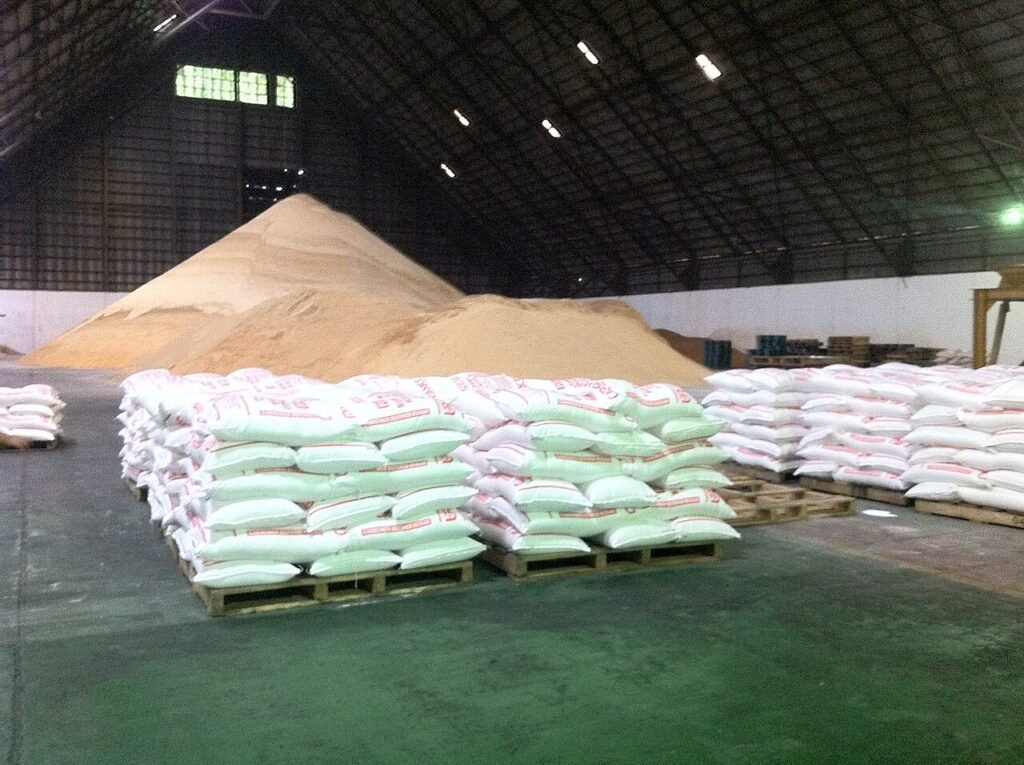
50 kg bags
The standard. Polypropylene woven bags with an inner plastic liner. Easy to stack on pallets and to tip into a mixer by hand, though 50 kg is heavy for one person to lift repeatedly, which is why some bakeries ask for smaller bags. See our page on ICUMSA 45 in 50 kg bags.
Smaller bags
25 kg bags are easier to handle and suit smaller bakeries and plants with strict manual-handling limits. They cost a little more per tonne to pack. Ask when you request a quote.
1 MT jumbo bags
For plants with a hoist or a bag-discharge station that feeds a silo or a mixer. Fewer bags to open, less waste, less dust, and less plastic to throw away. If you use more than a tonne a day, jumbo bags are worth considering.
Private label bags
Distributors who sell bakery sugar on to smaller bakeries sometimes want their own brand printed on the bag. That’s possible on larger orders.
Storing bakery sugar so it doesn’t cake
Nothing annoys a production manager quite like a pallet of sugar that has set into bricks. Caking is the most common sugar complaint we hear from bakeries, and in most cases it comes from storage, not from the sugar itself.
Research by Mathlouthi and Rogé, presented to the South African Sugar Technologists’ Association, found that white sugar cakes mainly because of moisture moving in and out of the crystal surface as humidity and temperature change. A thin film of syrup forms on the crystals when the air is damp, then dries into crystal bridges when the air dries out again. Do that a few times and the bag becomes a block.
What helps, in practice:
- Keep bakery sugar in a dry store away from ovens, steam, dishwashers and outside walls.
- Avoid big temperature swings. A store that is warm by day and cold by night is worse than one that is steadily cool.
- Store bags on pallets, off the floor and away from walls.
- Let a cold delivery reach room temperature before opening the bags, so moisture doesn’t condense on the sugar.
- Close opened bags and use them first.
- Rotate stock first in, first out. White sugar keeps a long time in good conditions, but there’s no reason to test that.
Brown sugar is a different case. It needs to keep its moisture, so store it sealed. If it dries out it goes hard, but it can usually be broken up and used.
How bakery sugar is priced
Bakery sugar is a commodity, so its price follows the world sugar market. White sugar is benchmarked against the ICE White Sugar futures contract in London. Raw sugar follows the ICE Sugar No. 11 contract in New York. The price your bakery pays also depends on:
- Grade. ICUMSA 45 usually costs more than ICUMSA 100 or 150.
- Packing. Small bags cost more to fill than 50 kg bags; jumbo bags cost less per tonne.
- Volume and frequency. A standing monthly order earns a better price than one-off containers.
- Freight. Container rates to your port can swing the delivered price by a lot.
- Duties and taxes in your country, which are often far higher on refined sugar than on raw.
The global picture matters too. In its May 2026 Sugar: World Markets and Trade report, the USDA forecasts world sugar production for 2026/27 at about 184.9 million tonnes and human consumption at nearly 180 million tonnes. It expects Brazil’s output to dip as more cane goes to ethanol, and Thailand’s to fall on reduced planting. Neither forecast means a shortage. They do mean prices can move, and bakeries that buy month to month feel every move.
One practical point: always compare offers on a delivered basis, sugar at your door, duty paid. A cheap FOB price can end up costing more than a dearer CIF one. Our posts on sugar wholesale prices and bulk order discounts explain how quotes are built.
A worked example: splitting grades on a mixed bakery
Here’s a simple way to see whether splitting grades is worth the bother. The figures are made up to show the method. Your own prices will be different, so plug them in.
Say a bakery uses 12 tonnes of sugar a month. About 9 tonnes go into bread, buns and chocolate cakes. The other 3 tonnes go into buttercream, sponges and meringues.
- Option A: one grade. All 12 tonnes are ICUMSA 45. Simple to stock and nobody can pick the wrong bag.
- Option B: two grades. 3 tonnes of ICUMSA 45 for the decorating and light cake lines, 9 tonnes of ICUMSA 150 for everything else.
If ICUMSA 150 is quoted at, say, US$30 a tonne less than ICUMSA 45 at your port, option B saves about US$270 a month, or over US$3,000 a year. That’s before any freight difference. Against that, you need two stock locations, clear bag labels and staff who use the right one. For some bakeries the saving is worth it. For a small team that’s already stretched, one grade might be the better call. Either way, it’s worth doing the sum rather than assuming.
The same thinking applies to bag size. Jumbo bags often cost less per tonne than 50 kg bags, but only help if you have a way to lift and empty them. A cheaper bag that needs two people and a forklift to open isn’t cheaper.
Bakery sugar in hot and humid climates
A lot of the bakeries we supply work in places where the air is warm and damp for much of the year. That changes how you should handle bakery sugar, from the ship to the mixer.
Sugar travels in steel containers. On a long voyage the box heats up by day and cools at night, and moisture can condense on the inside of the roof and drip onto the bags. This is called container rain. Good loading helps: dry, clean containers, a liner or kraft paper along the walls and roof, and desiccant bags hung inside. Ask your supplier how they load. If the answer is vague, push for detail.
Once the container lands, get it unpacked and the sugar into a dry store as soon as you can. Containers left sitting in a hot port yard for weeks are where a lot of caked sugar begins. If you can, check a few bags from the doors, the middle and the back of the box when you open it, and photograph anything damp before you sign for the delivery.
In the bakery itself, the warm, steamy air near ovens and proofers is the worst place for sugar. A separate dry store, even a small one, pays for itself. Some plants in very humid areas use dehumidifiers in the sugar room. It sounds like overkill until you’ve thrown away a few tonnes of bricked sugar.
Brown sugar is the exception. It needs to hold its moisture, so in a dry, air-conditioned store keep it sealed or it will harden. In a humid store, it’s more likely to clump, so again: sealed, and used first.
7 tips for buying bakery sugar in bulk
These come from the questions bakeries ask us and the problems we’ve seen them run into. None of them are complicated. They’re just easy to skip.
1. Match the grade to the product, not the other way round
Don’t buy ICUMSA 45 for a bread line because it’s “the best”. Don’t buy ICUMSA 150 for white buttercream because it’s cheap. Use the table above as a starting point, then test.
2. Put crystal size in the contract
Colour is easy to specify. Grain size is the one that changes your cookies. Agree it in writing.
3. Trial before you commit
Order a small lot, run it through your actual recipes on your actual equipment, and compare against your current bakery sugar. A few bags of trial sugar are cheaper than a container of the wrong one.
4. Ask for the paperwork up front
A certificate of analysis for each lot, an independent inspection certificate, a certificate of origin, and food safety certificates from the producing mill. Your food safety auditor will want these. Our page on the inspection certificate explains what it should show.
5. Plan storage before the container arrives
25 tonnes of bagged sugar takes up a fair bit of floor. Make sure the space is dry, clean and ready before the truck turns up.
6. Agree payment terms that protect you
For a first order, a letter of credit protects both sides. Never pay large sums upfront to a supplier you haven’t checked. Our LC and TT payment guide explains the options.
7. Check the supplier, including us
Ask where the sugar comes from, which mill, which port, and who inspects it. A real supplier answers without fuss. Our guide on what to check in a sugar wholesale company lists the questions.
Common bakery sugar problems and what usually causes them
When something goes wrong with a baked product, sugar gets blamed a lot. Sometimes fairly, sometimes not. Here are the problems we hear about most and where we’d look first.
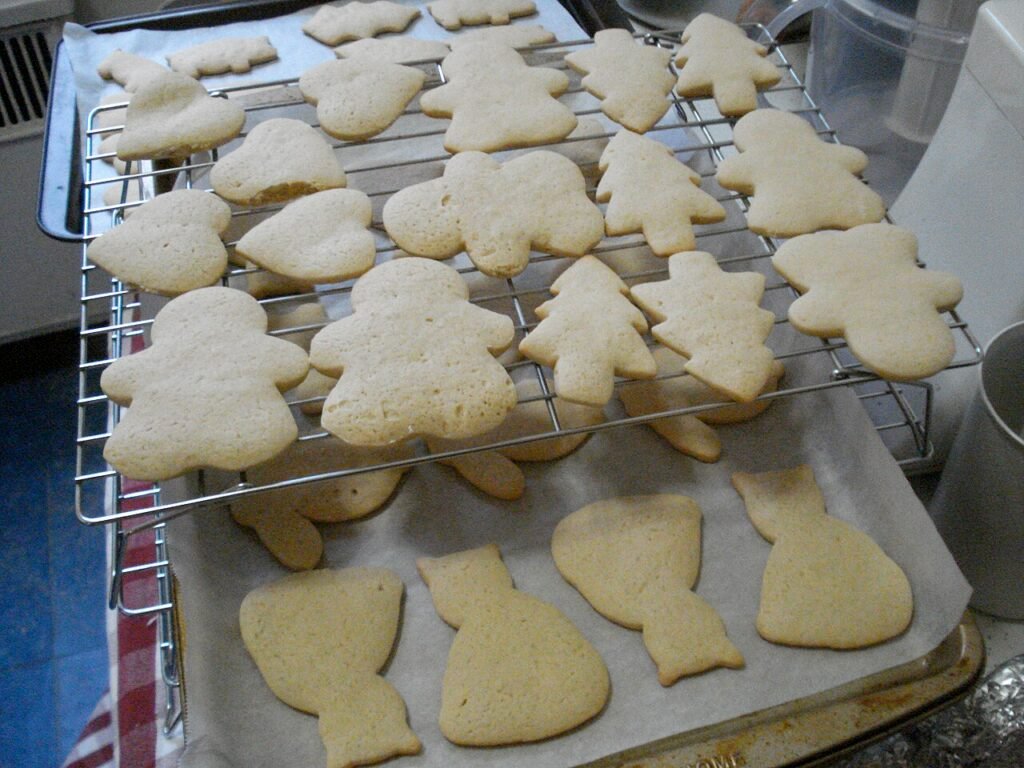
Cookies spreading differently from one week to the next
Check crystal size first, then fat temperature and flour. A change of bakery sugar supplier, or even a new production lot from the same supplier, can shift grain size enough to show.
White icing looking slightly cream or grey
Usually a colour grade problem: ICUMSA 100 or 150 used where ICUMSA 45 was needed. Can also come from fat colour or flavourings.
Dark specks in a light product
Could be foreign matter in the sugar, but more often comes from burnt bits on trays, spice or vanilla seeds. Keep a sample from the sugar lot so you can rule it in or out.
Sugar setting hard in the bag
Storage, almost always. See the caking section above.
Bread crust too dark or too pale
Sugar level, oven temperature and dough fermentation time all affect browning. Remember that yeast eats sugar, so a longer proof leaves less sugar for the crust.
Cakes collapsing after a sugar cut
Cutting sugar changes far more than sweetness. As the Baking Business article explains, sugar controls when the structure sets. Reformulating a lower-sugar cake usually needs changes to other ingredients too.
Bakery sugar and sugar reduction
Many bakeries are under pressure to cut sugar, from customers, retailers or government programmes. We supply sugar, so take our view with that in mind, but here’s the honest picture.
Sugar is hard to replace in baked goods because it does so many jobs at once: it sweetens, holds moisture, delays the set, browns the crust and feeds the yeast. Alternatives like polyols and fibres can cover some of these. The Baking Business article notes that maltitol and isomaltulose can replicate many of sucrose’s functions in cakes, though browning and flavour differ, so recipes need adjusting. Small cuts, done carefully, often work. Large cuts usually mean a different product.
If you are reformulating, keep a steady, well-specified bakery sugar as your baseline. You can’t judge a change if the sugar underneath it keeps changing.

Who buys bakery sugar from us
- Industrial bakeries running bread, bun and cake lines, usually on ICUMSA 100 or 150 for dough and ICUMSA 45 for decoration.
- Biscuit and cookie factories, which care most about crystal size and lot-to-lot consistency.
- Cake and pastry makers using ICUMSA 45 or crystal white for light products and brown sugar for dark ones.
- Bakery distributors who import by the container and sell to smaller bakeries in 25 kg or 50 kg bags.
- Hotel and catering groups with central bakeries.
- Snack and cereal makers who use brown sugar for granola and bars.
If you also make drinks or dairy products, our guides to industrial sugar, wholesale food sugar and sugar for beverage makers cover those uses. Refineries looking for raw material should see our VHP sugar page instead.
Where our bakery sugar comes from and how it ships
We source refined white and raw brown cane sugar mainly from Brazil and Thailand, two of the largest sugar exporters in the world according to the USDA trade data. Our guides to Brazilian sugar and Thai sugar explain what each origin offers.
Bakery sugar ships in containers, loaded with bagged sugar on the floor or on pallets, often with a liner and desiccant to protect against condensation on long voyages. Our container shipping guide covers how loading is done and what to check when the doors open. You’ll find our general terms on the shipping policy page.

How to order bakery sugar from us
- Tell us what you bake. Products, monthly volume, current sugar grade if you know it, port of delivery, preferred bag size. Use our contact form.
- Get a recommendation and quote. We’ll suggest a grade (or two, if splitting makes sense) and quote FOB or CIF.
- Trial if you need to. For new customers we can discuss a smaller first shipment.
- Agree the contract. Grade, granulation, packing, inspection, documents and payment terms all in writing.
- Loading and inspection. The bakery sugar is inspected at loading and the certificate goes with the documents.
- Delivery. The container arrives at your port; your clearing agent handles customs and gets it to your bakery.
Questions we get often are answered on our FAQ page.
Frequently asked questions about bakery sugar
What is bakery sugar?
Bakery sugar is the sugar bakeries buy for production, usually refined white cane sugar such as ICUMSA 45, 100 or 150, and sometimes raw brown cane sugar. It’s the same sucrose as table sugar, bought in bulk against a written specification.
Which ICUMSA grade is best for baking?
ICUMSA 45 for white or pale products like icing and sponge. ICUMSA 100 or 150 for bread, biscuits and dark cakes, where the colour doesn’t show and the lower price helps.
Does the grade of sugar change the taste of baked goods?
White grades taste the same. Brown sugar adds a caramel, molasses flavour, which is why it’s used in gingerbread and similar products.
Why does crystal size matter in baking?
It affects how sugar creams with fat, how far cookies spread and how hard they bake. Studies on cookie dough have shown measurable differences from sugar particle size alone.
How should bakery sugar be stored?
In a cool, dry store with steady temperature, bags on pallets off the floor, away from steam and ovens. Most caking is caused by humidity and temperature swings.
Do you sell icing sugar?
No, we sell granulated grades. Larger bakeries often mill icing sugar from ICUMSA 45 on site; smaller ones usually buy it ready-milled locally.
What is the minimum order for bakery sugar?
Usually one container, roughly 25 tonnes in a 20 ft box. Ask us about smaller trial lots for first orders.
What bag sizes are available?
50 kg PP bags with liner and 1 MT jumbo bags as standard. Smaller bags and private label printing on request.
Do you ship bakery sugar worldwide?
Yes, to ports across Asia, Africa, Europe, the Middle East, the Americas and Oceania.
How do I get a price for bakery sugar?
Send your grade, volume, bag size and port through our contact page. We’ll reply with a quote and a spec sheet.
Key takeaways
- Bakery sugar is usually refined white cane sugar (ICUMSA 45, 100 or 150) plus raw brown sugar for dark products.
- Sugar feeds yeast, delays the set so cakes rise, keeps crumb soft and helps crusts brown.
- Choose the grade by whether the sugar shows: ICUMSA 45 for white products, 100 or 150 for bread and biscuits.
- Crystal size changes how cookies and biscuits behave, so specify it alongside colour.
- Most caking comes from damp, changing storage conditions, not bad sugar.
- Compare offers delivered to your door, trial first, and check any supplier before you pay.
Ready to order? Request a bakery sugar quote or see our full product range. You might also find our guide to bulk granulated sugar and our bulk white sugar overview useful.
Sources and References
- European Food Information Council: What is the role of sugar in the food industry?
- Simsek, S. Understanding sugar’s impact on the physical and sensory properties of cakes. Baking Business, January 2025
- Kissell, Marshall and Yamazaki. Effect of variability in sugar granulation on the evaluation of flour cookie quality. Cereal Chemistry 50:255-263 (1973)
- Boz, H. Effect of flour and sugar particle size on the properties of cookie dough and cookie. Czech Journal of Food Sciences 37(2) (2019)
- Council Directive 2001/111/EC relating to certain sugars intended for human consumption
- Mathlouthi and Rogé: Caking of white sugar and how to prevent it (Proc. S. Afr. Sug. Technol. Ass., 2004)
- USDA Foreign Agricultural Service: Sugar: World Markets and Trade (May 2026)
- ICE: White Sugar Futures contract specifications
- ICE: Sugar No. 11 Futures contract specifications
- FAO/WHO Codex Alimentarius
Photo credits: Andy Li (CC0); Lauri Andler (CC BY-SA 3.0); YoAmes (CC BY-SA 2.0); Lcarsdata (CC BY-SA 3.0); Missvain (CC BY 4.0); Markadan (CC BY-SA 3.0); Katrin Morenz (CC BY-SA 2.0); Nielsoncaetanosalmeron (CC BY 4.0); all via Wikimedia Commons.