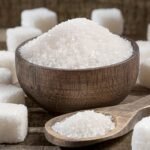

Not every buyer needs the strictest grade of white sugar on the market. Plenty of food and beverage manufacturers need something bright, clean, and consistent without paying a premium for purity levels they don’t actually need. That’s where ICUMSA 150 sugar fits in. It’s the grade most general-purpose bottlers, bakeries, and confectioners settle on once they’ve compared the numbers against pricier options, and at Global Sugar Supplies it’s one of our most consistently ordered products. This guide covers the full specification, where it fits against other grades, and how to buy it in bulk.
What Is ICUMSA 150 Sugar?
ICUMSA (International Commission for Uniform Methods of Sugar Analysis) grades sugar by color, measured in IU on a scale where lower numbers mean whiter, more refined sugar. ICUMSA 150 sugar sits comfortably in the refined white category — whiter and cleaner than raw or partially refined sugars that run into the hundreds or thousands, though not as tightly refined as the premium ICUMSA 45 or ICUMSA 35 grades used in clear beverages.
In plain terms, it’s bright white, food-grade cane sugar with a color reading of up to 150 IU. That’s more than good enough for the overwhelming majority of food manufacturing applications, and it’s priced accordingly — buyers who don’t need ultra-premium clarity save real money per metric ton by specifying ICUMSA 150 sugar instead of going a grade higher than they actually require.

Full Specification
| Parameter | Specification |
|---|---|
| Polarization | 99.80% minimum |
| ICUMSA Colour | 150 IU maximum |
| Moisture | 0.04% maximum |
| Ash Content | 0.04% maximum |
| Granulation | Fine white crystals |
| Solubility | 100% dry and free-flowing |
| Magnetic Particles | 4 mg/kg maximum |
| Sulphur Dioxide (SO₂) | 20 mg/kg maximum |
| Origin | Brazil, Thailand, or India (on request) |
| Packaging | 50kg polypropylene bags or 1MT jumbo bags |
Every shipment of ICUMSA 150 sugar we send out is tested against this specification before it ever gets loaded, and buyers can request independent SGS verification on top of our own quality checks.
How It Compares to ICUMSA 45 and ICUMSA 100
Buyers new to sugar sourcing often assume more refined automatically means better, but that’s not really how procurement should work — it should mean better for your specific application. Here’s the honest comparison:
- ICUMSA 45 is whiter, more expensive, and mainly worth the premium when your product is a clear liquid or a brand spec demands it.
- this grade is bright white, reliable, and noticeably cheaper per ton, ideal for baked goods, general confectionery, table sugar, and most beverage lines that aren’t ultra-premium clear drinks.
- ICUMSA 100 sits close by in the middle of the range and is often available interchangeably with ICUMSA 150 depending on the mill’s current output — the practical difference between the two in a finished baked or packaged product is usually not visible to the end consumer.
If your finance team is asking why you’re paying for ICUMSA 45 when your product doesn’t require that level of clarity, switching to ICUMSA 150 sugar is very often the right call, and most manufacturers who make the switch don’t notice any difference in their finished product.
Where This Grade Gets Used
- Bakery products — bread, cakes, pastries, cookies, where sweetness and texture matter more than the sugar’s own visual clarity in a liquid.
- Confectionery — general candy and chocolate production.
- Dairy and desserts — ice cream, yogurt, flavored milk products.
- Soft drinks and juices — standard formulations without an ultra-premium clarity requirement.
- Table sugar — for restaurants, cafes, hotels, and retail repackaging.
- Industrial food processing — large-scale manufacturing where cost efficiency across a big order matters.
Packaging and Shipping
We ship ICUMSA 150 sugar in whichever format suits your receiving operation:
- 50kg woven polypropylene bags with a moisture-resistant inner liner.
- 1 metric ton jumbo bags for bulk industrial buyers.
- Custom packaging on request for private label or retail distribution.
International shipping is arranged by 20ft or 40ft container or by vessel for larger volumes, on FOB, CIF, or CFR terms. We handle the full export paperwork — certificate of origin, health certificate, SGS inspection report, commercial invoice, packing list, and bill of lading — so your shipment clears customs without delay at the destination port.
Ordering Process
Step 1: Inquiry and quote. Send your target quantity, destination port, and packaging preference, and we return a competitive quote quickly.
Step 2: Contract and payment. A pro forma invoice and sales agreement follow once terms are set, with secure international payment options.
Step 3: Quality inspection. Every batch is independently tested to confirm it meets the this sugar specification before shipment.
Step 4: Shipping and delivery. We coordinate logistics, customs clearance, and insured shipping so your order arrives on schedule.
Storage and Handling
Store bags in a dry, cool space away from direct sunlight, keep them sealed to prevent moisture pickup, and rotate stock on a first-in-first-out basis. Properly stored, ICUMSA 150 sugar holds its color and free-flowing texture well past the point most buyers use it, which matters if you’re stockpiling ahead of a seasonal production run.
Certifications and Quality Assurance
Every shipment complies with international food safety frameworks including Codex Alimentarius guidelines — the joint FAO/WHO reference standard most national food regulators build from, viewable directly on the Codex Alimentarius site — along with EU sugar regulations and US FDA food-grade requirements. Production facilities are ISO 9001 certified and HACCP-compliant, with Halal and Kosher certification available on request.
How This Sugar Is Refined
Cane goes through milling, clarification, evaporation, and crystallization to produce raw sugar, and refining from there strips the molasses coating and remaining impurities in stages — affination, carbonatation or phosphatation, filtration, and decolorization. Getting to a 45 or 35 IU reading takes an extra pass through decolorization media; stopping at 150 IU means the sugar has been through fewer refining cycles, which is exactly why it costs less without being any less safe or food-grade. It’s still cane sugar refined to a documented international standard — just not pushed through the additional steps that only matter for applications needing near-total color removal.
This matters for buyers because it explains the price gap honestly. You’re not getting an inferior product with ICUMSA 150 sugar; you’re getting a product that skips processing steps your application doesn’t need, and the savings get passed on to you.
Common Mistakes Buyers Make
Over-specifying purity out of habit. A lot of procurement teams default to the highest grade available because it seems like the safe choice. For most bakery, confectionery, and general beverage applications, that’s money left on the table — the product performs identically in the finished product for the vast majority of uses.
Not confirming granulation needs. Fine crystal works for most uses, but if your process needs a specific grind size for dissolving speed or texture, confirm this in your purchase order rather than assuming standard granulation will work.
Treating all suppliers as interchangeable. Two suppliers quoting the same ICUMSA number can still differ meaningfully on consistency between batches, documentation quality, and how quickly they respond when something needs adjusting mid-contract. Ask for references and recent inspection reports before committing to a large volume.
Underestimating lead time for peak seasons. Demand for ICUMSA 150 sugar spikes ahead of major holiday production runs in the food industry. Ordering early avoids paying rush freight rates or settling for a less convenient shipping schedule.
Regional Buying Notes
Import requirements shift by destination. EU buyers should confirm HS code classification and applicable duty rates ahead of finalizing volume. US importers typically need to work with a licensed customs broker and confirm the exporting mill’s FDA food facility registration. Middle Eastern and African buyers frequently require Halal certification even though sugar has no animal-derived content — certification covers the processing and handling chain. Asia-Pacific markets sometimes add phytosanitary or fumigation documentation on top of the standard export paperwork. We sort these details out with buyers at the quote stage so nothing holds up your shipment at the port.
A Practical Example
A regional bakery chain we supply switched from ICUMSA 45 to ICUMSA 150 sugar after realizing their finished baked goods showed zero visible difference between the two grades, but the lower-purity option cut their annual sugar spend by a meaningful margin. That’s the calculation worth running before defaulting to the priciest grade on the list — check what your product actually needs, not just what sounds premium on paper.
Why Buyers Choose Global Sugar Supplies
We source this grade directly from licensed refineries, test every batch before shipment, and manage the full export process so buyers aren’t chasing down paperwork after a container has already left port. Whether you need one trial shipment or a standing supply contract, the quality standard and documentation stay consistent order after order. A few specifics that buyers tell us matter most when they compare us against other suppliers:
- Direct refinery relationships instead of layers of trading middlemen, which keeps pricing honest and communication fast when something needs to change mid-order.
- Mandatory pre-shipment testing on every lot, with independent SGS inspection available whenever a buyer wants third-party verification.
- Complete documentation prepared in advance — certificates and inspection reports are ready before the vessel loads, not scrambled together after a customs hold.
- Flexible order sizes, from a single trial container to multi-thousand-ton annual contracts, without a change in the quality standard applied.
- A sales team that answers technical questions — granulation, moisture tolerance, origin availability — before you sign anything, not just after a problem shows up.
Handling ICUMSA 150 Sugar Once It Arrives
Correct storage protects the investment you’ve just made in a full container or vessel shipment. Keep bags in a dry, temperature-stable warehouse away from direct sunlight and away from walls or floors where condensation can form. Stack pallets to allow airflow rather than pushing bags flush against each other, and keep an eye on humidity if you’re storing through a rainy season — ICUMSA 150 sugar is formulated to resist moisture pickup, but no packaging is completely immune to a consistently damp environment over months of storage. Rotate stock first-in-first-out so older inventory gets used before it has a chance to degrade, and inspect a sample bag from each pallet on arrival so any transit damage gets flagged and documented immediately rather than discovered mid-production.
Frequently Asked Questions
Is this sugar the same as regular white sugar? Broadly yes — it’s what most people picture when they think of standard refined white sugar, tested and documented to a specific commercial standard rather than sold loose without paperwork.
What’s the minimum order quantity? One 20ft container, roughly 25 metric tons, with better pricing at higher volumes.
Can I request a sample before ordering? Yes, samples are available; cost depends on destination and shipping method chosen.
How long does delivery take? Typically 10 to 21 days from confirmed payment to loading, plus ocean transit time to your port.
What Drives the Price of ICUMSA 150 Sugar
Pricing tracks the global raw sugar market as a baseline, then adjusts for the refining level, packaging choice, freight cost to your destination, and order volume. Because ICUMSA 150 sugar requires fewer refining passes than ICUMSA 45 or ICUMSA 35, the per-ton cost sits noticeably below those grades — often the single biggest lever buyers have for controlling raw material cost without switching to a lower-quality product entirely. Full container loads get better per-ton pricing than smaller trial orders, and buyers who can commit to a standing contract across several shipments typically lock in more favorable terms than one-off purchases. We requote regularly rather than publishing a fixed price list because raw sugar markets move daily, and a stale number does buyers no favors when it’s time to negotiate a contract.
One thing worth flagging: freight cost can sometimes matter more than the per-ton product price, particularly for buyers in landlocked regions or markets served by fewer shipping lines. When we quote the product, we break out product cost and freight separately so you can see exactly where your budget is going and compare fairly against other suppliers who might be bundling the two in a way that’s harder to evaluate.
What the Color Number Actually Means for Your Product
It’s worth explaining the IU reading itself, because it comes up in nearly every conversation we have with new buyers. The ICUMSA color unit measures the absorbance of light through a sugar solution at a specific wavelength — essentially, how much visible tint remains in the sugar after refining. A reading of 150 IU means there’s a small but measurable amount of color left compared with the near-zero tint of a 35 or 45 IU sugar. In a solid application like a cookie or a loaf of bread, that difference is invisible to the naked eye once the sugar is mixed into a batter or dough. In a completely clear liquid held up to light, a trained eye might notice a very faint difference between 45 IU and 150 IU, but most consumers never would. That’s the practical takeaway: ICUMSA 150 sugar is visually indistinguishable from higher grades in the overwhelming majority of finished products, and the cases where it isn’t are usually obvious — crystal-clear premium beverages, pharmaceutical-grade syrups, and similar niche applications.
Industry-by-Industry Breakdown
Bakeries and confectioners typically buy the largest volumes of ICUMSA 150 sugar we ship, because sweetness, texture, and cost efficiency matter more than clarity in a baked or molded product. Beverage producers making standard soft drinks, iced teas, or flavored waters — not positioned as ultra-premium clear products — also use this grade extensively. Dairy processors making flavored milk, yogurt, and ice cream find it performs identically to pricier grades once blended with other ingredients. Hospitality and food service operators buying table sugar for restaurants and hotel chains appreciate the cost savings across high-volume, everyday use. Industrial food manufacturers running large-scale production lines benefit most from the per-ton savings when multiplied across thousands of tons annually.
Sustainability and Sourcing Transparency
We work with refineries in Brazil, Thailand, and India that can document their sourcing practices and, where required, provide traceability information back to the originating mill. If your company tracks supply chain sustainability metrics as part of its own reporting, mention this when you request a quote for this grade and we’ll match you with an origin that fits your requirements rather than leaving it to chance after the contract is signed.
How to Compare Quotes From Different Suppliers
When you’re collecting quotes for ICUMSA 150 sugar from more than one supplier, price per ton is only part of the picture. Confirm whether the quote is FOB, CIF, or CFR, since that changes who’s responsible for freight and insurance and can make an apparently cheaper quote actually more expensive once you add your own shipping arrangements. Ask each supplier for a recent, dated lab report on an actual shipment rather than a generic spec sheet — a specification document tells you what the mill claims to produce, not what a specific batch tested at. Confirm packaging format and minimum order quantity match your operational setup, and ask directly whether SGS or equivalent inspection is included or an added cost. Finally, ask about payment terms: suppliers demanding full payment upfront with no verification step carry more risk than those willing to structure payment around production milestones or documentary letters of credit. None of this is complicated, but skipping it is exactly how buyers end up with a shipment that technically meets the ICUMSA 150 sugar specification on paper but causes headaches in practice.
More Questions Buyers Ask
Does this sugar dissolve as well as higher grades? Yes — solubility is effectively identical across refined white sugar grades in this range; the color reading doesn’t meaningfully affect how the sugar dissolves.
Is there a taste difference between ICUMSA 150 and ICUMSA 45? No detectable taste difference for the vast majority of applications. Both are high-purity sucrose with minimal ash content.
Can this grade be used in pharmaceutical applications? Some pharmaceutical uses require the tighter tolerances of ICUMSA 45 or 35; check your specific regulatory requirement before substituting a lower grade.
What documentation comes with each shipment? Certificate of origin, health certificate, phytosanitary certificate, SGS or equivalent inspection report, commercial invoice, packing list, and bill of lading, prepared before the vessel departs.
Buy ICUMSA 150 Sugar From Global Sugar Supplies
If your production doesn’t require the tightest purity grade on the market, ICUMSA 150 sugar gives you bright white, reliable, food-grade sugar at a price that makes sense for high-volume manufacturing. Check our full Refined ICUMSA 150 White Sugar product page, compare specs against ICUMSA 45 sugar if you’re weighing grades, browse our complete product range, or go straight to our sales team for a formal quote.