
Sugar for dairy is the refined white cane sugar that ice cream plants, yogurt makers, condensed milk factories and flavoured milk producers buy in bulk to sweeten and stabilise their products. For almost every dairy product that means a high-purity white grade, usually ICUMSA 45, because it dissolves clean, tastes neutral and doesn’t tint white products. We sell sugar for dairy to manufacturers and distributors worldwide in 50 kg bags or 1 MT jumbo bags, shipped by container, with independent inspection on every lot.
This guide is for dairy plant managers, buyers and QA teams. It covers what sugar actually does in ice cream, yogurt, condensed milk and milk drinks, which grade suits which product, the spec sheet numbers worth checking, how to store and handle sugar in a dairy, and how to buy it at a fair delivered price. We link to research and technical references where we use them. Where something is our own view as a sugar supplier, we say so.

Sugar for dairy: what we sell
These are the grades dairy manufacturers buy from us. Each product page has the full specification sheet.
- Refined ICUMSA 45 sugar: 45 IU max, polarization 99.80% min, moisture 0.04% max, ash 0.04% max. The standard sugar for dairy: ice cream, yogurt, condensed milk, milk drinks.
- Refined sugar ICUMSA 35: 35 IU max, polarization 99.80% min, SO₂ 20 mg/kg max. For clear dairy-based drinks and very white products.
- Crystal white sugar: sparkling white, polarization 99.8% min, fine to medium crystal. Dissolves quickly in mix tanks.
- Cane sugar ICUMSA 100: 100 IU max. For caramel, coffee and chocolate dairy products where colour is hidden.
- ICUMSA 150 white sugar: 150 IU max. For dulce de leche style products and dark dairy desserts.
- Raw brown cane sugar Grade E: ICUMSA 600 to 1200. For flavour in caramel and brown sugar ice creams.
Packing: 50 kg PP bags with inner liner, 1 MT jumbo bags. Shipping: 20 ft containers, about 25 MT each. Terms: FOB or CIF your port. Ask for a dairy sugar quote.
See the full range on our products page.
Why dairy plants are fussy about sugar
Dairy is one of the biggest industrial uses of white sugar, and dairy buyers are some of the most careful ones we deal with. That’s not because dairy products are hard to sweeten. It’s because sugar in dairy does several jobs at once, and because dairies run under strict hygiene rules where every raw material gets checked.
In ice cream, sugar controls how hard the product freezes. In condensed milk, sugar is the preservative that keeps a can stable for months. In yogurt, too much sugar in the wrong place slows the culture down. In white products like vanilla ice cream or plain sweetened yogurt, any tint from the sugar shows. So sugar for dairy has to be pure, consistent and clean, and the paperwork has to back that up.
What sugar does in ice cream
Ice cream is the product where sugar matters most, after the milk itself.
Sweetness and flavour
The obvious job. Sugar gives ice cream its sweetness and helps carry fruit and vanilla flavours. Professor H. Douglas Goff of the University of Guelph, one of the best-known researchers in ice cream science, notes that sugars give ice cream its characteristic sweetness and enhance the perception of fruit flavours.
Softness and scoopability
This is the less obvious job, and the more important one. Sugar lowers the freezing point of the mix. That means some water stays liquid even in the freezer. Goff explains that at normal serving temperatures of -15°C to -18°C, this unfrozen water is what makes ice cream scoopable: “Without this unfrozen water, the ice cream would be too hard to scoop.” He gives the figure that at about -16°C, only around 72% of the water is actually frozen.
How much sugar goes in
According to Goff’s Ice Cream Technology e-book, sweeteners are usually added at 12 to 16% by weight of the mix, typically a combination of sucrose and glucose-based corn syrups. Sucrose is the main sweetener because of its clean flavour.
Why the type of sugar matters
Not all sugars behave the same in the freezer. Goff points out that smaller sugar molecules depress the freezing point more, so monosaccharides such as fructose or glucose produce a much softer ice cream than disaccharides such as sucrose. That’s why recipes balance sucrose with glucose syrups, and why switching sweeteners changes texture. The same e-book notes that corn syrup is often used to replace part of the sucrose and gives a firmer, chewier body.
For a buyer, the point is simple: your recipe is built around a certain amount of sucrose doing a certain job. Sugar for dairy that is consistently pure, around 99.8% sucrose, keeps that balance steady from one delivery to the next.

What sugar does in sweetened condensed milk
In sweetened condensed milk, sugar isn’t just a sweetener. It’s what keeps the product safe and stable.
The Codex Alimentarius standard defines sweetened condensed milk as a product made by partially removing water from milk and adding sugar. Sugar here is generally understood to be sucrose. The standard sets the amount of sugar by good manufacturing practice, with a minimum that protects the product and a maximum above which sugar can crystallise.
The Tetra Pak Dairy Processing Handbook gives the working numbers. Typical sweetened condensed milk contains around 43.5 to 45% sucrose, and the high sugar level lowers water activity to about 0.78, which largely preserves the product without heat treatment after packing. The handbook is precise about the limit: “The sugar concentration in the water phase must not be less than 62.5% or more than 64.5%.” Below that range, the risk of microbial growth rises. Above it, sugar can crystallise and the product turns sandy.
That’s a narrow window. A condensed milk plant needs sugar for dairy that is consistent in purity and moisture, because small differences change the sugar-to-water ratio. The handbook also notes that sugar can go in as dry sugar or as a syrup drawn into the evaporator, and that the timing affects viscosity in storage.
If you make condensed milk, you’ll be buying a lot of sugar. Close to half of every can is sucrose. That makes it one of the most sugar-intensive dairy products there is, and a big line in your costs.

What sugar does in yogurt and fermented milk
Yogurt is the dairy product where sugar has to be handled most carefully, because the culture is alive.
The Tetra Pak handbook warns that adding more than about 8% sugar to the milk before inoculation and incubation adversely affects fermentation, because it changes the osmotic pressure the bacteria have to work against. That’s why many plants add part or most of the sugar after fermentation, often with the fruit.
The same handbook notes that fruit preparations are usually under 10% of the yogurt, and that sweet fruit additives normally have a sugar content of 50 to 55%. So a fruit yogurt plant may use sugar for dairy in two places: some in the milk base, and more in the fruit preparation, whether made in-house or bought in.
For plain sweetened yogurt, sugar colour matters. A white yogurt shows any tint, so ICUMSA 45 is the safe choice. For coffee, chocolate or caramel yogurts, a higher-colour grade may be fine.

What sugar does in flavoured milk and dairy drinks
Chocolate milk, strawberry milk, coffee milk drinks, milk tea, lassi and drinking yogurts all use sugar for sweetness and body. The sugar is usually dissolved into the milk or into a syrup before heat treatment. For long-life products that go through UHT treatment, the sugar is part of the mix that gets heated, so its microbiological quality is covered by the process. For chilled products, the sugar’s cleanliness matters more.
The grade depends on the product. Chocolate and coffee drinks hide colour, so ICUMSA 100 could work. Vanilla, plain and fruit drinks look better with ICUMSA 45. Many plants just use ICUMSA 45 across all lines to keep things simple.
Which grade of sugar for dairy suits which product
Here’s how we’d match grades to products. Your recipes and QA team have the final say.
| Product | Suggested grade | Why |
|---|---|---|
| Vanilla and white ice cream | ICUMSA 45 | Clean flavour, no tint |
| Chocolate, coffee, caramel ice cream | ICUMSA 45 or 100 | Colour hidden; 100 can save cost |
| Sweetened condensed milk | ICUMSA 45 | Purity and consistency for the sugar-water ratio |
| Plain sweetened yogurt | ICUMSA 45 | White product shows colour |
| Fruit yogurt and fruit preparations | ICUMSA 45 | Keeps fruit colours bright |
| Chocolate and coffee milk drinks | ICUMSA 45 or 100 | Colour hidden by cocoa or coffee |
| Clear whey drinks, white milk drinks | ICUMSA 35 or 45 | Very low colour |
| Dulce de leche, milk jam, caramelised desserts | ICUMSA 100 or 150 | Product is cooked brown anyway |
| Brown sugar or butterscotch ice cream | Raw brown Grade E, blended with white | Flavour |
For more on how the colour scale works, see our ICUMSA scale guide. Our posts on food grade ICUMSA 45 sugar, ICUMSA 35 sugar, ICUMSA 100 sugar and ICUMSA 150 sugar go deeper into each grade.

The spec sheet numbers to check on sugar for dairy
A sugar spec sheet has many lines. These are the ones a dairy buyer should read closely.
| Parameter | Typical for ICUMSA 45 | Why a dairy cares |
|---|---|---|
| Colour (ICUMSA) | 45 IU max | White products show colour |
| Polarization | 99.80% min | Sucrose purity; recipe balance |
| Moisture | 0.04% max | Caking, dosing accuracy, sugar-water ratio |
| Ash | 0.04% max | Mineral content; lower is cleaner |
| SO₂ | 20 mg/kg max | Allergen labelling rules in some markets |
| Microbiology | Ask for results | Yeast, mould and total counts matter in chilled products |
| Insoluble matter | None visible | Specks, filter blockage |
| Granulation | Fine to medium | Dissolving speed in mix tanks |
Microbiology
This is the line that separates dairy buyers from most other sugar buyers. Products such as chilled yogurt, fresh cream desserts and some flavoured milks aren’t sterilised after the sugar goes in, or only mildly heat treated. Dairy QA teams commonly ask for yeast, mould and total plate count results for each lot of sugar for dairy, and some set their own limits in the purchase contract. Ask your supplier for these results up front. If they can’t provide them, that tells you something.
Sulphur dioxide
Some refined sugars contain a small amount of sulphur dioxide from processing. In the EU and UK, food labelling law treats sulphur dioxide and sulphites above 10 mg/kg in the product as eaten as an allergen to be declared. Sugar at 20 mg/kg is diluted in most dairy recipes, but condensed milk is close to half sugar, so the maths is worth doing. Ask your QA team to check, and ask us for the actual reading.
Moisture
Low moisture keeps sugar free-flowing, which matters for automatic dosing systems. For condensed milk, it also feeds straight into the sugar-to-water ratio that controls shelf stability.
Our ICUMSA 45 specification guide and bulk refined sugar guide cover the full list.
Sugar for dairy by product: practical notes
Ice cream plants
Most ice cream mixes dissolve sugar in warm milk or water before pasteurisation. Fine to medium crystals dissolve faster, which helps on busy lines. Larger plants often dissolve sugar into a liquid syrup in a dedicated station and pump it into the mix. Either way, the heat treatment of the mix covers most microbiological risk, but foreign matter and specks still need watching. Seasonality is big in ice cream: plants in many markets run hard in the warm months, so plan sugar for dairy deliveries well ahead of your peak.
Condensed milk factories
The biggest sugar users in dairy, gram for gram. Because sugar can be close to half the product, small price differences per tonne add up to real money, and small quality differences show up in viscosity, colour and shelf life. These plants usually buy ICUMSA 45 by the container on a regular schedule and keep careful records of every lot.
Yogurt plants
Often split their sugar use between the milk base and the fruit preparation. Because some yogurts are only chilled, not sterilised, after the sugar goes in, the microbiological quality of sugar for dairy matters more here than almost anywhere else.
Flavoured milk and dairy drink plants
Usually dissolve sugar into the milk or a syrup before UHT or pasteurisation. Large plants commonly use jumbo bags feeding a dissolving station. Chocolate and coffee drinks may allow a higher-colour grade.
Dairy dessert makers
Puddings, custards, flans, milk jams and rice puddings. Many of these are cooked and coloured, so ICUMSA 100 or 150 can work, and some use brown sugar for flavour.

Common dairy problems where sugar for dairy plays a part
When a dairy product goes wrong, sugar is one of the first things people look at. Here’s where it can be involved, and where it usually isn’t.
Sandy or gritty condensed milk
Usually sugar crystallising because the sugar concentration in the water phase went too high, or because of lactose crystals forming during cooling. The Tetra Pak handbook links sandiness to a sugar ratio above 64.5% in the water phase. Check your sugar dosing, the moisture of the sugar for dairy you’re using and your evaporation end point.
Ice cream that is too hard or too soft
Usually a sweetener balance issue. Too little total sugar, or too much sucrose relative to glucose syrups, makes ice cream harder. Too much glucose or fructose makes it softer. Storage temperature swings also change texture. Sugar purity rarely causes this on its own, but a switch of sweetener or a dosing error will.
Slow yogurt fermentation
Often too much sugar in the milk before inoculation, which raises osmotic pressure. Move part of the sugar for dairy to the post-fermentation stage or into the fruit preparation.
Specks or sediment
Can come from foreign matter in the sugar, burnt residue in heat exchangers, or undissolved cocoa or stabilisers. Keep a retained sample of each sugar lot so you can check it quickly.
Off-white colour in white products
A higher-colour sugar than usual, heat damage during processing, or browning between milk proteins and sugars during long heat treatment. Compare the ICUMSA reading on the certificate with your earlier lots.
Yeast or mould spoilage in chilled products
Usually a hygiene issue somewhere in the plant, but sugar can be a source if it’s stored badly or comes from a poor supplier. This is exactly why dairies ask for microbiological results on sugar for dairy and keep sugar in a dry, clean store.
Certificates dairy buyers usually ask for
Dairy customers, especially retailers and export buyers, often want a full paper trail behind every ingredient. For sugar for dairy that usually means:
- Certificate of analysis for each lot, with colour, polarization, moisture, ash and SO₂.
- Microbiological results, where your products need them.
- Independent inspection certificate from loading.
- Certificate of origin for customs and trade agreements.
- Food safety management certificates from the producing mill or refinery.
- Halal or kosher certificates, if your markets require them.
- Allergen and GMO statements, which some customers ask for as a matter of routine.
Tell us at the quote stage which of these you need, so we can confirm what’s available for the lot you’re buying before you commit.
Handling and storing sugar for dairy
Dairies are wet places. Floors are washed constantly, there’s steam from pasteurisers and CIP systems, and cold rooms sit next to warm processing halls. None of that is good for sugar.
Research by Mathlouthi and Rogé, presented to the South African Sugar Technologists’ Association, found that white sugar cakes mainly because moisture moves in and out of the crystal surface as humidity and temperature change. A dairy’s mix of warm, humid and cold areas is almost designed to cause it.
What helps:
- Store sugar for dairy in a dedicated dry store, away from wash-down areas and steam.
- Don’t store sugar in or next to cold rooms. Moving cold sugar into a warm room causes condensation.
- Stack bags on pallets, off the floor and clear of walls.
- Keep the store temperature steady.
- Open bags in a controlled area and keep sugar dust away from filling lines.
- Use stock first in, first out, and keep lot numbers on every pallet for traceability.
- Control pests. Sugar attracts insects and rodents, and dairy auditors look hard at this.
Allergen and foreign body control
Sugar itself isn’t a major allergen. But bags can pick up contamination in transport and storage. Inspect bags on arrival, wipe or remove outer layers before taking them into the production area, and use sieves or magnets on the sugar line if your HACCP plan calls for them.

Bags, jumbo bags or syrup: receiving sugar for dairy
50 kg bags
The standard. Easy to store and count, but heavy to handle all day and more bags to open, which means more packaging waste and more chance of contamination at the tipping point.
1 MT jumbo bags
For plants with a hoist and a bag discharge station feeding a dissolver or silo. Fewer openings, less dust, less plastic waste and less handling. Many medium and large dairies move to jumbo bags once their volumes justify the equipment.
Dissolving in-house
Many large dairies dissolve granulated sugar into syrup themselves rather than buying liquid sugar. It keeps transport costs down, because you aren’t paying to ship water, and gives the plant control over the syrup’s concentration. If you dissolve in-house, the clarity and cleanliness of the granulated sugar matter a lot. We supply granulated sugar for dairy plants to dissolve themselves.
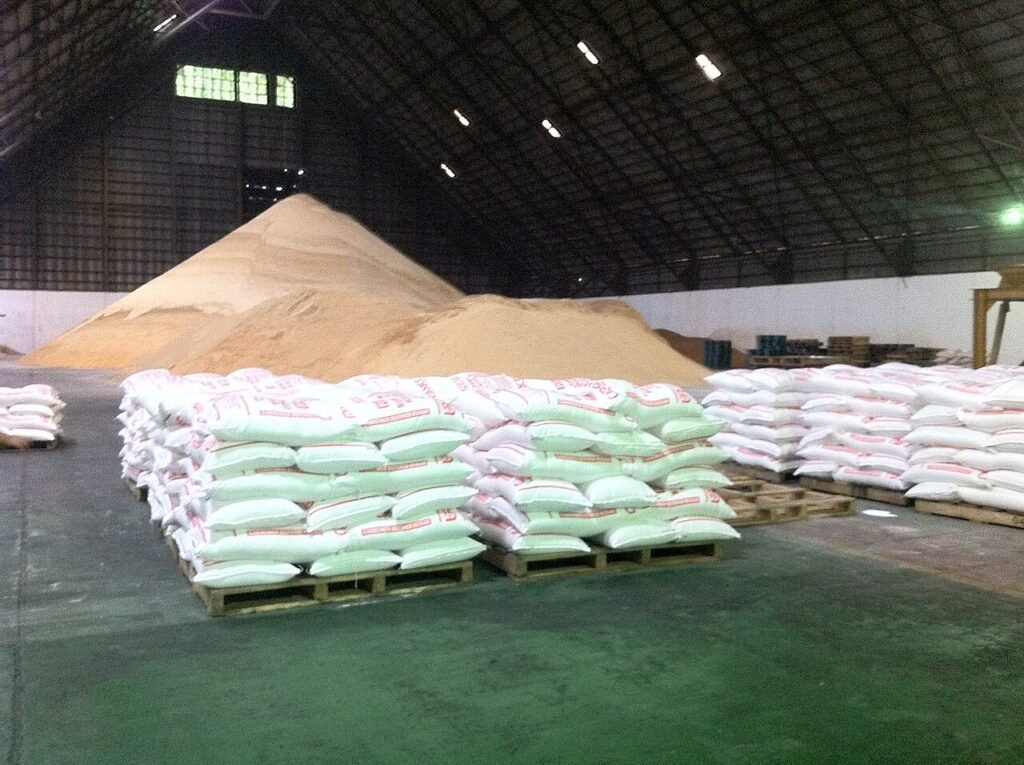
A worked example: sugar for dairy across three lines
A made-up plant to show the thinking. The numbers are only there to show the method.
Say a dairy uses 40 tonnes of sugar a month:
- Vanilla and fruit ice cream: 18 tonnes.
- Chocolate milk: 15 tonnes.
- Plain sweetened yogurt: 7 tonnes.
Option one is ICUMSA 45 for everything. One grade, one stock line, one set of paperwork.
Option two is ICUMSA 45 for the ice cream and yogurt, and ICUMSA 100 for the chocolate milk. If ICUMSA 100 comes in at, say, US$25 a tonne below ICUMSA 45 at your port, the chocolate milk line saves about US$375 a month. Against that, you have two stock lines, two sets of lot records and the risk that someone uses the wrong bag in the vanilla line.
For many dairies, the simplicity of one grade wins. For high-volume plants, splitting can make sense. Do the sum with your own prices.
What sugar for dairy really costs
The price on a quote is only one part of your cost. To compare offers, work out the delivered cost: the sugar price, ocean freight, insurance, import duty, port and clearing charges, and transport to your plant. In many countries duty on refined sugar is significant and can outweigh small price differences between suppliers.
Refined sugar prices follow the ICE White Sugar futures contract in London. Watching that market helps you decide whether to fix a price for several months, which many dairies prefer for budgeting, or buy shipment by shipment.
The wider picture matters too. In its May 2026 Sugar: World Markets and Trade report, the USDA forecasts world sugar production for 2026/27 at about 184.9 million tonnes and human consumption at nearly 180 million tonnes. Brazil, the largest exporter, is expected to produce slightly less sugar as more cane goes to ethanol. That’s not a shortage, but it means prices can move, and a dairy with fixed retail prices feels every move in its margins.
Our posts on sugar wholesale prices and sugar import prices break each cost line down. Our sugar HS code guide helps you check the right tariff line.
Sugar for dairy in hot climates
A lot of dairy growth is happening in warm countries, where ice cream, flavoured milk and condensed milk sell well. Heat and humidity add a few extra challenges.
On the voyage, containers heat up by day and cool at night, and moisture can condense and drip onto bags. Good loading helps: clean, dry containers, paper lining and desiccant bags. When the container arrives, unload it promptly. Sugar left in a hot port yard for weeks is where a lot of caking starts.
At the plant, keep the sugar store away from the processing hall’s heat and humidity. Some dairies in very humid climates air-condition or dehumidify their sugar store. It’s an extra cost, but less than throwing away caked sugar or stopping a dosing system that keeps blocking.
Checklist before you sign a contract for sugar for dairy
- Grade named, with maximum ICUMSA colour.
- Polarization, moisture and ash limits in writing.
- SO₂ limit stated, if your market has sulphite labelling rules.
- Microbiological results (yeast, mould, total plate count) for each lot, if your products need them.
- Packing agreed: bag type, liner, marking, pallets.
- Independent inspection at loading, with the certificate in the document set.
- Food safety certificates from the producing mill.
- Certificate of origin and any halal or kosher certificates your markets need.
- A delivery schedule that covers your peak season.
- Secure payment terms, such as a letter of credit for a first order.
Our page on the certificate of origin explains that document, and our guide to which certifications prove food grade covers the others.
7 tips for buying sugar for dairy
1. Use one well-specified grade as your baseline
For most dairies that’s ICUMSA 45. Build your recipes around it and only split grades where the savings are worth the complexity.
2. Ask for microbiology results, not just chemistry
Colour and polarization tell you about purity. Yeast and mould counts tell you whether the sugar is safe for your chilled lines.
3. Watch the sugar-water ratio in condensed milk
Consistent moisture and purity in the sugar make it easier to stay inside the narrow range that keeps condensed milk stable.
4. Add sugar to yogurt at the right stage
Keep high sugar levels out of the milk before fermentation where you can, and add the rest after, with the fruit or flavour.
5. Trial before switching suppliers
Run new sugar through your most sensitive product first, usually white ice cream or plain yogurt, and compare it side by side with your current sugar.
6. Plan for your peak season
Sea freight and clearance can take weeks. Have sugar for dairy in your store before the busy months start.
7. Check your supplier properly
Ask where the sugar comes from, which mill, which port and who inspects it. Use secure payment. Our guides on checking a sugar exporter before you pay and how to spot a real sugar trader list the warning signs.
Who buys sugar for dairy from us
- Ice cream manufacturers, from regional brands to large industrial plants.
- Condensed and evaporated milk factories.
- Yogurt and fermented milk producers, including drinking yogurt and lassi makers.
- Flavoured milk and dairy drink plants, including milk tea and coffee milk producers.
- Dairy dessert makers: puddings, custards, flans, milk jams.
- Distributors supplying smaller dairies. Our sugar distributor guide is written for them.
If you also run bakery or confectionery lines, our guides to bakery sugar, sugar for confectionery, industrial sugar and wholesale food sugar may help.
Where our sugar comes from and how it ships
We source refined white and raw brown cane sugar mainly from Brazil and Thailand, two of the world’s biggest sugar exporters according to the USDA. Our guides to Brazilian sugar, Thai sugar and Indian sugar explain what each origin offers.
Sugar for dairy ships in clean, dry 20 ft containers, lined and fitted with desiccant. Our post on what a sugar logistics supplier handles covers loading and arrival checks, and our shipping policy sets out our terms.
How to order sugar for dairy from us
- Tell us what you make. Products, monthly volume, current grade, port, bag size and any microbiological or certification needs. Use our contact form.
- Get a recommendation and quote. We’ll suggest a grade and quote FOB or CIF with the full spec sheet.
- Trial if needed. Run the sugar through your most demanding product first.
- Agree the contract. Grade, limits, packing, inspection, documents and payment in writing.
- Loading and inspection. Each lot is inspected at loading and the certificate goes with the documents.
- Regular supply. Set up a schedule around your production plan and peak season.
Our FAQ page answers common questions, and our guide to buying sugar in bulk covers the basics for first-time importers.
Frequently asked questions about sugar for dairy
What is the best sugar for dairy products?
For most dairy products, refined ICUMSA 45 white cane sugar. It’s very pure, dissolves cleanly and doesn’t tint white products. ICUMSA 100 can work for chocolate, coffee and caramel products.
How much sugar goes into ice cream?
Sweeteners usually make up 12 to 16% of the ice cream mix by weight, typically sucrose combined with glucose syrups, according to University of Guelph ice cream research.
Why does ice cream need sugar to be scoopable?
Sugar lowers the freezing point, so some water stays unfrozen at freezer temperatures. Without it, ice cream would be too hard to scoop.
How much sugar is in sweetened condensed milk?
Typically around 43.5 to 45% sucrose. The sugar concentration in the water phase is kept between 62.5% and 64.5% to prevent both microbial growth and crystallisation.
When should sugar be added to yogurt?
Adding more than about 8% sugar before fermentation can slow the culture, so many plants add most of the sugar after fermentation, often with the fruit.
Do dairies need microbiological testing on sugar?
Many do, especially for chilled products that aren’t sterilised after the sugar goes in. Ask your supplier for yeast, mould and total plate count results.
Can I use brown sugar in dairy products?
Yes, for flavour in caramel, butterscotch or brown sugar ice cream, often blended with white sugar.
What packing is best for a dairy plant?
50 kg bags for smaller plants, 1 MT jumbo bags for plants with a discharge station feeding a dissolver.
What is the minimum order for sugar for dairy?
Usually one 20 ft container, about 25 tonnes.
Do you ship sugar for dairy worldwide?
Yes, to ports across Asia, Africa, Europe, the Middle East, the Americas and Oceania. Ask for a quote.
Key takeaways
- Sugar for dairy is usually refined ICUMSA 45 white cane sugar, with ICUMSA 100 or 150 for dark or cooked products.
- In ice cream, sugar sweetens and keeps the product scoopable by lowering the freezing point.
- In condensed milk, sugar is the preservative, and the sugar-water ratio has to stay within a narrow range.
- In yogurt, too much sugar before fermentation slows the culture.
- Check colour, polarization, moisture, SO₂ and microbiology on every lot.
- Store sugar dry and steady, plan for peak season and compare suppliers on delivered cost.
Ready to buy? Request a sugar for dairy quote or see our full product range. Our guides to bulk white sugar and bulk brown sugar are also worth a look.
Sources and References
- Goff, H. D. Finding science in ice cream. University of Guelph, Department of Food Science
- Goff, H. D. Ice Cream Technology e-Book: Sweeteners. University of Guelph
- Tetra Pak Dairy Processing Handbook: Condensed milk
- Tetra Pak Dairy Processing Handbook: Fermented milk products
- Codex Alimentarius: Standard for Sweetened Condensed Milks (CXS 282-1971)
- Regulation (EU) No 1169/2011, Annex II: substances causing allergies or intolerances
- Mathlouthi and Rogé: Caking of white sugar and how to prevent it (Proc. S. Afr. Sug. Technol. Ass., 2004)
- ICE: White Sugar Futures contract specifications
- USDA Foreign Agricultural Service: Sugar: World Markets and Trade (May 2026)
Photo credits: Ilovemylife9 (CC BY-SA 4.0); W.carter (CC BY 4.0); Urci dream (CC BY-SA 4.0); Eurico Zimbres (CC BY-SA 2.5); GeoEvan (CC BY-SA 4.0); Cgoodwin (CC BY 3.0); Lauri Andler (CC BY-SA 3.0); Markadan (CC BY-SA 3.0); all via Wikimedia Commons.