Indian sugar is cane sugar produced in India, the world’s second-largest sugar producer after Brazil. In a normal year India exports several million tonnes, mostly white plantation sugar shipped to buyers in Africa, the Middle East and South Asia. 2026 has not been a normal year. India prohibited sugar exports from May 14 to September 30, 2026, then opened duty-free imports of 1 million tonnes of raw sugar as its own stocks fell, and as of mid-October no export quota had been set for the new 2026/27 season. If you rely on Indian sugar, you need a plan B. We supply refined white and raw brown cane sugar from Thailand and Brazil as direct replacements and ship worldwide.
This guide is for importers, distributors and food manufacturers who usually buy Indian sugar, or are wondering whether to. It explains how India’s sugar industry works, the grades India exports, what has happened to Indian exports in 2026 and what may happen next, and how to replace Indian sugar grade for grade from other origins. News and policy facts are dated and linked, because they are changing quickly. Where we give our own view from the trade, we say so.
Quick answer: can you buy Indian sugar right now?
Not easily. Here is the short version, as of late October 2026:
- Exports were prohibited from May 14 to September 30, 2026, covering raw, white and refined sugar, with narrow exceptions such as EU and US quota shipments and government-to-government deals.
- India is importing raw sugar duty-free to cool high domestic prices and rebuild stocks.
- No 2026/27 export quota had been announced by mid-October. The government has said domestic needs come first, ethanol second and exports last.
- Analysts expect any new exports to come in the second half of 2027 at the earliest, and in uncertain volumes.
That means buyers who normally fill containers with Indian sugar should be lining up other origins now, not waiting for New Delhi. The rest of this guide explains why, and how.
Replacement grades we can ship now
Every grade below is available from our Thai and Brazilian supply and can replace typical Indian white sugar in most uses. These are the short specs; each product page has the full sheet.
- ICUMSA 150 white sugar: 150 IU max, polarization 99.80% min, SO₂ 20 mg/kg max. The closest everyday match for Indian plantation white sugar.
- Cane sugar ICUMSA 100: 100 IU max, polarity 99.8% min, moisture 0.04% max.
- Refined ICUMSA 45 sugar: 45 IU max, polarity 99.80% min, moisture 0.04% max, ash 0.04% max.
- Crystal white sugar: sparkling white, polarity 99.8% min, fine to medium crystals.
- Refined sugar ICUMSA 35: 35 IU max, polarization 99.80% min, for clear drinks and pharma.
- Raw brown cane sugar Grade E: ICUMSA 600 to 1200, polarization 96° to 98°.
Packing: 50 kg PP bags with liner or 1 MT jumbo bags. Inspection: SGS or equivalent at loading. Shipping: worldwide by sea.
Prices are quoted on request because they follow the world sugar market daily. Tell us which Indian grade you used to buy and we will suggest the nearest match.
How the Indian sugar industry works
India produces a huge amount of sugar, but it also eats most of it. The USDA’s May 2026 report puts India’s domestic consumption at about 31 million tonnes in 2026/27, the largest of any country, and describes an industry that is “highly regulated” and “prioritizes domestic stability over global market trends”.
Several features make Indian sugar different from Brazilian or Thai sugar:
- Guaranteed cane prices. The USDA explains that growers are paid at least a federal Fair and Remunerative Price, and mills must pay within two weeks of delivery.
- Controlled mill sales. Mills cannot sell below a government minimum price, and the government sets how much each mill can sell at home.
- Assigned cane areas. Each mill buys all cane from a defined area, because cut cane loses sugar quickly.
- Export quotas. Exports are adjusted to protect domestic supply. In a short year, they can disappear entirely.
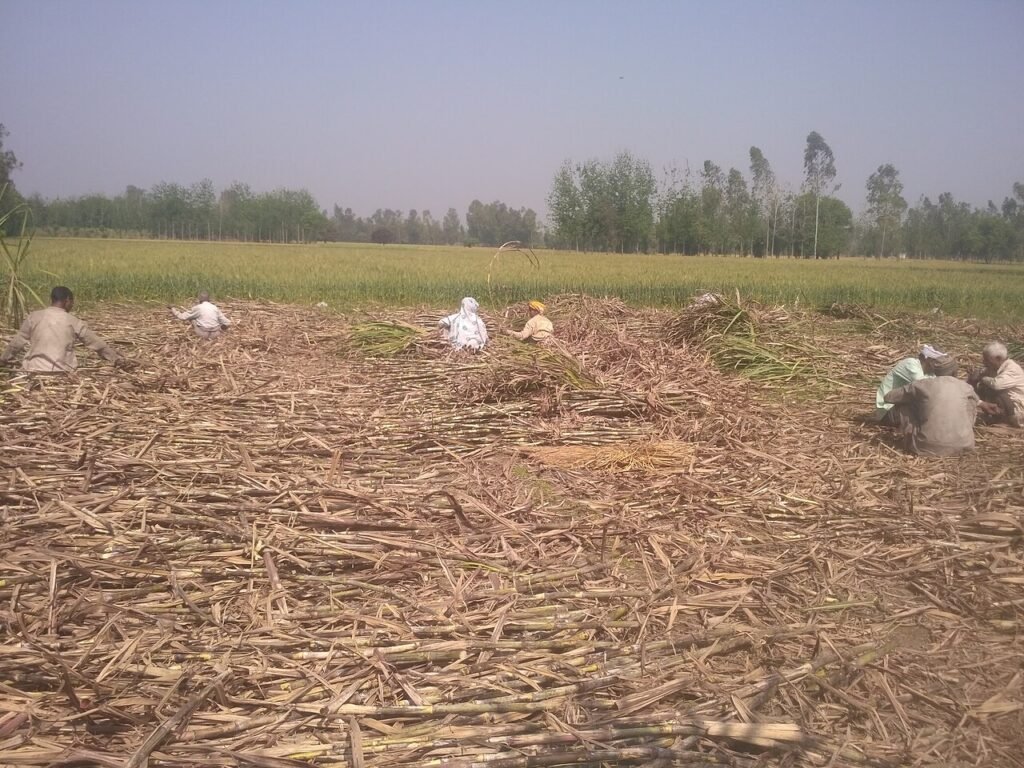
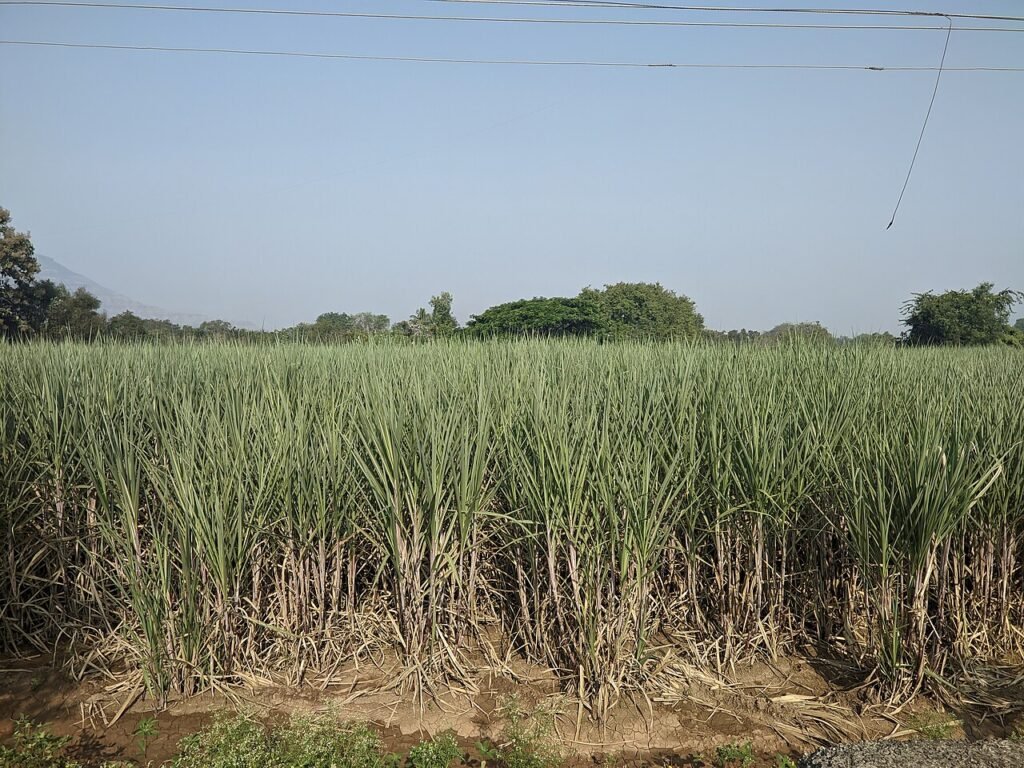
The USDA names Uttar Pradesh, Maharashtra and Karnataka as the leading cane states, together accounting for nearly 60% of sugar output. The crushing season runs roughly from October to April, and India’s sugar year runs October to September.
Ethanol now competes for Indian sugar
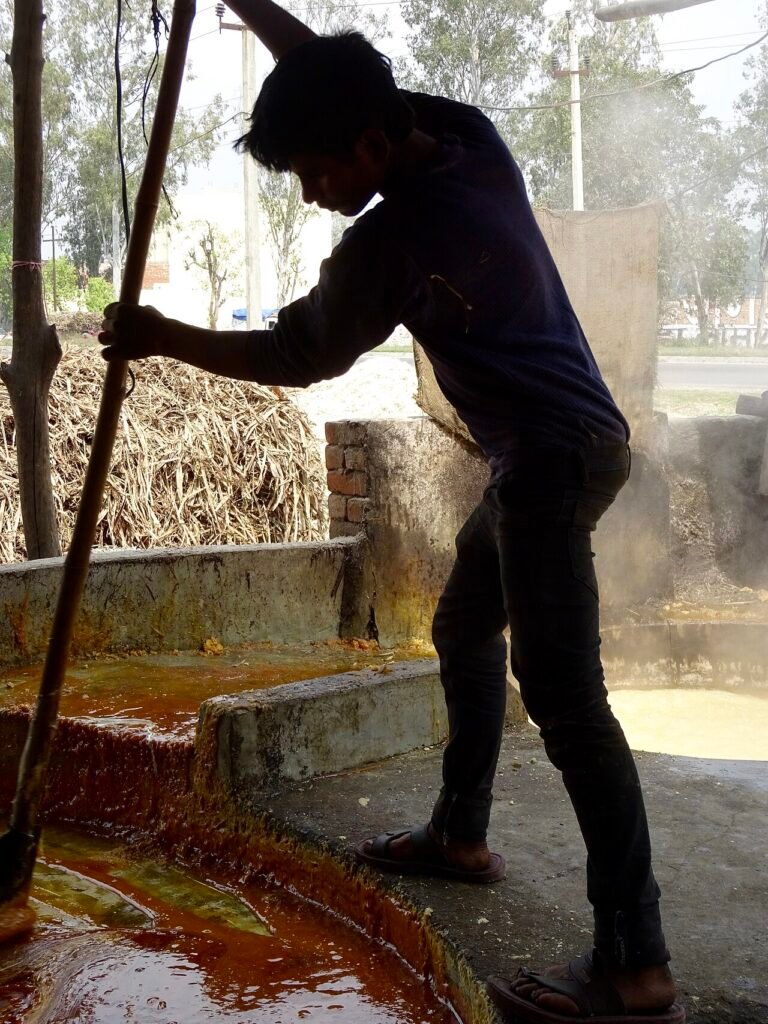
India has been pushing ethanol blending in petrol, and mills can turn cane juice or molasses into ethanol instead of sugar. In June 2026 India’s Joint Secretary for sugar told the trade publication ChiniMandi that “the topmost priority is meeting domestic consumption, the second is ethanol production, and only thereafter comes exports”, and that nearly 3 million tonnes of sugar were expected to be diverted to ethanol in 2025/26. That ranking explains a lot about why Indian sugar exports are so unpredictable.
What happened to Indian sugar exports in 2026
The story of 2026 is a crop that came in smaller than expected, meeting rising demand for ethanol. Here is the timeline, with sources.
A smaller crop than forecast
Early forecasts for the 2025/26 season were high. By May 2026, the USDA had already cut its estimate for India’s 2025/26 production by 5.3 million tonnes to 30.0 million, blaming excessive rain that disrupted crop development. Industry estimates since then have been lower again once ethanol diversion is taken out. Before the freeze, the government had allowed some exports; ChiniMandi reported that about 820,000 tonnes were shipped before the May ban.
May 14: exports prohibited
On May 14, 2026, India moved sugar exports from “restricted” to “prohibited”. According to The Tribune’s report of the notification, the ban covered raw, white and refined sugar until September 30, 2026, with exceptions for EU and US quota shipments, cargo already loading, and government-to-government sales for other countries’ food security. If the ban was not extended, the status was to revert to “restricted”, which still means exports need permission.
August: India starts importing
By August, prices had risen and stocks had fallen. Crisil Intelligence reported that the government allowed duty-free imports of 1 million tonnes of raw sugar under a tariff rate quota until October 31, 2026, and estimated closing stock for the 2025/26 season at 3.9 million tonnes, 25% below the previous season and 40% below the five-year average. The government also capped stocks for traders and bulk users. A later correction gave importers two months from each Bill of Entry to refine and sell the imported raw sugar, because shipments from Brazil can take 40 to 45 days to reach India.
For a country that usually exports, that is a big shift. Crisil described it as India opening sugar imports for the first time in about a decade.
October: no new-season export quota yet
India’s new sugar year started on October 1. The only export allowance we have seen confirmed is the small quota for the European Union: a Bizsolindia summary of the DGFT notice reports 5,841 tonnes for October 2026 to September 2027. That is a tiny, preferential volume, not general supply.
On the bigger question, analyst commentary published by CZ on October 14 expects Indian production of around 28.5 million tonnes in 2026/27, roughly equal to consumption, and says the industry expects exports to be allowed in the second half of 2027, with estimates ranging from a few hundred thousand tonnes to 3 million tonnes. The same note flags dry weather in parts of Maharashtra and Karnataka. These are forecasts, not decisions, and they could change.
What the numbers mean for buyers
| Date (2026) | Event | Effect on Indian sugar supply |
|---|---|---|
| May | USDA cuts 2025/26 crop to 30.0 million t | Less sugar to spare |
| May 14 | Exports prohibited to September 30 | General exports stop |
| August 20 | Duty-free import quota of 1 million t raw sugar | India becomes a buyer |
| October | New season starts; small EU quota only | No general export allocation |
| 2027 (forecast) | Possible exports in second half | Uncertain volume and timing |
Our view: plan as if Indian sugar will not be available for general export until at least mid-2027. If India does open exports earlier, you can add it back. If you plan on Indian sugar and it does not come, your shelves or your production line pay for it.
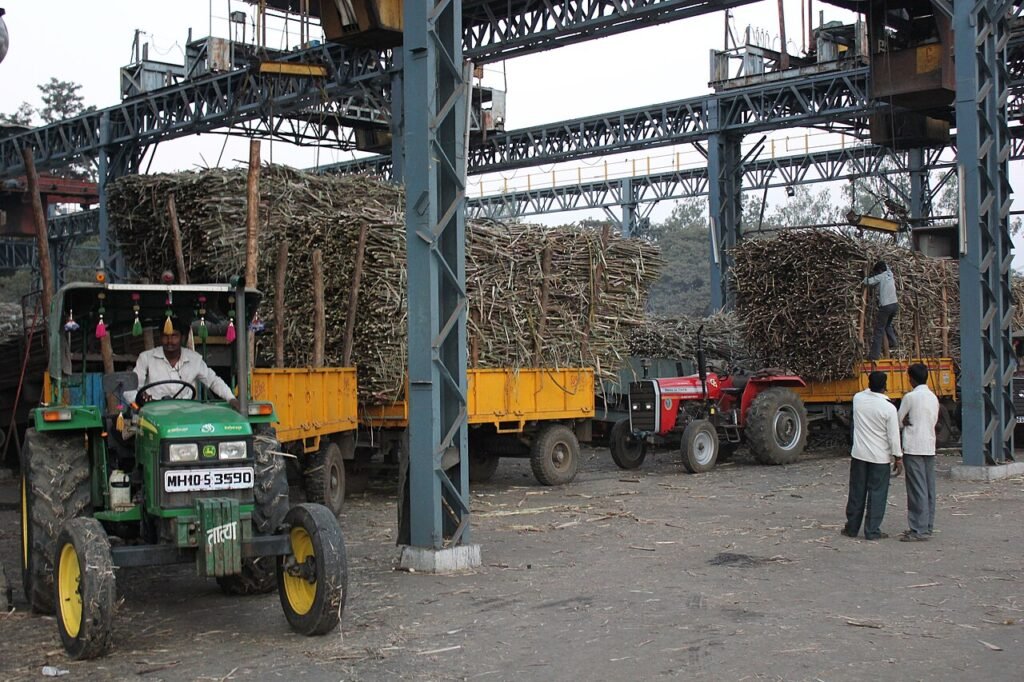
Indian sugar grades explained
India grades its plantation white sugar differently from the ICUMSA numbers used in most export contracts. Knowing the Indian system helps you find a replacement.
The Bureau of Indian Standards grading standard IS 498 uses a letter for grain size and a number for colour. The letters are L (large), M (medium), S (small) and SS (super small). The number comes from visual comparison with official sealed colour samples, and a higher number means whiter sugar. So S-30 is small-grain sugar matching colour standard 30, and M-30 is medium-grain sugar of the same colour.
| Grade letter | Grain size (IS sieve) |
|---|---|
| L (large) | Passes 2.36 mm, retained on 1.70 mm |
| M (medium) | Passes 1.70 mm, retained on 1.18 mm |
| S (small) | Passes 1.18 mm, retained on 0.60 mm |
| SS (super small) | Passes 0.60 mm, retained on 0.212 mm |
The same standard gives a minimum polarisation of 99.5% for plantation white sugar and maximum loss on drying of 0.10%. In export trade, Indian S-30 is commonly described as a plantation white sugar of roughly ICUMSA 100 to 150 colour, but colour varies by mill and season, so always check the ICUMSA figure on the certificate rather than assuming. Our ICUMSA scale guide explains the export colour scale.
Two practical points for anyone used to buying Indian sugar:
- Grain size matters. Indian S-grade has a medium-small crystal. If your process, packing line or customers are used to S-30, ask for a similar granulation from your replacement origin.
- Plantation white is not refined. Indian plantation white sugar is made directly at the mill. It is usually whiter than raw sugar but not as white as refined ICUMSA 45.
Who usually buys Indian sugar
Indian sugar mostly goes to nearby markets that can reach Indian ports quickly. In its May 2026 report, the USDA named Sudan, Libya and Somalia among the top destinations for Indian sugar exports. In good years Indian white sugar also travels to East Africa, the Gulf, Bangladesh, Sri Lanka and other parts of South and South-East Asia.
Those are exactly the buyers hit hardest when Indian sugar disappears from the export market. A distributor in East Africa or a repacker in the Gulf who has built a business around Indian S-30 now has to find the same kind of sugar somewhere else, often at short notice.

How to replace Indian sugar, grade by grade
The good news is that Indian sugar is not a unique product. Plantation white sugar of similar colour and grain is made or matched elsewhere, and refined grades give you a step up in quality if you want it. This is the mapping we use when customers ask us to replace Indian sugar.
| If you used to buy | Closest replacement | Upgrade option |
|---|---|---|
| Indian S-30 / M-30 for repacking | ICUMSA 150 white sugar | ICUMSA 45 or crystal white |
| Indian white sugar for bakery and food processing | ICUMSA 100 or ICUMSA 150 | ICUMSA 45 |
| Indian white sugar for soft drinks | ICUMSA 45 | ICUMSA 35 |
| Indian raw sugar for refining | Raw sugar from Brazil or Thailand (see our VHP sugar guide) | Refined white, skipping refining |
| Indian brown or khandsari-style sugar | Raw brown cane sugar | None needed |
When you switch from Indian sugar, run a quick side-by-side check: colour in solution, grain size, moisture and how it behaves in your process or packing line. Most buyers find the switch straightforward. The main surprise is usually crystal size, so put the granulation you want in the contract.
Thai sugar as a replacement for Indian sugar
For buyers in South-East Asia, South Asia and East Africa, Thailand is often the most natural replacement for Indian sugar. It is a large exporter with white and refined sugar, short voyages to much of Asia, and halal certification as standard. The USDA’s April 2026 Thailand report forecasts Thai exports of 6.0 million tonnes in 2026/27, with refined exports expected to exceed raw, and notes that Thai stocks are high. Our Thai sugar guide covers the details.
Brazilian sugar as a replacement for Indian sugar
Brazil is the world’s biggest sugar exporter, with a forecast 33.6 million tonnes of exports in 2026/27. It is the obvious source for large, regular volumes, and for buyers in Africa, the Middle East and Europe it can land competitively. Brazil is also where India itself has been buying raw sugar for its import quota. Our Brazilian sugar guide explains grades, ports and pricing.

Indian sugar vs Thai and Brazilian sugar
| India | Thailand | Brazil | |
|---|---|---|---|
| Typical export form | Plantation white (S-30, M-30) | Raw, white and refined | Mostly raw VHP, plus white |
| Export availability, late 2026 | General exports not allowed | Available | Available |
| Main buyers | East Africa, Gulf, South Asia | South-East and East Asia | Worldwide |
| Biggest risk | Policy and ethanol diversion | Rain-fed crop, low cane prices | Mills switching to ethanol |
Our honest view: when Indian sugar is available, it is often competitive for nearby markets because of short freight. When it is not, Thai and Brazilian sugar are the practical answers, and they are not going anywhere.
How the Indian sugar situation affects world prices
India matters to world sugar prices even when it is not exporting, because what it does not ship has to come from someone else. When India stops exporting, buyers in its usual markets turn to Brazil and Thailand, adding demand there. When India starts importing, it adds more. Both tend to support world prices, particularly for white sugar.
World white sugar is priced off the London white sugar futures contract, quoted in US dollars per tonne; raw sugar follows ICE Sugar No. 11 in New York. Our guide to sugar pricing factors shows how a quote is built, and our page on sugar export prices compares origins.
Two practical effects for buyers who used to rely on Indian sugar:
- Freight may rise. Replacing a short Indian voyage with a longer one from Brazil adds freight. Thai sugar often narrows that gap for Asian and East African buyers.
- Premiums for white sugar can firm. With one of the main white sugar exporters out, refined and white sugar premiums can rise. Booking a few months ahead usually helps.
Where Indian sugar fits in the world market
India’s size is why its policy swings matter so much. The USDA’s May 2026 report shows India as the second-largest producer behind Brazil and the largest consumer. Note that these are May forecasts; Indian industry estimates made later in 2026 are lower.
| USDA May 2026 forecast, 2026/27 | India | Brazil | Thailand |
|---|---|---|---|
| Production | 33.6 million t | 42.5 million t | 9.5 million t |
| Human consumption | 31.0 million t | 9.0 million t | 3.3 million t |
| Exports | 3.6 million t | 33.6 million t | 6.0 million t |
The table makes one thing clear: India produces almost exactly what it eats. A swing of a few million tonnes in the crop, or in ethanol diversion, decides whether India has sugar to export or needs to import. Brazil and Thailand, by contrast, export most of what they make. That is why we describe Indian sugar as an opportunistic origin and Thai and Brazilian sugar as dependable ones. Our articles on the international sugar trade and choosing a global sugar exporter look at the wider picture.
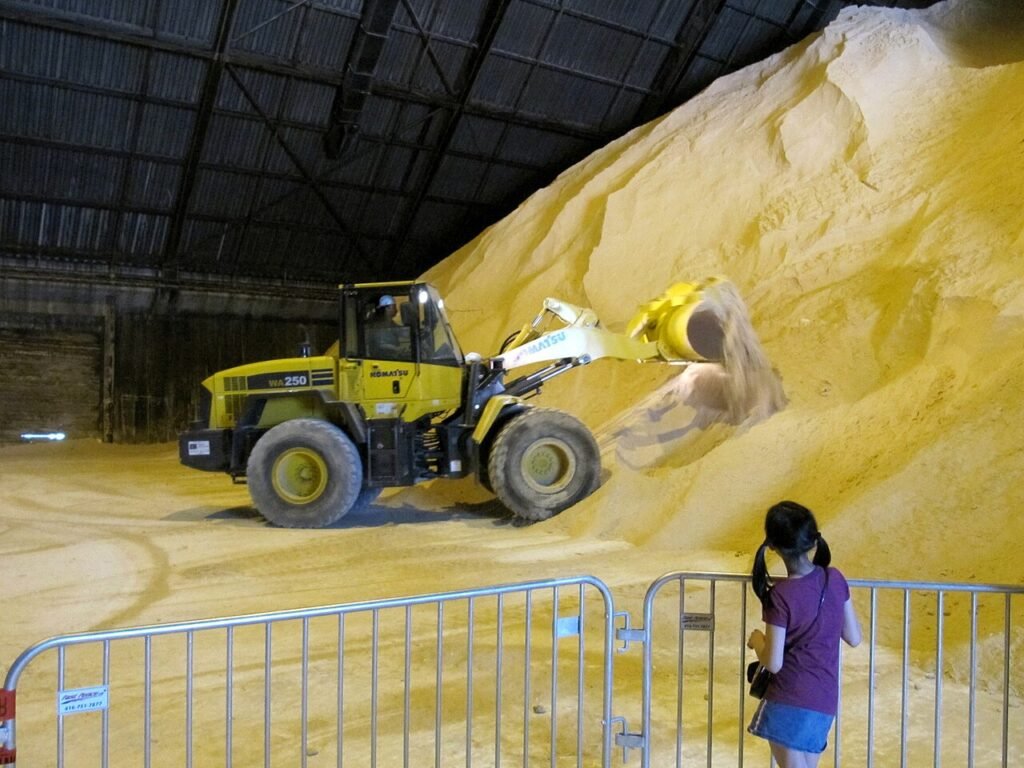
For buyers comparing grades and prices across origins, our pages on ICUMSA 150 sugar, ICUMSA 100 sugar, bulk white sugar, wholesale sugar and sugar wholesale prices fill in the details, and the specifications and standards guide explains each contract number.
Working out the landed cost of a replacement
When buyers compare their old Indian sugar price with a new Thai or Brazilian offer, the first number they see is often higher. Before deciding, break the cost into its parts, because the picture is usually closer than it looks.
- FOB price. The price of the sugar loaded on the ship at origin. Compare like grades: Indian S-30 against ICUMSA 150, not against ICUMSA 45.
- Freight. Usually the biggest difference. Short voyages from India were cheap. Thai sugar often narrows the gap for Asia and East Africa; Brazil adds more for those routes but can be competitive for West Africa, the Middle East and Europe.
- Insurance and port charges. Small per tonne, but they add up on a programme.
- Duty. Changing origin can change your duty rate if a trade agreement applied to Indian sugar. Ask your broker.
- Stock-holding cost. Longer voyages mean holding more buffer stock, which ties up cash and warehouse space.
Add these up for each origin on the same basis and you have a fair comparison. Our guides to sugar import prices and pricing factors walk through each line, and we are happy to quote both Thai and Brazilian options side by side so you can see the difference yourself.
Beware of “Indian sugar” offers right now
Whenever a big origin closes, fake offers multiply. Since India’s export ban, we have seen plenty of messages offering large monthly volumes of Indian sugar, often described as “Indian ICUMSA 45” at prices well below the market. Treat these with real caution.
- Check the policy first. General exports of Indian sugar were prohibited from May 14 to September 30, 2026, and no new-season quota had been announced by mid-October. A seller offering unlimited Indian sugar for prompt shipment needs to explain how.
- Ask about the exemption. The ban’s exceptions, as reported by The Tribune, were narrow: EU and US quota shipments, cargo already loading, and government-to-government deals. A private trader rarely fits any of these.
- Watch the grade. India mainly exports plantation white sugar. Offers of large volumes of “Indian ICUMSA 45 refined” should prompt questions about which refinery produced it.
- Never pay upfront fees. Requests for money for documents, registration or “proof of product” before a contract are a classic warning sign.
- Insist on independent inspection. A genuine seller will accept SGS or another independent inspector at loading.
Our guide on how to spot a real sugar trader and verify them lists the checks we would run before paying anyone, including us. We are open with buyers that we are not currently shipping Indian sugar, and we will tell you when that changes.

A supply plan for buyers who relied on Indian sugar
If Indian sugar was a large part of your supply, here is the plan we would suggest. It is our own approach, not an official recommendation, and you should adjust it for your market.
- Work out what you actually need. List the Indian sugar grades you bought last year, by month and by use: repacking, bakery, drinks, food processing.
- Map each one to a replacement. Use the table above. For most Indian S-30 buyers, ICUMSA 150 or ICUMSA 100 is the starting point.
- Get samples now. Test the replacement in your real process or show it to your retail customers before the old stock runs out.
- Pick one or two origins. Thai sugar for shorter voyages into Asia and East Africa, Brazilian sugar for volume and for Africa, the Middle East and Europe.
- Hold more buffer stock. Longer voyages mean longer gaps. Four to six weeks of stock covers most routes and port delays.
- Contract a monthly programme. A regular schedule is easier to price well and less exposed to sudden shortages.
- Keep an eye on India. If India opens exports in 2027, you can add Indian sugar back as one more option rather than your only one.
For the contract side, see our sugar contract negotiation tips and our payment terms guide.

Paperwork when switching from Indian sugar
Changing origin changes some of your import paperwork. The certificate of origin will now say Thailand or Brazil instead of India, which can affect duty rates under trade agreements, so check with your customs broker before the first shipment. Each of our shipments comes with:
- Commercial invoice and packing list
- Bill of lading
- Certificate of origin (see our certificate of origin guide)
- Quality and inspection certificate from SGS or an equivalent firm (see what an SGS sugar certificate shows)
The tariff codes do not change with origin: refined sugar is HS 1701.99 and raw cane sugar HS 1701.14. Our sugar HS code guide has the detail. If your import permit names India as the origin, you may need to amend it.
Indian sugar vs refined sugar: do you want to upgrade?
A shortage is also a chance to rethink. Many buyers stuck to Indian plantation white sugar mainly because it was nearby and cheap. If you are switching origin anyway, it is worth asking whether a refined grade would sell better or work better in your plant.
- Retail repackers often find that brighter ICUMSA 45 or crystal white sugar sells better on the shelf than plantation white.
- Drinks makers get clearer syrups and fewer quality complaints from ICUMSA 45 or 35.
- Bakeries and food processors usually do not need the upgrade; ICUMSA 150 does the job for less.
Our guides to industrial sugar and bakery sugar go deeper into which grade suits which factory.

Storing replacement sugar after a longer voyage
Sugar coming from Brazil spends longer at sea than sugar from India, often crossing humid tropical waters. Storage at your end matters more as a result. Keep bags on pallets in a cool, dry and stable warehouse, away from walls and strong smells. Keep bags closed, use stock first in, first out, and let cold bags warm up before opening so they do not sweat. Refined white sugar stored this way keeps for around two years.
When the container is opened, check bags from the front and back. Soft lumps that break apart are normal after a long voyage. Wet bags, hard blocks or odd smells should be photographed and reported to us and the carrier within 48 hours, as our shipping policy sets out.

What to watch if you want Indian sugar back
If Indian sugar suits your market and you hope to buy it again, these are the signals worth following through the 2026/27 season. None of them guarantees an export decision, but together they show which way it is likely to go.
- Crop estimates. The government has tied export decisions to a realistic production estimate. Industry estimates from the sugar mills’ associations through the crushing season, especially in December to February, give the first real numbers.
- Rainfall in Maharashtra and Karnataka. The CZ note of October 14 flagged rainfall well below normal in parts of central Maharashtra and North Karnataka. Dry weather hurts this crop and the next one.
- Ethanol policy. Any limit on making ethanol from cane juice or B-heavy molasses leaves more sugar in the system and makes exports more likely. More diversion means less Indian sugar to spare.
- Domestic prices and stocks. While domestic prices stay high and stocks low, an export quota is politically hard.
- Government notifications. Export policy changes are published by the commerce ministry and the Directorate General of Foreign Trade, and reported quickly by the trade press.
We follow all of these closely. If Indian sugar becomes available for export again, we will say so on our product pages and to customers who have asked us to keep them informed.
Three common situations, and what we would do
These are typical situations buyers describe to us, written as examples rather than case studies of particular customers.
A repacker that sold Indian S-30 in 1 kg packs
The shelf matters most here. We would sample ICUMSA 150 for a like-for-like replacement and crystal white sugar as an upgrade, put both on the packing line, and let the repacker’s own retail customers choose. Granulation should be close to the Indian sugar they are used to, so the packs look and pour the same.

A biscuit or bakery plant that used Indian white sugar
Colour hardly matters once sugar is baked. We would suggest ICUMSA 100 or 150, a trial batch, and a monthly programme with four to six weeks of buffer stock to cover the longer voyage.
A soft drink bottler that bought Indian sugar on price
Here the switch is a chance to improve quality. We would suggest ICUMSA 45, or ICUMSA 35 for very clear drinks, with a syrup test on each sample lot. Our guide for beverage industry buyers lists the tests that matter.
In each case the aim is the same: replace Indian sugar without the end customer noticing anything except, perhaps, better quality.
How to order a replacement for Indian sugar from us
We supply refined white and raw brown cane sugar from our bases in Thailand and Brazil to importers, distributors, repackers and manufacturers worldwide. Replacing Indian sugar with us works like this:
- Tell us what you used to buy. The Indian sugar grade (for example S-30 or M-30), your monthly tonnage, packing, destination port and Incoterm.
- Get a matched offer and samples. We suggest the nearest grade, courier samples and send a delivered price, then a pro forma invoice and sales contract with the specification attached.
- Payment. By bank transfer, as set out in our billing policy.
- Loading and inspection. Orders are usually processed within two to four business days of payment clearing, with SGS or equivalent inspection at loading.
- Shipping. We email the bill of lading and tracking details. Sea freight typically takes three to six weeks, depending on route and port.
Orders normally start at one 20 ft container of about 25 MT. You can see every grade on our products page, read more about Global Sugar Supplies, or go straight to our contact page for a quote. If you are buying in volume, our bulk sugar buying guide and container shipping guide are worth a read. Our refund policy explains what happens if a delivery has a genuine problem.


Indian sugar quick reference
- World ranking: second-largest producer, largest consumer.
- Main states: Uttar Pradesh, Maharashtra, Karnataka (nearly 60% of output).
- Sugar year: October to September; crushing roughly October to April.
- Typical export grade: plantation white sugar, graded S-30, M-30 and similar.
- 2026 status: exports prohibited May 14 to September 30; duty-free raw sugar imports allowed from August.
- 2026/27 outlook: no general export quota by mid-October; exports possible in the second half of 2027 (analyst estimate).
- Replacements: ICUMSA 150 or 100 for S-30 buyers; ICUMSA 45 or 35 for drinks; Thai or Brazilian origin.
Frequently asked questions about Indian sugar
Is Indian sugar available for export now?
Not for general buyers. India prohibited sugar exports from May 14 to September 30, 2026, and no export quota for the 2026/27 season had been announced by mid-October 2026. Only small preferential quotas, such as the EU quota, continue.
Why did India stop exporting sugar?
A smaller crop than forecast, rising domestic prices and sugar diverted to ethanol left less to spare. The government puts domestic consumption first, ethanol second and exports last.
Is India importing sugar?
Yes. In August 2026 India allowed duty-free imports of 1 million tonnes of raw sugar under a tariff rate quota, with imports to be completed by October 31, 2026.
When will Indian sugar exports restart?
Nobody knows for sure. Analyst commentary in October 2026 suggested exports might be allowed in the second half of 2027, in volumes anywhere from a few hundred thousand tonnes to 3 million tonnes.
What does S-30 mean for Indian sugar?
Under the Indian standard IS 498, the letter is grain size (S means small) and the number is colour, judged against official samples; higher numbers are whiter.
What is the best replacement for Indian S-30 sugar?
For most repacking and food uses, ICUMSA 150 or ICUMSA 100 white sugar from Thailand or Brazil. For a whiter retail product, ICUMSA 45 or crystal white sugar.
Is Thai sugar a good substitute for Indian sugar?
For buyers in Asia and East Africa, often yes: short voyages, white and refined grades, standard halal certification and high Thai stocks.
Is Brazilian sugar a good substitute for Indian sugar?
Yes, especially for large, regular volumes and for buyers in Africa, the Middle East and Europe. Freight is longer, so plan more buffer stock.
Will prices rise without Indian sugar?
India’s absence from exports, and its imports, tend to support world prices, especially for white sugar. Booking a few months ahead usually helps.
Are offers of Indian ICUMSA 45 genuine?
Be very careful. With general exports blocked, large offers of Indian sugar for prompt shipment need a clear explanation. Verify the seller and insist on independent inspection.
Do you sell Indian sugar?
India is one of our possible origins, but we are not shipping Indian sugar while exports are restricted. We supply equivalent grades from Thailand and Brazil and will tell customers if Indian supply reopens.
Do you ship worldwide?
Yes, to major ports in Asia, Africa, Europe, the Middle East, the Americas and Oceania.
Key takeaways
- Indian sugar exports were prohibited from May 14 to September 30, 2026, and no 2026/27 quota had been set by mid-October.
- India has turned importer for now, allowing 1 million tonnes of raw sugar in duty-free.
- Indian plantation white sugar is graded by grain size and colour (S-30, M-30); check the ICUMSA figure when replacing it.
- ICUMSA 150 or 100 from Thailand or Brazil replaces Indian S-30 for most uses; ICUMSA 45 or 35 suits drinks and premium retail.
- Plan as if Indian sugar will not return before mid-2027, hold more buffer stock and verify any seller offering it now.
Sources and References
- USDA Foreign Agricultural Service: Sugar: World Markets and Trade (May 2026)
- The Tribune: India bans sugar exports with immediate effect until September 2026
- Crisil Intelligence: India opens sugar imports after a decade as stocks fall, prices surge (August 2026)
- Angel One: Government changes sugar import processing deadline (August 2026)
- ChiniMandi: Interview with India’s Joint Secretary (Sugar) on 2026-27 exports (June 2026)
- CZ: India, sugar vs ethanol (October 14, 2026)
- Bizsolindia: India’s EU sugar quota for 2026-27
- Bureau of Indian Standards: IS 498, grading for plantation white sugar
- USDA Foreign Agricultural Service: Thailand Sugar Annual (April 2026)
- ICE: White Sugar Futures contract specifications
Photo credits: Ravityagijiffy (CC BY-SA 4.0); Pratishkhedekar (CC BY-SA 4.0); Shakher59 (CC BY-SA 3.0); Janoux (CC BY-SA 4.0); Tobias Erbsland (CC BY-SA 4.0); all via Wikimedia Commons.