


If you’ve spent any time trying to source sugar for your business, you already know the international sugar trade doesn’t run like a normal retail supply chain. There’s no “add to cart” button. There’s no fixed price sitting on a shelf. Prices move with the weather in Brazil, with fuel costs, with currency swings, and with what’s happening on the ICE futures market on any given Tuesday. If you’re new to buying sugar in bulk, or if you’ve been burned before by a supplier who couldn’t deliver what they promised, this is the guide I wish someone had handed me the first time I got involved in commodity sourcing.
At Novamira, we work with importers, distributors, manufacturers, and retailers across the world who need consistent, verified sugar supply — not just a one-off shipment, but a relationship they can build a business around. This article walks through how the trade actually works, what specifications matter, how pricing gets set, and what separates a supplier you can trust from one that leaves you holding an empty warehouse.

Why the Sugar Trade Looks the Way It Does
Sugar is grown in dozens of countries, but a handful of regions produce the volumes that move through global trade: Brazil, India, Thailand, and parts of Central America and Southern Africa are the names you’ll hear most. Each region has its own harvest calendar, its own mix of cane and beet production, and its own domestic consumption that eats into what’s actually available for export. That’s the first thing a lot of first-time buyers miss — a country can be a massive sugar producer and still have very little left over to sell once its own population and food industry take their share.
This is why the international sugar trade behaves less like a simple export business and more like an ongoing balancing act between harvest yields, domestic demand, currency values, and shipping capacity. A drought in one growing region can tighten supply worldwide within a single season. A strong harvest somewhere else can bring prices back down just as fast. Buyers who treat sugar sourcing as a “set it and forget it” purchase tend to get caught out. The ones who do well treat it the way they’d treat any other commodity position — they watch the market, they build relationships with more than one reliable exporter, and they lock in terms early when conditions are favorable.
The Two Products Everyone Actually Means When They Say “Sugar”
When people talk about buying sugar internationally, they’re almost always talking about one of two things: raw sugar or refined white sugar. It sounds simple, but the differences matter a lot once you’re the one placing a purchase order.
Raw sugar is the semi-processed product straight out of the mill — brownish, still carrying molasses, and destined to be refined further either by the buyer or by a refinery down the supply chain. It’s priced and traded differently than white sugar, and it’s what a lot of large-scale food manufacturers actually want, because they run their own refining process and don’t want to pay for refinement they’re going to do anyway.
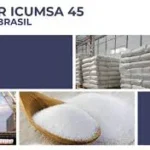
Refined white sugar is what most people picture — the fine, white crystals used in food production, beverages, bakeries, and retail packaging. This is graded by colour using something called the ICUMSA scale, and it’s worth understanding because it comes up in every serious sugar negotiation.
- ICUMSA 45 — this is the premium, top-tier white sugar. Very low colour value, very clean crystal, the standard most buyers request when they need the highest visual and quality grade for food and beverage production.
- ICUMSA 100 — a step below 45 in whiteness, still a solid refined sugar used widely across food manufacturing and general commercial use.
- ICUMSA 150 — slightly less refined again, commonly used in industrial and bulk food applications where colour grade is less critical than price.
- Raw / brown sugar (ICUMSA 600–1200) — unrefined or semi-refined, carrying natural molasses colour and flavour, used both directly and as refinery feedstock.
Buyers who don’t specify their required ICUMSA grade up front are the ones who end up disputing shipments later. It’s the single most important number in the whole transaction, right alongside quantity and price.
The Specifications That Actually Matter on a Contract
Beyond the ICUMSA colour grade, a proper sugar supply contract should spell out a handful of technical specifications. If a supplier can’t give you these numbers without hesitation, that’s a warning sign.
Polarization — this measures sucrose content, and for refined white sugar you’re generally looking at 99.8% minimum. It’s the number that tells you how pure the sugar actually is.
Moisture content — should sit at 0.04% max for refined sugar. Too much moisture and you get clumping, spoilage risk, and weight disputes at the port.
Sulphur dioxide (SO2) — typically capped around 20 ppm max for refined white sugar, relevant for both food safety compliance and taste.
Ash content — usually 0.04% max, another purity marker that affects both quality and shelf stability.
Granulation — crystal size matters more than people expect. A buyer running an automated packaging or beverage line needs a consistent crystal size, usually specified in a range like 0.7mm to 1.2mm depending on end use.
Colour (ICUMSA units) — as covered above, this is the headline spec buyers ask for first.
A legitimate exporter will hand you a full specification sheet, ideally alongside a Certificate of Analysis (COA) for the specific batch you’re buying, plus a phytosanitary certificate and a certificate of origin. If a supplier is vague on any of this, or keeps deflecting the question, walk away. It’s not worth the risk.
Packaging and Shipping — the Part Everyone Underestimates
How your sugar arrives matters almost as much as what’s inside the bag. Standard export packaging includes:
- 50kg PP (polypropylene) bags — the most common format for retail and mid-size commercial buyers, easy to handle, palletized for container loading.
- 25kg bags — used for smaller distribution or retail-adjacent buyers.
- 1,000kg to 1,200kg jumbo bags (bulk bags) — for buyers running industrial-scale operations who want fewer units to handle at the warehouse.
- Bulk container / bulk vessel loading — for the largest buyers, sugar can move in bulk without individual bags at all, which reduces cost per ton significantly but requires the receiving facility to handle bulk unloading.
Shipping terms are usually quoted as FOB (Free On Board — the buyer arranges and pays for ocean freight from the port of loading) or CIF (Cost, Insurance, and Freight — the seller handles freight and insurance to the destination port). CFR (Cost and Freight, no insurance) also shows up in contracts. New buyers should understand these Incoterms before they negotiate — the difference between an FOB quote and a CIF quote isn’t just paperwork, it can swing the landed cost by a meaningful percentage depending on the shipping lane and current freight rates.
Container loads (usually 20ft or 40ft, holding roughly 24–27 metric tons for 20ft and closer to 27 tons for 40ft depending on packaging) are standard for most mid-volume buyers. Larger buyers work in bulk vessel shipments measured in thousands of tons.
How Pricing Actually Gets Set
This is the part that trips up almost every new buyer. Sugar isn’t priced off a catalog — it’s priced off the market, then adjusted for grade, packaging, shipping terms, and volume.
The benchmark most of the trade watches is the raw sugar futures price on ICE (Intercontinental Exchange), plus the white sugar futures traded in London. These set the baseline “world price,” and everything else — refining premiums, freight, packaging costs, insurance, financing costs — gets layered on top to arrive at your quoted price per metric ton.
A few things move that baseline more than people expect:
Brazilian harvest conditions carry outsized weight because Brazil is the largest producer and exporter in the world. A good or bad harvest there ripples through global pricing fast.
Currency movements matter too — a weaker Brazilian real, for example, can make Brazilian sugar cheaper on the world market even if nothing about production changes, because exporters there are still earning in a currency that buys more locally.
Fuel and freight costs are their own variable entirely. Ocean freight rates move independently of the sugar market itself, and in years where shipping is tight, freight can end up being a larger swing factor than the sugar price itself.
Government policy — export quotas, ethanol blending mandates (a lot of Brazilian cane can go to ethanol instead of sugar depending on which is more profitable), and import tariffs in buyer countries all shift how much supply is actually available for the international sugar trade at any given time.
This is exactly why buyers who work with an established supplier tend to get better pricing over time than buyers who shop around cold every single order. A supplier who understands your volume needs and payment history can offer terms that a spot-market transaction never will.
What Separates a Reliable Exporter From a Risky One
We’ve talked to enough buyers who got burned to know the pattern. Here’s what to actually check before you sign anything:
A real supplier has verifiable sourcing — they can tell you which mills or refineries the sugar comes from, and they’re not cagey about it. They provide full documentation before you pay anything: specification sheets, COA, certificate of origin, phytosanitary certificate, and a clear Incoterm-based quote. They’re willing to work through a secure payment structure — for new relationships, that usually means a Letter of Credit (LC) or another bank-verified instrument rather than a wire transfer to an unknown account with no recourse. They have a track record you can check — references from other buyers, a real business history, not a website that appeared six months ago with no verifiable trading history. And they communicate clearly about lead times, port capacity, and realistic shipping windows instead of promising unrealistic turnaround just to close the deal.
At Novamira, we built our business around exactly this — transparent specs, verified documentation, and consistent supply for buyers who need sugar they can actually count on, whether that’s a single container or a recurring bulk contract. We supply both raw and refined grades, work across FOB and CIF terms depending on what makes sense for your operation, and ship to ports worldwide.
A Realistic Picture of How an Order Comes Together
For anyone about to place their first international order, here’s roughly how the process should go. You start with an inquiry specifying grade (ICUMSA), quantity, packaging preference, and destination port. A legitimate supplier responds with a formal offer — price, Incoterm, packaging, estimated shipment window, and payment terms. Once terms are agreed, a contract gets signed and, depending on the payment structure, an LC gets opened or a deposit is arranged. The supplier confirms production or allocation, arranges pre-shipment inspection (SGS or a similar third-party inspector is standard here — don’t skip this step even if a supplier suggests it’s unnecessary), and books the vessel or container. You’ll receive shipping documents — bill of lading, COA, certificate of origin, packing list — before or at the time of shipment depending on the payment terms agreed. The shipment moves, and you track it through to your destination port for clearance and delivery.
It’s a longer process than domestic sourcing, no question. But once you’ve done it once with a supplier who handles their side properly, repeat orders move a lot faster because the trust and documentation trail is already established.
A Quick Regional Snapshot
It helps to know roughly where the supply comes from, because origin affects both price and availability throughout the year.
Brazil is the heavyweight of the international sugar trade — its Center-South region alone produces more export sugar than most countries produce in total. Harvest runs roughly April through November, and because so much Brazilian cane can be diverted to ethanol production instead of sugar, the ethanol-sugar price relationship inside Brazil actually influences how much sugar makes it onto the export market in a given year.
India is the largest producer in absolute terms but consumes most of what it grows domestically, so its export volumes swing depending on government policy and quota decisions in any given season — when India opens up exports, it can add real pressure on world prices; when it restricts them, prices tend to firm up.
Thailand is a consistent, reliable exporter with a harvest window from roughly November through April, which conveniently offsets Brazil’s calendar and helps smooth out global supply across the year.
Smaller but steady exporters across Central America, Southern Africa, and parts of Southeast Asia round out the supply base, often offering competitive pricing on raw sugar and mid-grade refined sugar for buyers who don’t need top-tier ICUMSA 45.
Knowing this calendar matters because it explains why prices and availability shift through the year even when nothing dramatic is happening in the news. A buyer who understands the harvest rhythm can time larger purchases to land when supply is more abundant.
Common Mistakes First-Time Buyers Make
We see the same handful of mistakes over and over with buyers who are new to sourcing sugar internationally, so it’s worth naming them directly.
Not specifying the ICUMSA grade clearly enough, then being surprised when the sugar that arrives isn’t as white as expected. Always put the exact ICUMSA number in writing, not just “white sugar.”
Skipping pre-shipment inspection to save a small fee, then having no recourse when a shipment doesn’t match the agreed specification. The inspection fee is small compared to the cost of a rejected container sitting at port.
Paying 100% upfront via wire transfer to a supplier with no verifiable trading history. This is the single most common way buyers lose money in commodity trading generally, not just sugar. A Letter of Credit protects both sides and is standard practice for a reason.
Ignoring Incoterms and comparing an FOB quote from one supplier against a CIF quote from another as if they’re the same number. They’re not — always normalize quotes to the same Incoterm before comparing.
Underestimating port and customs timelines at the destination end. Even a perfect shipment can sit waiting for customs clearance, and buyers who don’t plan for that end up with inventory gaps.
Frequently Asked Questions
What’s the minimum order quantity for international sugar trade purchases?
It varies by supplier, but most exporters work in container-load minimums — roughly one 20ft or 40ft container — for new buyers, with larger bulk vessel quantities available for established relationships.
How long does a typical shipment take?
Depending on origin and destination port, ocean freight alone usually runs anywhere from two to six weeks, with additional time for production, documentation, and customs clearance on either end.
Can I request a sample before committing to a full order?
Yes, and you should. Any legitimate supplier will provide a sample along with a specification sheet before you commit to a container-size purchase.
Is raw sugar cheaper than refined sugar?
Generally yes, since it hasn’t gone through the additional refining process, but the right choice depends entirely on what your operation actually needs it for.
Where International Sugar Trade Fits Into Your Sourcing Strategy
If you’re buying for a business — whether that’s food manufacturing, beverage production, bakery supply, or wholesale distribution — sugar is rarely a one-time purchase. It’s an ongoing input cost, and how you manage it affects your margins every single month. That’s why it’s worth understanding not just how to place one order, but how sugar export prices move over a season, what a genuinely global sugar exporter actually looks like versus a broker reselling someone else’s stock, how sugar import prices can differ significantly from the contract price once duties and freight are added on your end, and how sugar logistics — the shipping, customs, and port handling side — can make or break your landed cost even when the sugar price itself looks great on paper.
For more on how the trade is tracked at an institutional level, the International Sugar Organization publishes market data that’s worth following if you want to understand where prices are headed, and the USDA Foreign Agricultural Service puts out regular production and trade estimates that most of the industry references when planning purchases.
Getting Started
None of this works if you're only glancing at headlines. The international sugar trade shifts week to week, and a buyer who checks the international sugar trade only once a year tends to pay whatever price shows up that day. Talk to us before you need sugar urgently, not after — we'll help you understand where the international sugar trade actually stands right now, and how the international sugar trade is likely to move over your next few orders, not just what a single quote says.
If you’re sourcing sugar for the first time, or looking to move away from a supplier who hasn’t been delivering consistently, the best first step is simply asking for a formal specification sheet and quote. A supplier who’s confident in their product and their supply chain will have that ready without delay. We work with buyers across food manufacturing, beverage production, bulk distribution, and retail packaging, supplying ICUMSA 45, ICUMSA 100, and raw sugar grades in bag or bulk formats, shipped to ports worldwide.
Reach out to Novamira with your required grade, volume, and destination port, and we’ll put together a formal offer built around your actual needs — not a generic price list. The international sugar trade rewards buyers who do their homework and work with suppliers who can back up what they say with paperwork. We’d rather earn a long-term customer than close one fast deal, and that shows in how we handle every inquiry that comes through.



Comments are closed.