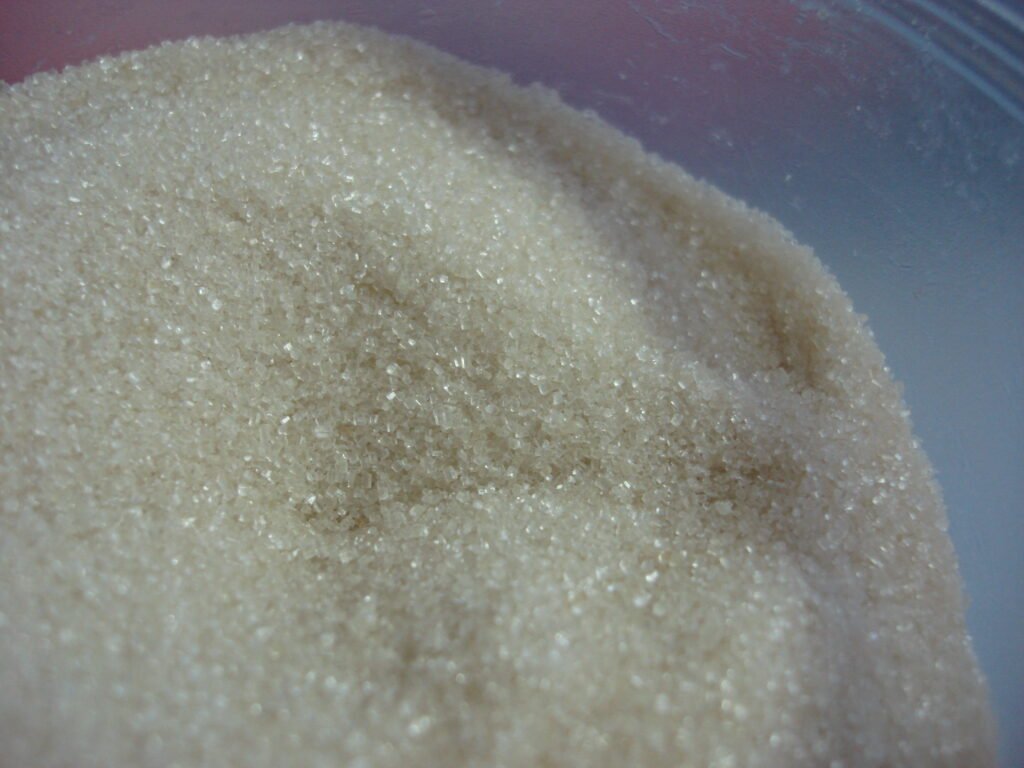
Not all raw sugar leaving a mill is treated the same way once it comes off the crystallizer. Food grade raw sugar refers specifically to raw cane sugar produced, handled and packed to standards that make it safe and legal to use directly in food and beverage manufacturing, rather than sugar destined purely for industrial refining where food-contact hygiene is less of a concern along the way. The difference is not marketing language — it shows up in how the mill runs its process, what testing accompanies each batch, and what certifications back up the claim.
We supply food grade raw sugar to food manufacturers, bottlers and ingredient buyers worldwide, and this page covers what that designation actually means, the specification and certification you should expect, and how to tell a genuinely food-safe supplier from one just using the phrase loosely.
What “Food Grade” Actually Requires
Food grade raw sugar needs to meet the same core purity specification as standard raw sugar, but with added controls around hygiene, contamination risk and traceability at every stage from the mill floor to the bag. That means clean processing equipment, controlled storage conditions, pest control documentation, and packaging that protects the product from contamination during transit — not just a good polarization reading on a lab certificate.
| Parameter | Food Grade Specification |
|---|---|
| ICUMSA color | 600 – 1,200 IU |
| Polarization | 96.0° – 99.0° minimum |
| Moisture content | 0.15% – 0.50% maximum |
| Ash content | 0.15% maximum |
| Sulphur dioxide (SO2) | Within food safety threshold, tested per batch |
| Microbiological limits | Within food-grade safety thresholds |
| Foreign matter | None detectable |
| Magnetic particles | Below detection limit |
Certifications That Should Back Up a Food Grade Claim
Anyone can print “food grade” on a spec sheet. What actually verifies it is a set of certifications that require ongoing audits, not a one-time application:
- HACCP — Hazard Analysis and Critical Control Points, the baseline food safety management system covering the whole production process
- ISO 22000 — a broader food safety management standard built around HACCP principles
- Halal certification — required for many Middle Eastern and Southeast Asian markets
- Kosher certification — required by certain buyers and markets
- FSSC 22000 or an equivalent GFSI-recognized certification — increasingly requested by larger institutional and retail buyers
Ask any supplier claiming to sell food grade raw sugar which of these they currently hold, and verify the certificate directly with the issuing body rather than taking a logo on a website at face value. A supplier unable to produce current certification when asked directly is telling you something important.
Why Food Grade Matters More Than the Label Suggests
Sugar destined purely for further industrial refining does not need the same hygiene controls as sugar going straight into a food or beverage production line. If your product touches food grade raw sugar directly — think confectionery, some bakery applications, or blending into a food product without an intervening refining step — the hygiene and contamination controls along the entire supply chain matter in a way they simply do not for sugar headed to a refinery for further processing.
Buying standard raw sugar and assuming it meets food grade requirements is a real risk. The underlying crystal chemistry might look identical on paper, but the handling, storage and packaging controls that keep it genuinely food-safe are a separate set of practices that a mill either follows consistently or does not.
Packaging Requirements for Food Grade Raw Sugar
- Food-grade polypropylene bags with a moisture-resistant inner liner, 25 kg or 50 kg standard
- 1,000 kg jumbo bags with food-safe liners for buyers with bulk handling capability
- Sealed, batch-labeled packaging — every bag marked with batch number and production date so contamination or quality issues can be traced back to a specific run
- Pallet wrapping and container inspection to prevent contamination during transit, not just moisture ingress
Packaging that is merely “clean” is not the same as packaging validated for food contact. Ask specifically whether the bag material and liner are food-contact approved, not just moisture-resistant.
Documentation That Accompanies Every Food Grade Shipment
- Certificate of analysis tied to the actual batch, covering purity and microbiological testing
- Health certificate, confirming fitness for human consumption
- Halal or Kosher certificate, where required by the destination market
- HACCP or ISO 22000 compliance documentation
- Certificate of origin and phytosanitary certificate
- Fumigation certificate for wooden pallets, where required
None of this is optional paperwork tacked on at extra cost. For food grade raw sugar, it is the documentation trail that lets your own quality team, and your customers’ regulatory bodies, confirm the product is what it claims to be.
How to Verify Food Grade Claims Before You Order
- Request the specific certifications listed above, not a generic statement that the product is “food safe”
- Ask for a certificate of analysis that includes microbiological testing results, not just polarization and color
- Confirm packaging materials are food-contact approved, in writing
- Ask whether the mill produces food grade and industrial-grade sugar on the same lines, and if so, how cross-contamination is controlled
- Request a sample for your own independent lab testing before committing to a full order, particularly on a first purchase
Industries That Rely on Food Grade Raw Sugar
- Confectionery manufacturers using raw sugar directly in recipes
- Bakery producers where a less-refined sugar fits the product profile
- Specialty beverage and syrup producers
- Food ingredient blenders supplying downstream manufacturers
- Regional food distributors repackaging for retail or foodservice markets
Food Grade Raw Sugar vs Standard Raw Sugar
| Factor | Food Grade Raw Sugar | Standard Raw Sugar |
|---|---|---|
| Purity specification | Same base ICUMSA and polarization range | Same base ICUMSA and polarization range |
| Hygiene controls | Documented, audited throughout process | Not necessarily prioritized |
| Certifications | HACCP, ISO 22000, Halal/Kosher available | Often absent or not verified |
| Typical destination | Direct food and beverage use | Further industrial refining |
| Price | Slightly higher, reflecting certification and controls | Lower, since hygiene overhead is reduced |
If your end use touches food production directly, the modest price difference for verified food grade raw sugar is small compared to the risk of a supply chain issue reaching your own customers.
Shipping and Order Sizes
We supply food grade raw sugar from sample quantities for lab evaluation up to full container and multi-container orders, shipped FOB or CIF to buyers across Africa, the Middle East, Asia, Europe and the Americas. Container orders typically run 24–27 metric tons, with lead times of 15–30 days for stock orders once terms are confirmed.
What Drives the Price of Food Grade Raw Sugar
- Certification overhead. Maintaining HACCP, ISO 22000 or Halal certification requires ongoing audits, and that cost is reflected modestly in the final price.
- Global commodity pricing. Like any raw sugar, food grade raw sugar tracks futures markets and moves with global supply conditions.
- Order volume. Larger, recurring orders generally secure a better per-ton rate as fixed costs like inspection and documentation spread across more tonnage.
- Packaging requirements. Food-contact approved liners and batch-labeled bags cost slightly more than standard industrial packaging.
- Destination certification requirements. Markets requiring Halal or Kosher certification, or additional microbiological testing, may add modest administrative cost.
Be cautious of a supplier quoting food grade raw sugar at the same price as standard industrial-grade raw sugar with no explanation for how the certification and hygiene overhead is being absorbed. That gap is usually a sign the food grade claim is not backed by anything substantive.
Regional Certification Requirements to Check
| Region | Common food grade requirement |
|---|---|
| Middle East | Halal certification almost always required for direct food use |
| European Union | Stricter documentation on food safety management systems and traceability |
| North America | FDA-aligned food safety documentation, often GFSI-recognized certification |
| South and Southeast Asia | Halal certification common; import licensing varies by country |
Confirm which certifications your specific destination market requires before finalizing an order. Sorting this at the quoting stage is far simpler than discovering a missing certificate once cargo is already at your port.
Storage and Handling to Preserve Food Grade Status
Food grade raw sugar does not stay food grade automatically once it leaves the mill — how you store it afterward matters just as much as how it was produced.
- Store in a dedicated, clean area away from non-food chemicals, cleaning products or strong odors that sugar can absorb.
- Keep bags sealed until use, and reseal partially used bags promptly to limit contamination exposure.
- Maintain pest control documentation in your own warehouse, consistent with the controls the mill applied during production.
- Rotate stock on a first-in, first-out basis to avoid extended storage that can affect both quality and food safety compliance over time.
A supplier can do everything right at the mill, but food grade status is only meaningful if your own handling after delivery maintains the same standard through to actual use.
Common Mistakes Buyers Make Sourcing Food Grade Raw Sugar
- Accepting “food grade” as a label without asking for certification. The phrase alone proves nothing without documentation behind it.
- Not checking for cross-contamination controls. A mill running food grade and industrial sugar on shared lines needs a documented separation process.
- Skipping microbiological testing on the certificate of analysis. Purity figures alone do not confirm food safety.
- Assuming packaging is automatically food-safe because it looks clean. Ask specifically about food-contact approval for bag materials and liners.
A Practical Example
A confectionery producer we work with initially sourced raw sugar from a supplier who described the product as food grade without providing any specific certification. After requesting HACCP documentation directly, the supplier could not produce it, and further questions revealed the sugar was actually intended for industrial refining, not direct food use. Switching to a supplier who could show current HACCP and Halal certification, along with microbiological testing on every certificate of analysis, resolved the issue and gave their own quality team documentation they could pass on to their retail partners.
Red Flags When Evaluating a Food Grade Raw Sugar Claim
- The word “food grade” appears on a spec sheet with no certification numbers attached
- A supplier cannot say which specific certifying body issued their HACCP or ISO documentation
- No microbiological testing appears anywhere on the certificate of analysis
- Reluctance to confirm whether packaging materials are food-contact approved
- Pricing identical to standard industrial-grade raw sugar with no explanation
A supplier genuinely producing food grade raw sugar has invested real time and cost into the certifications that back up that claim, and will not hesitate to share the documentation that proves it.
How Ordering Food Grade Raw Sugar Works, Step by Step
- Send your requirements. Quantity, destination, and any specific certifications your market or your own customers require.
- Receive current certification documentation. A legitimate supplier sends HACCP, ISO or Halal certificates alongside pricing, not after you ask twice.
- Request a sample for independent testing. Particularly worthwhile on a first order, to verify microbiological and purity results match the certificate.
- Confirm packaging specification in writing. Food-contact approved materials, batch labeling, and liner type should all be documented before production.
- Production, inspection and shipment. The order is produced or allocated, tested against the contracted specification, and shipped with full documentation.
This process takes a little longer upfront than buying standard raw sugar off a generic price list, but it is the reason food grade raw sugar actually holds up to scrutiny once it reaches your own quality team, your customers, or a regulatory inspector.
Frequently Asked Questions
What makes raw sugar “food grade” rather than standard raw sugar?
Food grade raw sugar meets the same core purity specification but is produced, handled and packed under documented hygiene controls, with certifications such as HACCP or ISO 22000 backing up the claim, making it suitable for direct food and beverage use.
Is food grade raw sugar more expensive than standard raw sugar?
Typically slightly more, reflecting the certification and hygiene overhead involved in production. The difference is usually modest relative to the risk of using unverified sugar in food production.
Can food grade raw sugar be used directly without further refining?
Yes, that is the point of the designation. It is produced and handled to a standard that makes it safe for direct food and beverage use, unlike standard raw sugar destined for further industrial refining.
What certifications should I ask for?
HACCP and ISO 22000 as a baseline, plus Halal or Kosher certification depending on your destination market, and a certificate of analysis that includes microbiological testing results.
How is the purity of food grade raw sugar actually measured?
Testing follows the internationally recognized methods published by the International Commission for Uniform Methods of Sugar Analysis, the standards body behind the ICUMSA grading scale used throughout the sugar trade.
Request a Quote for Food Grade Raw Sugar
We supply food grade raw sugar in bulk to buyers worldwide, with full certification, verified specifications and documentation you can pass directly to your own quality and compliance teams. Send us your target volume, destination port and certification requirements, and we will respond with a formal quote and current documentation.
Need the fully refined grade instead? Our ICUMSA 100 sugar for sale page covers the white refined grade. For raw sugar in general, see our raw sugar for sale page, or read about our raw sugar exporter process for shipping and documentation details.