
“Organic” gets stamped on a lot of sugar that has no business wearing the label. A brown color and an earthy-sounding product name aren’t certification — they’re marketing. Real organic raw sugar comes from cane grown without synthetic pesticides or fertilizers, processed without synthetic aids, and verified by an accredited certifying body that puts its name on a document you can actually check. Everything else is a guess dressed up in kraft-paper packaging.
We supply certified organic raw sugar to buyers across Europe, North America, the Middle East, and Asia, and this page covers what the certification actually requires, the specification you should expect on paper, how it differs from conventional raw sugar in production and price, and how to tell a genuinely certified supplier from someone who just likes the word “organic.”
What Makes Raw Sugar “Organic”
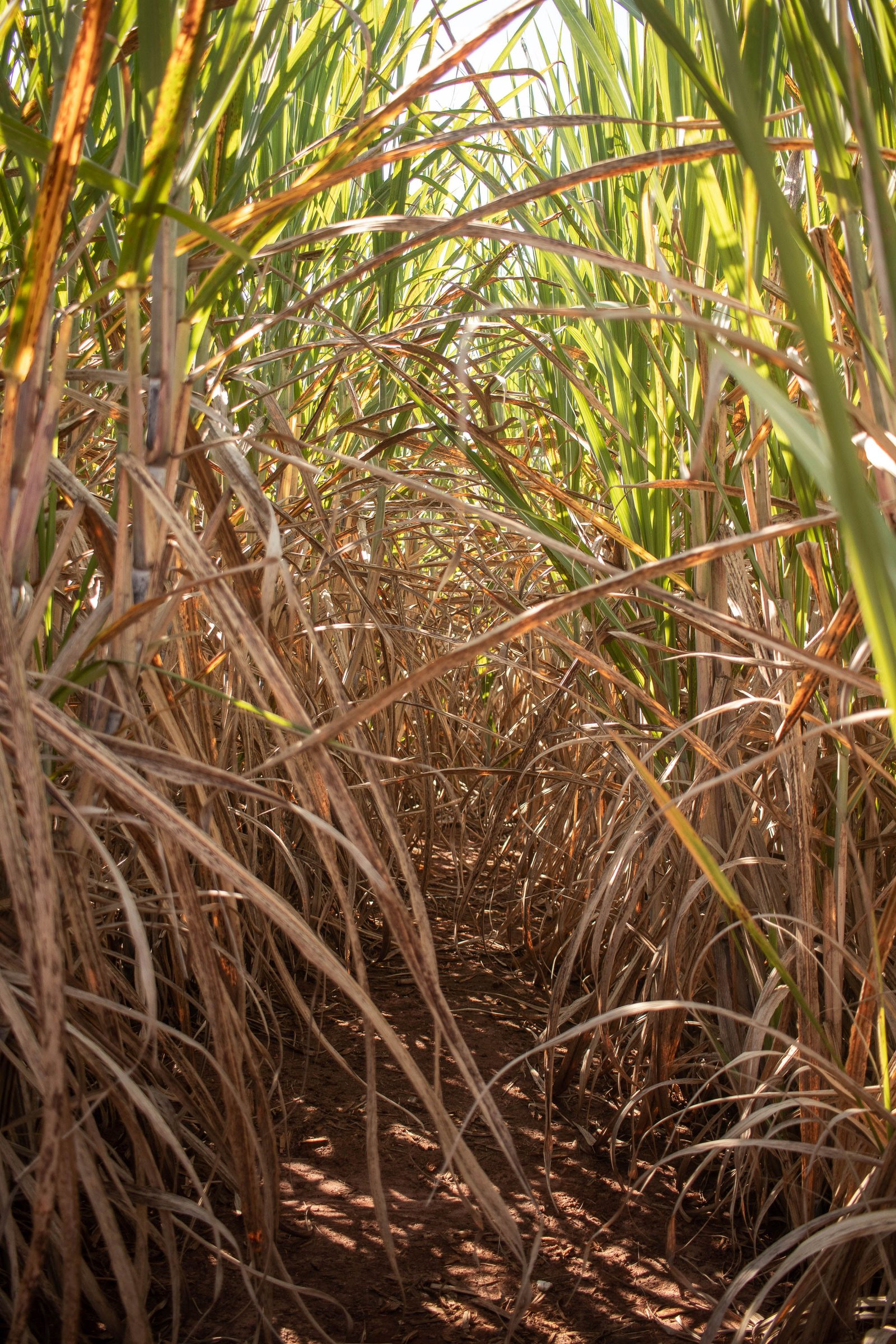
Organic raw sugar starts with cane grown on land that’s been free of prohibited synthetic pesticides, herbicides, and fertilizers for a certification body’s required transition period, usually a minimum of three years. From there, the cane has to be crushed, boiled, and crystallized without synthetic processing aids — no synthetic flocculants, no bone char, none of the chemical decolorizing agents used in some conventional refining. What comes out the other end is raw, unbleached, unrefined sugar carrying its natural molasses coating, certified at every stage from field to bag.
That last part matters more than people realize. Organic certification isn’t a one-time check on the finished product — it’s chain-of-custody documentation covering the farm, the mill, the storage facility, and every party that touches the product before it reaches you. A supplier who can only show you a certificate for the sugar itself, with no paperwork covering the mill or the supply chain in between, is missing exactly the part that makes the certification mean anything.
Organic Raw Sugar Specification
Buyers sourcing organic raw sugar should expect a specification sheet alongside the certification, not instead of it. Here’s the typical range:
- Polarization: 96° to 99° minimum
- Moisture content: Below 0.20%
- Color (ICUMSA): 800 to 1600 units, naturally darker due to retained molasses
- Ash content: Below 0.60%
- Reducing sugars: Below 0.60%
- Sulphur dioxide (SO2): None added — organic processing prohibits sulphur-based clarification
- Pesticide residue: Below detectable limits per certifying body threshold
- Grain size: Medium crystal, natural golden-brown color
Notice the SO2 line — a lot of conventional raw sugar uses sulphur dioxide as a clarifying agent during processing, which organic certification doesn’t allow. If a supplier quotes SO2 content on an “organic” spec sheet, that’s worth asking about directly, because it may mean the product isn’t processed to organic standards even if it’s labeled that way.
Certification Bodies and What to Actually Check
Organic certification isn’t a single global standard — it’s a set of regional and national programs, and which one matters depends on your destination market. USDA Organic covers the US market, EU Organic (formerly EU Eco-regulation) covers the European Union, and other countries run their own accredited programs. Some certifications carry mutual recognition agreements, meaning a product certified under one program can be sold as organic under another without re-certification, but not all do, so it’s worth confirming before you assume a certificate covers your market.
What you should ask any supplier claiming organic raw sugar: which certifying body issued the certificate, what the certificate number is, and whether it covers the specific batch you’re buying — not just “the farm is organic,” but the actual lot with a traceable certificate number you can verify against the certifying body’s public database if one exists. A supplier who hesitates on any of those three questions probably can’t back up the claim.
Organic vs. Conventional Raw Sugar: What Actually Changes
The biggest practical difference between organic and conventional raw sugar isn’t taste, even though some buyers swear they can tell the difference — it’s traceability and processing method. Organic raw sugar costs more, typically 20% to 40% above conventional pricing depending on origin and volume, because the farming practices required (crop rotation, natural pest management, no synthetic fertilizer) generally produce lower yields per hectare than conventional cane farming, and the certification and chain-of-custody documentation adds cost throughout the supply chain.
What you’re paying for is verifiable: no synthetic agrochemical residue, a documented and auditable supply chain, and processing that avoids sulphur-based clarification. For buyers manufacturing organic-labeled end products — baked goods, beverages, confectionery sold under an organic claim — this isn’t optional, since using non-certified sugar in a product you’re marketing as organic is a compliance problem waiting to surface during an audit.
Who Buys Organic Raw Sugar
Demand comes primarily from three directions. Food and beverage manufacturers producing organic-certified end products need certified organic sugar as an ingredient to maintain their own product’s organic status — this is the largest and most consistent source of demand. Health-focused retail brands buy it for direct-to-consumer packaging, marketing the minimally processed, chemical-free profile to consumers who specifically shop for that. And specialty bakeries, craft beverage producers, and artisanal food makers buy smaller volumes for products where the ingredient story matters as much as the function.
Each of these buyers has different volume needs — a large beverage manufacturer might order multiple container loads monthly, while an artisanal bakery might order a few hundred kilograms a quarter — and a supplier who can flex between those order sizes without treating small buyers as an afterthought is worth more to a growing brand than one who only wants your business once you’re ordering at scale. For buyers who need conventional volumes alongside an organic line, our natural cane sugar page covers the non-certified equivalent product side by side.
Packaging for Organic Raw Sugar
Packaging matters more for organic product than conventional, because contamination during storage or transport can jeopardize certification status even if the sugar itself was processed correctly. We pack organic raw sugar in 25kg or 50kg food-grade kraft or polypropylene bags with certified organic labeling printed directly on the bag, sealed to prevent contact with non-organic product during transit and storage. Bulk 1,000kg totes are available for buyers with the volume and handling capacity to use them. Every pallet is segregated from conventional stock in our warehouse, because organic certification requires that separation to be maintained end to end, not just claimed on paperwork.
How to Verify a Supplier’s Organic Claim Before You Order
A few concrete steps protect you here. Ask for the certificate number and the name of the certifying body, then check that body’s public registry if one exists — most accredited organic certifiers maintain a searchable database of certified operations. Ask whether the certificate covers the specific mill and the specific batch you’re buying, not just the general farming operation. Request a certificate of analysis alongside the organic certificate, since organic status and quality specification are two separate things and you need both. And if anything feels vague or the supplier can’t produce documentation quickly, treat that hesitation as your answer.
We provide our current organic certification, batch-specific certificate of analysis, and chain-of-custody documentation to any buyer before they commit to an order, because we’d rather you verify everything up front than have a compliance question surface after your product is already on shelves.
Shelf Life and Storage
Organic raw sugar behaves similarly to conventional raw sugar in storage, but because it hasn’t had sulphur-based clarification, some buyers notice it’s slightly more prone to color darkening over long storage periods if humidity isn’t controlled. Store it in a dry facility below roughly 65% relative humidity, keep it off the floor on pallets, and rotate stock on a first-in, first-out basis. Under proper conditions, organic raw sugar holds its certified status and quality for well over a year from production date.
Common Misconceptions About Organic Raw Sugar
A few myths come up often enough that they’re worth addressing directly. The first is that organic automatically means unrefined or raw — it doesn’t. You can buy organic white sugar that’s been through a full refining process using only organic-approved methods, so “organic” and “raw” are two separate label claims that happen to overlap in this particular product. The second myth is that organic sugar is nutritionally very different from conventional sugar — chemically, sucrose is sucrose, and the nutritional difference is marginal; what buyers are actually paying for is the farming and processing method, not a meaningfully different nutrition panel. The third is that any brown, unrefined-looking sugar must be organic, which is simply not true — color comes from retained molasses regardless of whether the cane was grown organically, and plenty of conventional raw sugar looks identical to organic raw sugar on the shelf.
Getting these distinctions right matters if you’re making claims on your own packaging, because a regulator or auditor checking your organic labeling will care about the actual certificate, not the visual appearance of the sugar you used.
Environmental and Sustainability Considerations
Buyers increasingly ask about organic raw sugar specifically for the environmental story, not just the chemical-residue angle. Organic cane farming practices — crop rotation, natural pest management, avoiding synthetic nitrogen fertilizer — generally reduce agrochemical runoff into surrounding waterways compared to conventional intensive cane farming, which matters in regions where cane cultivation sits near sensitive watersheds. Some organic certification programs also require or encourage soil health practices that improve long-term land productivity rather than depleting it, which is a separate but related sustainability argument buyers sometimes want documented alongside the organic certificate itself. Standards vary by program and region, and the International Federation of Organic Agriculture Movements publishes a useful overview of how the major national and regional organic frameworks compare.
If sustainability reporting matters for your business — increasingly it does, given retailer and regulatory pressure on supply chain disclosure — ask your supplier whether they can provide anything beyond the base organic certificate, such as farm-level sourcing information or any additional sustainability certification the growing operation holds. Not every organic supplier tracks this at the level buyers now want, so it’s worth confirming early rather than assuming it’s automatically included.
Shipping and Incoterms for Organic Raw Sugar
Logistics for organic raw sugar work the same way as conventional raw sugar export, with one added wrinkle: destination customs authorities in some markets require the organic certificate to be presented alongside standard import documentation, and clearance can be delayed if that paperwork isn’t in order before the shipment arrives. We quote organic orders under the same Incoterms as conventional shipments — FOB, CFR, or CIF — and most first-time organic buyers prefer CIF so the insurance and freight arrangements are handled on our end rather than split across two parties managing separate paperwork for a certified product.
Container sizes and loading follow the same math as conventional raw sugar: roughly 24–25 metric tons in bagged product per 20ft container, more per 40ft container, with bulk vessel shipment available for buyers ordering at a scale that justifies it. The main operational difference is that organic containers should be sealed and documented separately from any conventional product moving through the same shipment, both for certification integrity and for customs clarity at destination.
Building a Long-Term Organic Supply Relationship
Buyers who use organic raw sugar as a core ingredient — not an occasional specialty run, but something in every batch of product — tend to care less about spot pricing and more about supply consistency, because a gap in organic-certified supply can shut down a production line that has no conventional substitute available under their own product’s organic claim. If that’s your situation, it’s worth discussing forward contracts or standing order arrangements rather than negotiating fresh on every purchase, since a supplier with a forward commitment has more reason to prioritize your allocation when organic-certified stock is tighter than usual, which does happen given the smaller pool of certified growers relative to conventional cane farming.
We work with a handful of buyers on exactly this basis — a standing monthly or quarterly volume, agreed well ahead of the shipping window, which gives both sides planning certainty that spot-market buying doesn’t.
Frequently Asked Questions
Is organic raw sugar the same as unrefined sugar?
Not necessarily. Unrefined or raw sugar simply describes the processing level — it hasn’t been through the refining stages that produce white sugar. Organic describes the farming and processing standard. A raw sugar can be conventional or organic; the two labels answer different questions, and a supplier should be able to speak to both separately.
Does organic raw sugar cost significantly more than conventional?
Typically yes, usually 20% to 40% more depending on origin, volume, and current market conditions, reflecting lower yields, certification costs, and the more limited pool of certified organic cane growers compared to conventional producers.
Can organic and conventional raw sugar be shipped in the same container?
It’s not recommended and most certification standards prohibit it, since mixed shipment risks contamination claims that can jeopardize the organic status of the entire load. We ship organic orders in dedicated containers or clearly segregated within a shared container only when the certifying body’s rules explicitly allow it.
What documentation should accompany an organic raw sugar shipment?
At minimum: the organic certificate covering the specific batch, a certificate of analysis, commercial invoice, packing list, bill of lading, and certificate of origin. For certain destinations, additional import documentation specific to organic goods may also be required, which we confirm before shipment.
Will organic raw sugar work in a product currently made with conventional sugar without changing the recipe?
In most cases yes, since the sucrose content and basic sweetening function are equivalent. Some manufacturers do minor recipe adjustments because organic raw sugar’s moisture content and molasses coating can behave slightly differently in precise industrial formulations, so a small-batch trial before switching your full production line is worth the time.
How do you handle organic certification renewal and does it affect ongoing orders?
Certification is renewed annually through the certifying body’s audit cycle, and we track renewal dates so there’s no gap in valid certification covering stock we’re shipping. If you’re on a standing order arrangement, we notify buyers ahead of any renewal cycle so there’s no surprise if documentation needs updating on your end for customs purposes. For the broader documentation set that travels with any international shipment, see our page on raw sugar export documentation.
How Certification Follows the Product Through the Supply Chain
One detail that trips up buyers new to organic sourcing: certification isn’t a single stamp that transfers automatically once it’s been applied anywhere in the chain. Every entity that takes possession of the product — the farm, the mill, the exporter, sometimes even the freight forwarder depending on local rules — needs to hold valid organic handling certification for that link in the chain to remain unbroken. If any link isn’t certified, the product can lose its organic status by the time it reaches you, even if the original cane was genuinely grown organically.
This is why we’re certified as an organic handler ourselves, not just a reseller of product someone else certified upstream. When you buy from us, the chain-of-custody documentation covers the full path from farm to your destination port, and we can produce that paperwork on request rather than asking you to take our word for it.
Comparing Suppliers: Questions Worth Asking Before You Commit
When you’re evaluating more than one supplier for organic raw sugar, price is the easiest thing to compare and often the least useful, because a lower quote from a supplier who can’t produce a valid certificate isn’t actually a lower price — it’s a liability you haven’t discovered yet. A more useful comparison covers whether the supplier holds organic handler certification themselves, whether they can provide batch-specific documentation rather than a generic farm-level certificate, what their minimum order quantity is and whether it fits your actual usage, how they package and segregate organic stock in their own warehouse, and how quickly they can turn around a sample shipment for you to test before a full commitment.
A supplier who answers all of that clearly and quickly is usually the one who’s set up to keep supplying you reliably a year from now, not just the one who happened to quote the lowest number this week.
Get an Organic Raw Sugar Quote
If you need certified organic raw sugar with documentation you can actually verify, tell us your destination market, target certification (USDA Organic, EU Organic, or another accredited program), and volume. We’ll send our current certificate, a batch-specific certificate of analysis, and a proforma invoice so you can check everything before committing.