
Sugar for confectionery is the refined white cane sugar (and sometimes brown sugar) that candy, toffee, fudge, chocolate and gum makers buy in bulk as their main raw material. For most sweets that means ICUMSA 45 refined sugar, because it’s very white, very pure and dissolves cleanly. Darker products such as caramel, toffee and butterscotch can use ICUMSA 100, 150 or raw brown cane sugar. We sell all of these grades to confectionery manufacturers and distributors worldwide, in 50 kg bags or 1 MT jumbo bags, shipped by container.
This guide is for factory owners, production managers, QA staff and buyers at confectionery plants of any size. It covers how sugar behaves in different sweets, which grade suits which product, the numbers on a spec sheet that matter to a confectioner, what goes wrong and why, how to store sugar, and how to buy it at a fair delivered price. We link to research and standards where we use them. Where something is our own view from supplying sugar to food makers, we say so.
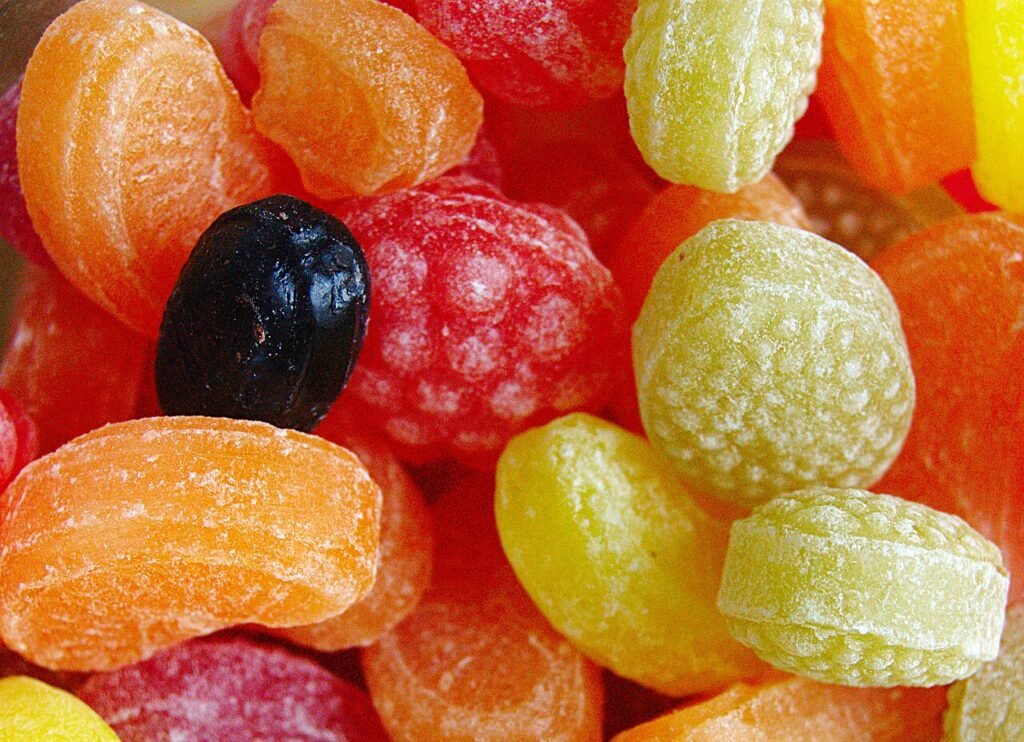
Sugar for confectionery: what we sell
These are the grades confectionery makers order from us. Each product page has the full specification sheet.
- Refined ICUMSA 45 sugar: 45 IU max, polarization 99.80% min, moisture 0.04% max, ash 0.04% max. The standard choice for clear boiled sweets, white fondant, mints, chocolate and gummies.
- Refined sugar ICUMSA 35: 35 IU max, polarization 99.80% min, SO₂ 20 mg/kg max. For the clearest glass candies and lollipops, and for clear syrups.
- Crystal white sugar: sparkling white, polarization 99.8% min, fine to medium crystal. Good for sanding and coating sweets.
- Cane sugar ICUMSA 100: 100 IU max, polarization 99.8% min. For caramels, toffees and coated products where some colour is fine.
- ICUMSA 150 white sugar: 150 IU max. Budget option for dark caramels and cooked-down fillings.
- Raw brown cane sugar Grade E: ICUMSA 600 to 1200, polarization 96° to 98°. For butterscotch, fudge and toffee with a molasses note.
Packing: 50 kg PP bags with inner liner, 1 MT jumbo bags. Shipping: 20 ft containers, about 25 MT each. Terms: FOB or CIF your port. Ask for a confectionery sugar quote.
See the whole range on our products page.
Why confectionery is the hardest job sugar does
In bread or cake, sugar is one ingredient among many. In a boiled sweet, it’s most of the product. That’s why buyers of sugar for confectionery tend to be the fussiest customers we deal with, and with good reason. Small differences in the sugar can show up as cloudy candy, a yellow tint, sticky wrappers or sweets that turn grainy on the shelf.
It helps to split sweets into two families.
Non-crystalline (amorphous) sweets
Hard candies, lollipops and clear mints are sugar glasses. Writing in Food Technology magazine, J. Peter Clark put it simply: “Hard candies are glasses—amorphous, noncrystalline.” The sugar is cooked until almost all the water is gone, then cooled fast so it sets before crystals can form. Caramels and many toffees also sit on this side, as chewy, non-crystalline masses. For these products the goal is to stop sugar crystallising.
Crystalline sweets
Fondant, fudge, creams and some mints work the other way. The cooked syrup is cooled and beaten so that tiny sugar crystals form on purpose. The size of those crystals decides whether the sweet feels smooth or gritty. For these products the goal is to control crystallisation.
Both families start with the same sugar for confectionery: clean, refined white sugar. What changes is the recipe, the cooking temperature and how the batch is cooled. But the sugar still has to be clean and consistent, because anything extra in it, whether colour, minerals or dust, can change how the batch behaves.
How sugar behaves in sweets: the science in plain words
Glucose syrup and invert sugar keep candy clear
Pure sucrose wants to crystallise. If you boil sugar and water to hard crack and pour it out, there’s a fair chance it will grain. Confectioners add something to get in the way, usually glucose syrup, sometimes acid to create invert sugar. Clark notes that “the glucose helps inhibit crystallization of sucrose.”
A 2024 paper in Frontiers in Food Science and Technology by Ozel and colleagues explains the mechanism: these so-called doctoring agents prevent or slow sucrose crystallisation during cooling, mainly by raising the viscosity of the mass, while glucose and fructose molecules sit between sucrose molecules and disrupt crystal formation.
The balance matters. FAO’s guide to small-scale sugar confectionery says about 10 to 15% invert sugar is needed for a non-crystalline sweet. Too much and the sweet pulls water from the air and turns sticky. Too little and the sucrose crystallises. The same guide points out that adding glucose syrup is a more accurate way to get there than relying on acids such as cream of tartar or citric acid.
Why does this matter when buying sugar for confectionery? Because the sugar you buy also contains a tiny amount of invert sugar and other non-sucrose material. Refined ICUMSA 45 sugar has very little. Lower grades have a bit more. If you change grades or suppliers, your recipe balance can shift slightly. Most of the time nobody notices. On a clear hard candy line, sometimes they do.
Moisture decides shelf life
FAO’s guide gives two useful numbers: hard-boiled sweets contain less than 2% moisture, and sweets with more than 4% moisture are likely to crystallise during storage, starting at the surface. That’s why boiling temperature and wrapping matter so much, and why a humid factory or warehouse causes trouble.
Boiling temperatures for common sweets
The cooking temperature sets the final moisture and texture. These are the sea-level ranges given in the FAO sugar confectionery guide:
| Product | Boiling temperature (sea level) |
|---|---|
| Fondant | 116 to 121°C |
| Fudge | 116°C |
| Caramels and regular toffee | 118 to 132°C |
| Hard toffee (butterscotch) | 146 to 154°C |
| Hard-boiled sweets | 149 to 166°C |
At those high temperatures, sugar starts to colour. That’s fine, even wanted, in toffee. In a clear lemon drop it isn’t. So when choosing sugar for confectionery that will be boiled hard, start with the whitest, purest sugar you can get, because the cook will add some colour anyway.
Which grade of sugar for confectionery suits which product
Here’s how we’d match grades of sugar for confectionery to products. It’s a starting point. Your own recipes and customers have the final say.
| Product | Suggested grade | Why |
|---|---|---|
| Clear hard candy, lollipops, glass mints | ICUMSA 35 or 45 | Any colour shows through the glass, and the cook adds more |
| White fondant, creams, white mints | ICUMSA 45 | Bright white finish |
| Chocolate (milk, white, dark) | ICUMSA 45 | Clean taste; white chocolate shows colour |
| Gummies and jellies | ICUMSA 45 | Bright colours stay true |
| Sugar sanding and coating | Crystal white, medium crystal | Sparkle and even coverage |
| Caramels and chewy toffee | ICUMSA 100 or 150 | Colour is part of the product |
| Butterscotch, dark fudge, molasses toffee | Raw brown Grade E, often blended with white | You want the flavour |
| Panned sweets and dragees | ICUMSA 45, fine crystal | Smooth, even shell layers |
A note on chocolate: chocolate makers grind sugar very fine during refining so it doesn’t feel gritty on the tongue. You don’t need to buy pre-milled sugar for this. Standard granulated ICUMSA 45 goes into the mixer and the refiner does the rest.
A note on brown sugar: raw brown cane sugar is stickier and holds more moisture than white. Many confectioners blend it with white sugar to get the flavour without making the batch too soft. Our bulk brown sugar guide covers how to order it consistently.
For more on how the ICUMSA scale works, see our ICUMSA scale guide. Our posts on food grade ICUMSA 45 sugar, ICUMSA 35 sugar, ICUMSA 100 sugar and ICUMSA 150 sugar go into each grade.
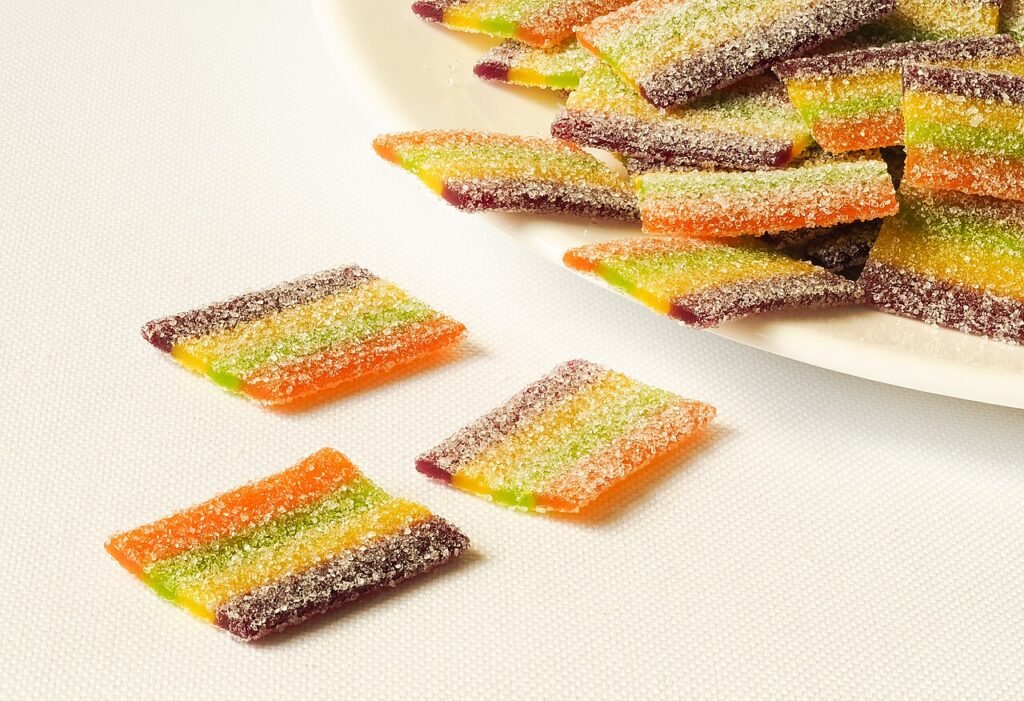
Sugar for confectionery by product: a closer look
The table above gives the short answer. Here’s a bit more detail on each product, because the reasons behind the grade choice matter when something goes wrong.
Hard candy and lollipops
This is where sugar for confectionery is tested hardest. The batch is cooked to well over 140°C, the water is driven off and the mass is cooled into a clear glass. Any colour in the sugar shows. Any speck shows. Undissolved crystals can seed graining. Most hard candy makers use ICUMSA 45, and some step down to ICUMSA 35 for the clearest products. Glucose syrup is almost always part of the recipe to keep the candy from crystallising.
Toffee and caramel
Here, colour is part of the product. Caramels get their brown from milk proteins and sugar reacting during the cook, and nobody expects them to be white. That’s why ICUMSA 100 or 150 sugar for confectionery often works fine, and costs less. Some makers still prefer ICUMSA 45 so they have one grade across the factory. Both approaches are reasonable.
Fudge and fondant
These are the crystalline sweets. You cook the syrup, cool it to the right point, then beat it to form fine crystals. White fondant for cake decorating or cream centres needs ICUMSA 45. Fudge is more forgiving on colour, and brown sugar is often part of the flavour.
Marshmallows and nougat
Aerated sweets made with sugar, glucose syrup and a whipping agent such as gelatine or egg white. White marshmallow shows colour, so a low-ICUMSA white grade is the usual choice.
Gummies and jellies
Sugar for confectionery in gummies does two jobs: it’s in the mass, and it’s often on the outside as a sanding coat. White sugar keeps bright colours true. For the coating, a medium crystal gives a nice sparkle, while finer sugar gives a smoother, frosted look.
Chocolate
Sugar is a major ingredient in milk and white chocolate. It’s ground very fine during refining so the chocolate feels smooth. White chocolate shows any colour, so ICUMSA 45 is the normal choice. Dark chocolate is more forgiving, but most chocolate makers still use one white grade throughout.
Panned sweets and dragees
Sugar shells are built up in thin layers by spraying syrup over centres in a rotating pan. Clean, fine, low-colour sugar gives smooth, even layers and bright final colours.
Chewing gum and pressed mints
Gum and pressed tablets often use very finely milled sugar, which the factory usually mills in-house from white granulated sugar. Starting from a clean ICUMSA 45 keeps the final product white.
The spec sheet numbers to check on sugar for confectionery
Every offer of sugar for confectionery lists a few numbers. These are the ones worth reading carefully.
| Parameter | Typical for ICUMSA 45 | Why a confectioner cares |
|---|---|---|
| Colour (ICUMSA) | 45 IU max | Clarity and whiteness of the finished sweet |
| Polarization | 99.80% min | Sucrose purity; affects recipe balance |
| Ash | 0.04% max | Mineral content; lower is cleaner |
| Moisture | 0.04% max | Caking in storage, weighing accuracy |
| Reducing sugars | Very low (check sheet) | Adds to the invert in your recipe |
| SO₂ | 20 mg/kg max | Allergen labelling rules in some markets |
| Granulation | Fine to medium | Dissolving speed, sanding finish |
| Insoluble matter | None visible | Specks and haze in clear candy |
Colour
The most obvious one. For clear candy, the lower the better. Colour in the sugar becomes colour in the sweet, and high-temperature cooking adds more on top. Our ICUMSA 45 specification guide explains how it’s measured.
Ash
Ash is the mineral residue left in the sugar. In our experience, confectioners making clear or white products prefer the lowest-ash grade they can get, because a cleaner sugar gives more predictable results batch to batch.
Sulphur dioxide
Some refined sugars carry a small amount of sulphur dioxide from processing. This matters because in some markets sulphites count as an allergen above a set level. In the EU and UK, for example, food labelling law lists “sulphur dioxide and sulphites at concentrations of more than 10 mg/kg” in the product as it’s eaten. Sugar with 20 mg/kg is diluted in most recipes, so the finished sweet usually comes in under that, but it depends on your recipe and the other ingredients. Ask your QA team to check, and ask us for the actual SO₂ reading on the certificate.
Granulation
For cooking, fine to medium crystals dissolve quickly and evenly. For sanding sweets, a medium to coarse crystal gives better sparkle. If you do both, you may want two grades or two grain sizes.
Our bulk refined sugar guide covers the full list.
Common confectionery problems and where sugar fits in
When something goes wrong on a candy line, the sugar for confectionery gets blamed first. Sometimes that’s fair. Often it isn’t. Here’s where we’d look.
Hard candy turning grainy or cloudy
Usually too little doctoring agent, a cook that didn’t reach temperature, too much stirring after boiling, or moisture getting into the candy afterwards. Sugar dust or seed crystals on equipment can also start graining. Sugar itself is a less common cause, but undissolved crystals from a coarse grain can seed the batch.
Sticky sweets and wrappers
Usually too much invert sugar or too much moisture, either from the cook or from humid storage. The FAO guide warns that without proper packaging, especially in humid conditions, sweets can become sticky and grainy.
Yellow tint in clear candy
Overcooking or holding the batch hot too long, or a higher-colour sugar than usual. Compare the ICUMSA reading on the certificate with your previous lots.
Gritty fudge or fondant
Crystal control. Usually beating at the wrong temperature or seed crystals forming too early. The sugar’s own grain size dissolves during cooking, so it’s rarely the cause here.
Dark specks
Burnt residue on pans, foreign matter in the sugar, or flavourings. Keep a retained sample from every sugar lot so you can rule the sugar in or out quickly.
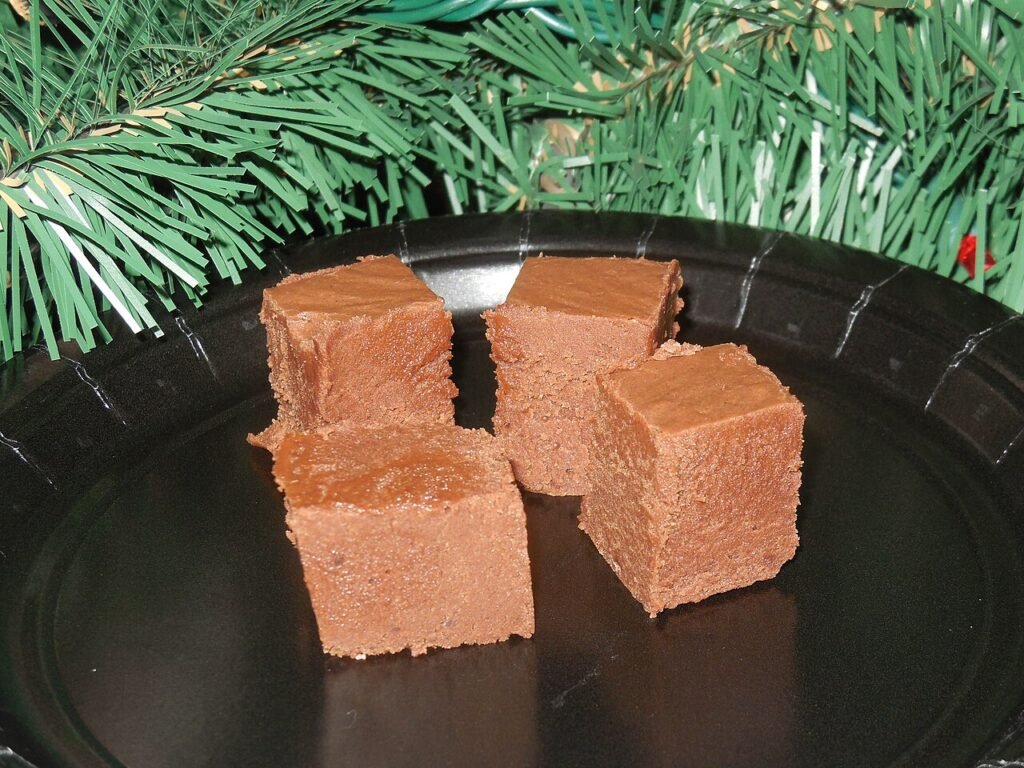
Storing sugar for confectionery
A confectionery factory is often warm and humid, which is bad news for stored sugar for confectionery. Damp sugar cakes into blocks, and lumps don’t weigh or dissolve properly.
Research by Mathlouthi and Rogé, presented to the South African Sugar Technologists’ Association, found that white sugar cakes mainly because moisture moves in and out of the crystal surface as humidity and temperature change. Each cycle builds little bridges between crystals until the bag sets.
Practical steps:
- Keep sugar in a separate dry store, away from cookers, steam and wash areas.
- Keep the store temperature steady. Big day-night swings are worse than a store that’s simply warm.
- Stack bags on pallets, off the floor and away from walls.
- Let cold deliveries warm up before opening, so moisture doesn’t condense on the sugar.
- Use stock first in, first out, and keep lot numbers on every pallet.
- Keep sugar dust down near cooling tables. Dust can seed crystallisation in candy.
Finished sweets need just as much care. Low-moisture hard candy will happily pull water from damp air. Good wrapping and a dry store protect your product, and your sugar.
Bags, jumbo bags or bulk: how to receive sugar for confectionery
50 kg bags
The standard. Easy to store, easy to count, easy to tip into a dissolver by hand, though 50 kg is heavy to lift all day. See our ICUMSA 45 product page for bag details.
1 MT jumbo bags
For plants with a hoist or bag-discharge station feeding a silo or a dissolver. Less handling, less waste, less dust in the production area. If you use more than a tonne a day, jumbo bags usually pay for themselves.
Liquid sugar
Some large plants dissolve their sugar for confectionery into syrup at the start of the line. If you do this, the clarity of the dissolved sugar matters more than anything else, which points again to a low-colour grade. We supply granulated sugar; your dissolving station turns it into syrup.
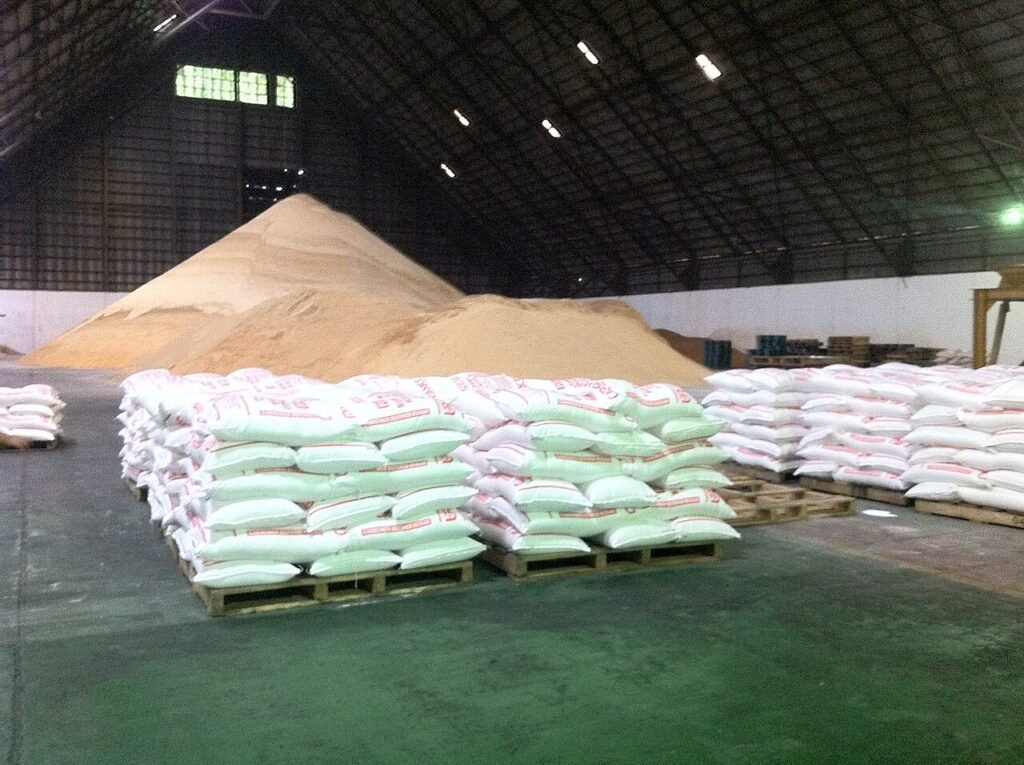
A worked example: one confectionery plant, three grades
Here’s a made-up plant to show how choosing sugar for confectionery works in practice. The numbers are only there to show the method.
Say a factory uses 30 tonnes of sugar a month across three lines:
- Clear fruit drops: 12 tonnes. Customers see straight through the candy.
- Milk caramels: 14 tonnes. The product is brown anyway.
- Butterscotch: 4 tonnes. Flavour matters.
Option one: buy ICUMSA 45 for everything. Simple, one stock line, no mix-ups.
Option two: ICUMSA 45 for the drops, ICUMSA 150 for the caramels, and a blend of white with raw brown sugar for the butterscotch. If ICUMSA 150 lands at, say, US$30 a tonne below ICUMSA 45 at your port, the caramel line alone saves about US$420 a month. The trade-off is more stock lines and the need to keep them apart in the store.
Neither option is wrong. Some plants value simplicity, others watch every dollar. The point is to do the sum with your own prices.
What sugar for confectionery really costs
The price of sugar for confectionery on a quote is only part of what you pay. To compare offers properly, build up a delivered cost: the sugar price, ocean freight, insurance, import duty, port and clearing fees, and transport to your factory. Duty on refined sugar can be high in some countries, and it often outweighs any small difference between suppliers.
Refined white sugar prices follow the ICE White Sugar futures contract in London. You don’t need to trade futures, but watching the market helps you decide whether to fix a price for several months or buy shipment by shipment.
The bigger picture is worth knowing too. In its May 2026 Sugar: World Markets and Trade report, the USDA forecasts world production for 2026/27 at about 184.9 million tonnes, with Brazil, the largest exporter, producing slightly less as more cane goes to ethanol. That’s not a shortage, but it does mean prices can move.
Our posts on sugar wholesale prices and sugar import prices break down each cost line.
Sugar for confectionery in hot and humid climates
Many of the confectionery plants we supply are in warm, damp places. That makes life harder for both the sugar and the finished sweets.
The trouble starts on the ship. A steel container heats up by day and cools at night, and moisture can condense on the roof and drip onto the bags. Good loading helps: a clean, dry box, paper lining on the walls and roof, and desiccant bags. When the container lands, get it unloaded and into a dry store as fast as you can. Sugar for confectionery left in a hot port yard for weeks is asking for trouble.
In the factory, keep the sugar store separate from the cooking hall. The steam from candy cookers is exactly what you don’t want near open bags. Some plants in very humid regions run dehumidifiers in the sugar store and the packing room. It sounds like a big step, but caked sugar and sticky finished sweets cost money too.
Finished hard candy is just as sensitive. A low-moisture sugar glass will pull water from humid air and turn sticky at the surface. Good wrapping, sealed packs and dry storage are the answer. The FAO guide lists waxed paper, aluminium foil, cellulose film, heat-sealed polythene bags, glass jars and airtight tins as options that protect sweets far better than traditional leaf wrappers.
Checklist before you sign a contract for sugar for confectionery
Run through this before you commit to a container. It takes ten minutes and saves a lot of arguments later.
- Grade named clearly, with a maximum ICUMSA colour figure.
- Polarization, moisture and ash limits written into the contract.
- SO₂ limit stated, if your market has sulphite labelling rules.
- Granulation described, especially if you sand or coat sweets.
- Packing agreed: bag size, liner, marking and pallets.
- Independent inspection at loading, with the certificate in the document set.
- Food safety certificates from the producing mill.
- Delivery schedule that covers your busy season.
- Payment terms that protect you, such as a letter of credit for a first order.
- A retained sample from each lot, kept on site.
If a supplier won’t agree to most of this, think twice. Real suppliers of sugar for confectionery are used to these requests.
7 tips for buying sugar for confectionery
1. Match the grade to how visible the sugar is
Clear and white products need ICUMSA 45 or lower. Brown products can use higher grades. Don’t pay for whiteness nobody will see, and don’t save money where everybody will.
2. Ask for actual readings, not just the spec
The spec says “45 IU max”. The certificate says what this lot actually measured. For clear candy, the actual number is what matters. Our ICUMSA 45 specification guide shows the readings to look for.
3. Agree on SO₂ and allergen information
If you sell into markets with sulphite labelling rules, get the SO₂ figure in writing and let your QA team do the maths for each recipe.
4. Trial before switching
Run the new sugar for confectionery through your most sensitive product, usually the clearest candy, and compare it side by side with your current sugar before committing to a container.
5. Keep one grade per product line
Switching grades between batches makes problems harder to trace. Pick a grade for each line and stick with it.
6. Get the paperwork your customers will ask for
Certificate of analysis, inspection certificate, certificate of origin and the producing mill’s food safety certificates. Retail customers and auditors will want them.
7. Protect yourself on payment
For a new supplier, use a letter of credit or another secure method. Our guide to checking a sugar exporter before you pay covers safe payment options, and our article on how to spot a real sugar trader lists the warning signs.

Who buys sugar for confectionery from us
- Hard candy and lollipop factories, which care most about colour and clarity.
- Toffee, caramel and fudge makers, who often use two grades: white and brown.
- Chocolate makers, from small bean-to-bar businesses buying bags to large plants buying containers.
- Gummy and jelly producers, using white sugar in the mass and crystal sugar for coating.
- Chewing gum and mint makers.
- Traditional sweet makers producing regional confections for local markets.
- Distributors who supply smaller confectioners. Our sugar distributor guide is written for them.
If you buy sugar for confectionery and also run a bakery or other food lines, our guides to bakery sugar, industrial sugar and wholesale food sugar may help.

Planning sugar for confectionery around your busy season
Most confectionery businesses have peaks. Festive seasons, school holidays and gift-giving periods can double or triple output for a few weeks. The worst time to discover you’re short of sugar for confectionery is two weeks before your biggest selling period.
A few habits help:
- Work backwards from your peak. Sea freight, port clearance and trucking can easily take six to ten weeks door to door depending on the route. Order early enough to have sugar in your store before production ramps up.
- Agree a schedule, not just an order. A supply plan with shipments spread over several months gives you steadier prices and a cushion if one ship runs late.
- Hold a little safety stock. Two to four weeks of sugar for confectionery on hand covers most delays without tying up too much cash.
- Keep grades consistent through the peak. Busy season is not the time to trial a new grade or supplier.
Tell us your peak months when you ask for a quote and we’ll suggest a shipment schedule to match.
Where our sugar comes from
We source our sugar for confectionery, both refined white and raw brown cane sugar, mainly from Brazil and Thailand, two of the world’s biggest sugar exporters according to the USDA. Our guides to Brazilian sugar and Thai sugar explain what each origin offers.
Sugar ships in clean, dry 20 ft containers, usually lined with paper and fitted with desiccant to protect it on the voyage. Our post on what a sugar logistics supplier handles explains loading and what to check on arrival. Our general terms are on the shipping policy page.
How to order sugar for confectionery from us
- Tell us what you make. Products, monthly volume, current sugar grade, port and bag size. Use our contact form.
- Get a recommendation and quote. We’ll suggest a grade for each line and quote FOB or CIF with the full spec sheet.
- Trial if needed. Run the sugar through your most demanding product first.
- Agree the contract. Grade, colour limit, SO₂, packing, inspection, documents and payment terms in writing.
- Loading and inspection. Each lot is inspected at loading and the certificate travels with the documents.
- Regular supply. Set up a schedule so you never run short in your busy season.
Our FAQ page answers common questions, and our guide to buying sugar in bulk covers the basics for first-time importers.
Frequently asked questions about sugar for confectionery
What is the best sugar for confectionery?
For most sweets, refined ICUMSA 45 white cane sugar. For the clearest hard candy, ICUMSA 35. For caramel and toffee, ICUMSA 100 or 150 works, and raw brown sugar adds flavour to butterscotch and fudge.
Why does hard candy need such white sugar?
Hard candy is a clear sugar glass, so any colour in the sugar shows. The high cooking temperature also adds colour, so starting with low-colour sugar keeps the finished candy bright.
Do confectioners use glucose syrup as well as sugar?
Yes. Glucose syrup slows sucrose crystallisation and keeps hard candy and caramels from graining. Sugar is still the main ingredient.
How much moisture should hard candy have?
FAO guidance says hard-boiled sweets contain less than 2% moisture, and sweets above 4% are likely to crystallise in storage.
Is “confectioners’ sugar” the same as sugar for confectionery?
No. Confectioners’ sugar usually means powdered icing sugar. Sugar for confectionery means the granulated refined sugar candy factories buy in bulk. We sell granulated grades.
Can I use brown sugar in confectionery?
Yes, especially for butterscotch, fudge and toffee. Many makers blend it with white sugar to get flavour without making the product too soft.
Does sugar contain sulphites?
Some refined sugars contain a small amount of sulphur dioxide from processing. ICUMSA 45 is typically 20 mg/kg max. Check your local labelling rules and your recipe.
How should sugar for confectionery be stored?
Keep sugar for confectionery dry, cool and at a steady temperature, on pallets, away from steam and cooking areas.
What is the minimum order for sugar for confectionery?
Usually one 20 ft container of sugar for confectionery, about 25 tonnes.
Do you ship worldwide?
Yes, to ports across Asia, Africa, Europe, the Middle East, the Americas and Oceania. Ask for a quote.
Key takeaways
- Sugar for confectionery is usually refined ICUMSA 45 white cane sugar, with ICUMSA 35 for the clearest candy and higher grades or brown sugar for caramel and toffee.
- Hard candies are sugar glasses; glucose syrup and the right invert level keep them clear.
- Moisture control, from cooking to storage, decides whether sweets stay clear or turn sticky and grainy.
- Check colour, ash, SO₂ and granulation on every certificate, not just the spec sheet.
- Store sugar dry and steady, trial before switching, and compare suppliers on delivered cost.
Ready to buy? Request a confectionery sugar quote or see our full product range. Our guides to bulk refined sugar and bulk white sugar are also worth a look.
Sources and References
- Clark, J. P. Crystallization is key in confectionery processes. Food Technology, December 2004
- Ozel et al. Correlation of low field NMR relaxation with composition and glass transition of hard candies. Frontiers in Food Science and Technology (2024)
- FAO: Small-scale food processing guide, sugar confectionery chapter
- Regulation (EU) No 1169/2011, Annex II: substances causing allergies or intolerances
- Mathlouthi and Rogé: Caking of white sugar and how to prevent it (Proc. S. Afr. Sug. Technol. Ass., 2004)
- ICE: White Sugar Futures contract specifications
- USDA Foreign Agricultural Service: Sugar: World Markets and Trade (May 2026)
Photo credits: Adam Zivner (CC BY-SA 3.0); HelenOnline (CC BY-SA 3.0); Matthew Paul Argall (CC BY 2.0); Petar Milošević (CC BY-SA 4.0); HeatherMarieKosur (CC BY-SA 4.0); Pedro Ribeiro Simões (CC BY 2.0); Markadan (CC BY-SA 3.0); Lauri Andler (CC BY-SA 3.0); all via Wikimedia Commons.