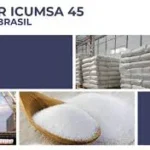
Starting a sugar export business looks simple from the outside — find a supplier, find a buyer, ship a container, collect a margin. In practice, the businesses that actually last past their first year are the ones that treat sourcing, documentation, and logistics as seriously as sales. This guide walks through what it actually takes to build a sugar export business from the ground up, and where a reliable supply partner fits into that picture.
What Running a Sugar Export Business Actually Involves
At its core, a sugar export business does one thing: connects sugar supply to buyers who need it, and manages everything in between — quality assurance, documentation, freight, and payment — cleanly enough that both sides trust the transaction. That sounds simple until you’re the one holding a container of product with a buyer questioning the paperwork.
New entrants often underestimate how much of the job is logistics and compliance rather than sales. A sugar export business that’s built a reputation for reliability usually got there by treating the boring parts — documentation, testing, communication during delays — as seriously as finding the next buyer.

Sourcing: The Foundation of Any Sugar Export Business
Nothing else matters if the underlying supply isn’t reliable. Whether you’re sourcing directly from a mill or working with a trading partner, the priority is a supplier who can consistently hit spec and produce full documentation without excuses. A new exporter is especially vulnerable to a bad first shipment, since a single off-spec container can damage a buyer relationship before it’s even had a chance to develop.
Many new entrants start by partnering with an established supplier rather than trying to build direct mill relationships from day one. This lets a new entrant focus on sales and logistics while leaning on a supplier’s existing quality control and documentation systems until volume justifies deeper direct sourcing.
Specifications Every Export Business Should Know
Whatever grade you’re moving, know the numbers cold before you’re on a call with a buyer.
| Parameter | Refined White Sugar | Raw Cane Sugar |
|---|---|---|
| Polarization | 99.7° – 99.9° min | 98.0° – 99.5° min |
| Moisture | 0.04% max | 0.15% – 0.5% max |
| Colour (ICUMSA) | 45 – 100 IU | 800 – 1500 IU |
| Ash content | 0.03% – 0.05% max | 0.15% max |
| Sulphur dioxide (SO₂) | 15 ppm max | 20 ppm max |
| Packaging | 25kg / 50kg bags, 1MT jumbo bags | 50kg bags, 1MT jumbo bags, bulk vessel |
Buyers evaluating a new exporter will often ask harder questions on specs precisely because there’s no long track record yet to fall back on. Knowing these numbers fluently, and being able to explain what drives the range, builds credibility fast.
Registration and Legal Setup
Requirements vary significantly by country, but most jurisdictions require some combination of a registered business entity, a tax or export registration number, and in some cases a specific export license depending on the product category and destination. A new exporter should confirm requirements with local trade authorities before taking a first order, since operating without proper registration can complicate banking, customs clearance, and contract enforcement later.
It’s also worth understanding your own country’s export control rules, even for a food commodity like sugar — some jurisdictions apply reporting requirements or seasonal restrictions that aren’t obvious until you’re already mid-transaction.
Finding Buyers for a New Export Business
Early buyers for a sugar export business typically come from three places: trade platforms and B2B marketplaces, direct outreach to food manufacturers and distributors in target markets, and referrals once a first successful shipment builds a track record. None of these are fast, and most new entrants underestimate how long the sales cycle runs on a first container — weeks of relationship-building before a buyer commits real money to an unproven supplier.
Being transparent about being new to the business, while backing that with a reliable supply partner and full documentation, tends to work better than overstating experience. Buyers doing due diligence on a first order will usually ask questions that expose an inflated pitch quickly.
Documentation Your Business Needs to Manage
- Certificate of Analysis specific to each shipment
- Certificate of Origin
- Phytosanitary certificate
- Bill of Lading
- Packing list and commercial invoice
- Halal, Kosher, or other certification depending on the destination market
- Insurance documentation, depending on the agreed shipping terms
An exporter that leans on a supplier already set up to produce this full document set, rather than trying to assemble it independently on a first deal, avoids a lot of the paperwork mistakes that stall early shipments.
Shipping Terms You’ll Need to Understand
| Term | What It Means |
|---|---|
| FOB (Free on Board) | Seller delivers to the port; buyer arranges shipping from there. |
| CFR (Cost and Freight) | Seller pays freight to destination; buyer arranges insurance. |
| CIF (Cost, Insurance, Freight) | Seller covers both freight and insurance to destination. |
These follow the Incoterms rules maintained by the International Chamber of Commerce. A new sugar export business often starts by quoting CIF to buyers, since it’s the simplest structure to explain and removes freight coordination from the buyer’s side entirely on a first deal.
Working Capital and Payment Structures
This is where a lot of new entrants underestimate the business. A single container of sugar can represent tens of thousands of dollars in value, and payment structures — letters of credit, partial deposits, documentary collection — all affect how much working capital you need tied up at any given time. A business without adequate working capital can find itself unable to confirm a supplier order while still waiting on payment terms from a buyer.
Many new businesses start with smaller trial orders specifically to manage this cash flow risk, building up to larger commitments as both supplier trust and buyer relationships mature.
Freight and Logistics Partners
Unless you’re planning to manage freight booking directly from day one, a freight forwarder relationship is worth establishing early. A good forwarder handles vessel booking, customs coordination, and can flag potential delays before they become a crisis. Many established suppliers can also manage this piece on your behalf under CIF terms, which is often the simpler starting point for a new operation without in-house logistics experience yet.
International Standards to Build Around
Sugar moving through international trade is generally expected to meet the food safety benchmarks in the Codex Alimentarius, the joint FAO/WHO reference for international food standards, including limits on sulphur dioxide and heavy metals. A new exporter should build its documentation and supplier vetting process around these standards from the start, rather than learning them reactively after a shipment gets held at customs.
How Pricing and Margin Actually Work
Sugar pricing tracks the underlying commodity market, typically referencing the ICE Sugar No. 11 futures contract for raw sugar, with adjustments for grade, packaging, and freight terms layered on top. A new sugar export business needs to understand this pricing mechanism well enough to quote competitively while protecting margin, since the underlying commodity cost can shift meaningfully between the day you quote a buyer and the day you actually confirm supply.
Building in a small buffer between your supplier cost and your buyer quote, rather than quoting to the exact commodity price of the day, protects against the market moving against you during the days it takes to finalize a deal.
Insurance and Managing Risk on Early Shipments
A new exporter has more to lose relative to its size on a single bad shipment than an established company does, which makes cargo insurance worth taking seriously from the first order rather than treating it as an optional add-on. Ask your supplier for the actual insurance certificate on every shipment, not a verbal assurance, and understand exactly what’s covered and up to what value under the shipping term you’ve agreed to.
Beyond insurance, build a small buffer into your own quoted timelines to buyers. Port congestion and documentation holds happen even to experienced operators, and a business that quotes an unrealistically tight delivery window on a first deal sets itself up for a difficult conversation the first time a shipment runs even slightly behind schedule.
Trading Model vs. Holding Inventory
Most new export businesses operate on a back-to-back trading model — sourcing product only once a buyer order is confirmed, rather than holding inventory speculatively. This keeps working capital requirements lower and risk more contained, since you’re not carrying unsold stock. As volume and cash flow allow, some businesses eventually move toward holding limited inventory to shorten delivery timelines for repeat buyers, but this is generally a later-stage decision rather than a starting point.
Whichever model you choose, be explicit with buyers about which one you’re operating under. A buyer expecting immediate shipment from stock will be frustrated by a four-week lead time if they didn’t know the order was being sourced fresh from a mill.
Building a Simple Operations Checklist
A short internal checklist prevents most of the early mistakes that damage a new business’s reputation. At minimum: confirm the Certificate of Analysis against the agreed spec before any shipment loads, verify documentation numbers match across the Bill of Lading, Certificate of Origin, and packing list, and communicate proactively with the buyer the moment any timeline shifts. None of this requires sophisticated systems — a shared spreadsheet tracking each order from quote to delivery is enough at the volume most new businesses start with.
Choosing a Supply Partner as a New Business
The single highest-leverage decision a new sugar export business makes is who it sources from. A supplier that treats a new business seriously — offering samples, transparent documentation, and reasonable trial order minimums — makes it possible to build credibility with buyers quickly. A supplier that treats every new entrant as a low priority makes everything downstream harder.
Look for a supplier with export experience across multiple destination markets, since they’ll already understand documentation quirks you haven’t encountered yet, and won’t need you to teach them your target market’s requirements.
Red Flags When Choosing Your First Supplier
Watch for a supplier who won’t name their actual sourcing origin, who pushes for full payment upfront with no inspection option on a first order, or who can’t produce a lab report tied to a specific past shipment when asked. As a new entrant without your own track record yet, your supplier’s credibility effectively becomes your credibility with early buyers — a shaky supplier relationship undermines the trust you’re trying to build from the very first deal.
It’s worth asking a prospective supplier directly how they’ve supported other new export businesses in the past. A supplier used to working with first-time exporters will usually have systems in place — smaller trial minimums, clearer documentation templates, more patient communication — that a supplier focused only on large established buyers won’t bother maintaining.
Common Challenges New Entrants Face
Cash flow timing is the most common one — the gap between paying a supplier and collecting from a buyer can strain a new business more than any other single factor. Documentation errors on a first shipment are the second, usually from unfamiliarity with a specific destination market’s requirements rather than carelessness. And underestimating how long it takes to close a first buyer relationship is the third; most successful sugar export businesses report their first deal took considerably longer to close than they initially expected.
Growing From One Container to Recurring Volume
Once a sugar export business has completed a handful of successful shipments, growth usually comes from two directions: existing buyers increasing order frequency once trust is established, and referrals into adjacent buyer networks. Reinvesting early margin into working capital, rather than drawing it out too early, is what lets a business scale from occasional containers to a steady shipping cadence.
At this stage, moving to a structured supply agreement with your primary source — fixed cadence, formula-based pricing, priority allocation — gives both sides the predictability needed to plan capacity and cash flow with more confidence than order-by-order quoting allows.
Certifications Worth Building Toward
Buyers increasingly expect more than a basic Certificate of Analysis, particularly in food-grade markets. ISO 9001 quality management certification and HACCP compliance are commonly requested by larger buyers, and Halal or Kosher certification opens specific regional markets that would otherwise be closed to you. A new exporter doesn’t need every certification on day one, but knowing which ones matter for your target markets, and confirming your supplier already holds them, saves a lot of lost deals down the line where a buyer simply can’t proceed without a specific certificate.
Scaling Beyond Your First Market
Once a business has a track record in one destination market, expanding into a second is usually easier than the first market was, since the documentation process and supplier relationship are already proven. What changes is the destination-specific detail — different duty structures, different certification requirements, sometimes a different preferred shipping term. Treat each new market as its own mini research project rather than assuming what worked in one country transfers directly to another.
Diversifying across a few markets also reduces the risk of a single country’s regulatory change or demand shift disrupting the whole business, which matters more as volume grows and more capital is tied up in the pipeline at any given time.
A Quick Example
A trading company we’ve supplied started with a single 20ft container to a regional distributor, sourced entirely through our supply relationship while they built their own documentation and freight processes. Eighteen months later they were placing recurring monthly orders across three markets, having reinvested early margin into working capital rather than taking it out of the business.
Frequently Asked Questions
How much capital do I need to start a sugar export business? This varies widely by target volume and payment terms, but a single 20ft container typically represents tens of thousands of dollars, so working capital planning should start there rather than assuming margin alone will fund growth.
Do I need my own warehouse or storage facility? Not necessarily for a trading model where product moves directly from supplier to buyer, though this depends on your specific business structure and whether you’re taking possession of goods at any point.
How long does it take to close a first buyer? Longer than most new entrants expect — weeks to months is common, since buyers doing proper due diligence on an unproven supplier take their time before committing to a first order.
Can I start with a smaller trial shipment? Yes, and most established suppliers will work with a smaller first order specifically so a new business can prove its process to a buyer before scaling volume.
What’s the biggest mistake new entrants make? Underestimating documentation requirements and cash flow timing — both are more central to the business than sales, even though sales gets most of the early attention.
Do I need my own freight forwarder relationship right away? Not immediately. Many new businesses lean on their supplier’s freight coordination under CIF terms until volume justifies managing that relationship independently.
Should I specialize in one grade or offer multiple? Most new entrants start focused on one or two grades they know well, then expand into raw sugar or additional refined grades once they’ve built supplier relationships that support a broader range.
How do I price competitively without cutting into margin too much? Base your quotes on real commodity pricing plus a transparent margin, and be prepared to explain your pricing structure to buyers who ask — vague pricing tends to lose deals to competitors who can break down their numbers clearly.
Build Your Sugar Export Business on a Reliable Supply Foundation
Send your target volume, grade, and destination port, and you’ll get a quote built on real production capacity and documentation you can hand straight to a buyer. Our wholesale raw sugar suppliers guide and wholesale white sugar suppliers page cover grade-specific sourcing in more depth, and our breakdown of the ICUMSA colour scale explains grading if you’re new to the terminology. Once you’re ready to move volume, our guide on evaluating a sugar export supplier covers exactly what to look for in a long-term sourcing partner. If your business will also handle inbound shipments, our guides on running a sugar import company and sourcing from a sugar import supplier cover that side of the trade.