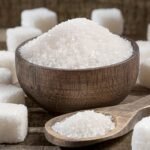
If you’re sourcing ICUMSA 45 sugar in commercial volume, you already know the hard part isn’t finding someone who claims to sell it — it’s finding an ICUMSA 45 sugar supplier who can actually back the spec sheet with paperwork. Global Sugar Supplies supplies ICUMSA 45 white refined cane sugar direct from Brazilian mills, in bulk, with SGS inspection and full export documentation on every shipment. This page lays out exactly what we sell, the numbers behind it, and how the buying process works.
What ICUMSA 45 Actually Means
ICUMSA stands for the International Commission for Uniform Methods of Sugar Analysis, and the number attached to a sugar grade tells you how much color is left in it after refining — measured in RBU (reference base units). The lower the number, the whiter and purer the sugar. ICUMSA 45 sits at the top of the commercial refined scale, which is why it’s the default spec for food and beverage manufacturers, pharmaceutical buyers, and anyone who can’t afford variation batch to batch. When someone asks us for an ICUMSA 45 sugar supplier, this is the product they mean nine times out of ten.
Full Specification Sheet
Here’s exactly what leaves our facility under the ICUMSA 45 label:
- ICUMSA Color: 45 RBU maximum (routine output usually tests 20–35 RBU)
- Polarization: 99.80° minimum
- Moisture: 0.04% maximum
- Ash content: 0.04% maximum
- Reducing sugars: 0.05% maximum
- Sulphur dioxide (SO2): 2 ppm maximum
- Sediment: nil
- Solubility: 100% in water, no residue
- Granulation: fine to medium crystal, free-flowing
- Origin: Brazil, Sao Paulo and Mato Grosso do Sul mills
- Crop year: current season
Those are the numbers an SGS or Intertek inspector will confirm at loading, and they’re the same numbers that go on the contract. We don’t quote a tighter spec than we can deliver.
Packing, Quantities, and Minimum Order
As an ICUMSA 45 sugar supplier working at commodity scale, we pack to whatever the receiving end needs: 50kg PP woven bags with a poly liner, 1MT jumbo bags for buyers with forklift handling, or straight bulk for vessel loading. Minimum order is 1,000 MT per shipment for standard ICUMSA 45 — that’s roughly one Handysize parcel or around 40 containers, depending on how you’re shipping. Buyers occasionally ask if we’ll do smaller test orders; for ICUMSA 45 specifically, the economics of milling, bagging, and inspection don’t work much below that threshold, so we’re upfront about it instead of stringing anyone along.
Why Buyers Stick With Us
There are a lot of names floating around online claiming to be an ICUMSA 45 sugar supplier, and a fair number of them are brokers reselling someone else’s paper, or worse, outright scams running LOI/ICPO procedures designed to extract advance fees. We work direct with mills, we name the origin, and we let buyers nominate their own inspector if they don’t trust ours — which, frankly, they shouldn’t have to. The product either passes independent inspection or it doesn’t, and ours does.
For more on Brazil’s role in global supply, see our Sugar Manufacturer page, and for the broader product range beyond ICUMSA 45, our Cane Sugar Supplier page covers VHP, brown, and organic grades.
Certifications and Inspection
Every lot ships with: SGS or Intertek pre-shipment inspection report, Certificate of Origin, Phytosanitary Certificate, Commercial Invoice, Packing List, and Bill of Lading. HALAL and KOSHER certification is available on request, along with ISO 22000 and FSSC 22000 documentation for buyers whose import compliance teams need it. None of this is an upsell — it’s just what ships with the product as standard.
Shipping and Lead Times
We load out of Santos and Paranaguá. From confirmed order to vessel loading typically runs 15–30 days, depending on port congestion, which moves around more than people expect during peak harvest season. Container shipments work for the 20–500 MT range; anything above that usually makes more sense as a chartered bulk vessel. We can quote FOB, CIF, or CFR to whatever destination port you’re working with.
Payment Terms
Standard terms are an irrevocable Letter of Credit at sight from a prime bank for first-time buyers, or TT against documents once there’s a trading history. We price against the ICE Liffe No. 5 white sugar futures contract plus a basis, so the number you get is something you can actually check against the market rather than take on faith.
Getting a Quote
Send us the quantity, packing preference, destination port, and payment terms you’re working with, and we’ll come back with a formal offer inside 24–48 hours. If you want to compare us against other options first, our ICUMSA 45 Sugar Exporter and Buy ICUMSA 45 Sugar pages go into shipping logistics and the buying process in more detail. For bulk and wholesale-specific pricing breaks, see Wholesale ICUMSA 45 Sugar and Bulk ICUMSA 45 Sugar.
For the technical background on how ICUMSA color grading actually works, the ICUMSA organization publishes the official analytical methods used across the industry.
ICUMSA 45 vs Other Grades — Why the Number Matters
People new to the sugar trade sometimes assume “sugar is sugar” and the ICUMSA number is just marketing. It isn’t. ICUMSA 100 still looks white to the naked eye but carries roughly double the residual color and a looser moisture and ash tolerance — fine for a manufacturer doing secondary processing, less fine for a beverage company trying to match a precise color profile batch after batch. Drop down to VHP raw cane sugar (ICUMSA 600–1,200) and you’re looking at a product meant for refineries, not direct food use. As an ICUMSA 45 sugar supplier, we carry the full range, but ICUMSA 45 is what most serious buyers land on once they understand the tradeoffs, because it’s the one grade where you’re not gambling on consistency.
Who Actually Buys at This Grade
Our ICUMSA 45 buyers fall into a fairly predictable set of categories. Beverage manufacturers need it for color consistency in carbonated drinks and juices. Confectionery and bakery operations buy it because crystallization behavior and sweetness profile are more predictable than with lower grades. Dairy processors use it in yoghurt and flavored milk lines. Pharmaceutical buyers occasionally request tighter-than-standard specs — lower heavy metal limits, stricter microbial counts — which we can arrange through dedicated pharmaceutical-grade runs. And then there’s a steady volume of commodity traders and importers who simply want a reliable physical position they can move through their own distribution network without worrying about a failed inspection holding up the deal.
How Quality Control Actually Works on Our End
It’s worth explaining this in plain terms because a lot of buyers have been burned before and are understandably skeptical of anyone who just says “trust us.” Before a shipment leaves Brazil, an independent inspector — SGS or Intertek, whichever the buyer prefers — draws samples directly from the batch being loaded, not from a separate “showroom” sample set. Those samples go to a lab for polarization, moisture, ash, color, and reducing sugar testing. The results get written up into a formal certificate that travels with the shipping documents. If a buyer wants to send their own surveyor to origin, we don’t push back on that; it’s standard practice in physical commodity trade and it protects both sides. The only suppliers who get nervous about independent inspection are the ones who know their product won’t hold up to it.
Storage, Shelf Life, and Handling
ICUMSA 45 sugar properly bagged and kept in a dry, ventilated warehouse away from direct moisture exposure holds for a minimum of two years without caking or color drift. Humidity is really the only enemy here — sugar is hygroscopic, so if it’s stored somewhere with poor airflow or temperature swings that cause condensation inside the packaging, you’ll start to see clumping. We pack with a polyethylene liner inside the woven PP bag specifically to manage that risk during ocean transit, where humidity swings are unavoidable.
A Note on Avoiding Bad Deals
Because ICUMSA 45 sugar is one of the most searched commodities online, it’s also one of the most targeted by fraudulent “suppliers” who never touch physical product. The pattern is usually the same: unrealistically low pricing, pressure to sign an LOI or ICPO before you’ve even gotten a real offer, demands for NCNDA/IMFPA paperwork, and eventually a request for an upfront fee before anything ships. A legitimate ICUMSA 45 sugar supplier doesn’t need an advance fee to issue you a formal offer with a real specification sheet and a named origin. If a deal looks too good to check, it usually is.
Frequently Asked Questions
What’s the difference between ICUMSA 45 and “double refined” sugar? Double refined is a marketing term, not an ICUMSA standard. Ask for the actual color reading in RBU instead.
Can you supply less than 1,000 MT? Not economically at ICUMSA 45 — below that volume, milling and bagging costs make the price uncompetitive for both sides.
Do you supply organic ICUMSA 45? Yes, on request, with EU Organic or USDA NOP certification, though MOQs and lead times differ from conventional product.
How is pricing set? Against the ICE Liffe No. 5 white sugar futures contract plus a basis tied to grade, origin, and incoterm, so it’s verifiable against a public market reference rather than an arbitrary number we make up.
What Each Number on the Spec Sheet Actually Tells You
Buyers who are new to commodity sugar often nod along at a spec sheet without really knowing what they’re agreeing to. It helps to break it down. Polarization measures how much of the product is actual sucrose versus other dissolved solids — 99.80° minimum means you’re getting almost pure sucrose, with very little else along for the ride. Moisture at 0.04% maximum matters because water content drives caking and shortens shelf life; a sugar sitting at 0.2% moisture will clump in the bag within weeks in a humid port warehouse. Ash content reflects mineral residue left over from the cane — potassium, calcium, that kind of thing — and it directly affects flavor in delicate applications like clear beverages. Reducing sugars are the fructose and glucose that didn’t fully convert during processing; too high and you get caramelization issues during high-heat manufacturing processes like baking or syrup production. None of these numbers exist in isolation — together they’re what separates ICUMSA 45 from a cheaper, less consistent grade.
Incoterms, Explained for Buyers Who Don’t Live in Commodity Trade
We get asked about FOB versus CIF more than almost anything else, so here’s the short version. FOB (Free on Board) means our responsibility ends once the sugar is loaded onto the vessel at Santos or Paranaguá — you arrange and pay for the ocean freight and insurance from there. CIF (Cost, Insurance, Freight) means we handle the freight and insurance and quote you a landed price at your destination port, which is usually simpler for buyers who don’t have an existing freight forwarder relationship. CFR (Cost and Freight) sits in between — we cover freight, you arrange your own insurance. None of these is objectively “better”; it depends on whether you already have logistics infrastructure in place or you’d rather we handle that side of it.
Typical Timeline From Inquiry to Delivery
Buyers planning around a delivery date need a realistic timeline, not a sales promise. From the day we receive a complete inquiry — quantity, packing, destination, payment terms — expect a formal offer within 24 to 48 hours. Once that’s accepted and the sale and purchase agreement is signed, milling and bagging to your specification typically takes 10 to 15 days, assuming standard ICUMSA 45 packed in 50kg bags. SGS inspection happens during the final loading window, adding a day or two. Ocean transit time then depends entirely on destination — West Africa from Santos runs roughly 18 to 25 days, the Middle East 25 to 35 days, South and Southeast Asia 30 to 40 days. All told, most buyers should plan on 45 to 75 days from signed contract to cargo arriving at their port, with port congestion being the single biggest variable that can stretch that window.
Packaging Options in More Detail
The default for most buyers is the 50kg polypropylene woven bag with an inner polyethylene liner — it’s the global standard because it’s easy to handle manually, stacks well in a container, and the liner protects against moisture ingress during transit. Buyers with mechanized receiving facilities and forklift capability often prefer 1MT jumbo bags, which cut down significantly on labor at the destination port. For buyers taking volumes above roughly 5,000 MT with silo storage already in place, bulk vessel shipment without any bagging at all is usually the most cost-efficient option, since you’re not paying for packaging materials or the labor to fill and stitch tens of thousands of bags. We can also arrange custom bag printing for buyers who repackage and resell under their own brand in their local market — that’s common among distributors and importers who buy from us and supply onward to retail.
Working With Us Long Term
Most of our ICUMSA 45 buyers don’t place a single order and disappear — they come back quarterly or move to standing contracts once they’ve confirmed the product holds up over a few shipments. That’s really the test that matters more than anything on a website: does the second shipment match the first one, and the fifth match the fourth? We’d rather earn that confidence over a few real transactions than convince anyone with marketing copy. If you’re evaluating us as an ICUMSA 45 sugar supplier alongside other options, ask for references from existing buyers, request your own inspector at loading, and start with a volume you’re comfortable testing the relationship with before scaling up.
Industries and Regions We Currently Ship To
Our current ICUMSA 45 buyer base spans food and beverage manufacturers across West and East Africa, distributors in the Middle East and the Gulf, importers across South and Southeast Asia, and a smaller number of European repackers who blend our product into private-label retail lines. Volumes range from a single 1,000 MT trial order up to standing annual contracts north of 20,000 MT split across quarterly vessels. Wherever your operation sits, the underlying process — spec confirmation, formal offer, inspection, shipment — stays the same.
Ready to move forward? Send your requirement — quantity, packing, destination port, payment terms — and we’ll have a formal offer back to you within 24 to 48 hours.
If you specifically need the white refined sugar ICUMSA 45 specification with full documentation, we cover that in detail on our dedicated page.