Raw sugar is a different product from the refined white sugar most people picture, and buyers looking for a raw sugar supplier often need it for a specific reason — feeding a refinery, blending into an industrial process, or supplying a market where raw or semi-refined sugar is the actual end product rather than an intermediate step. This guide covers what raw sugar actually is, the specification a legitimate supplier should be able to document, and what to check before placing an order.
What Is Raw Sugar, Exactly?
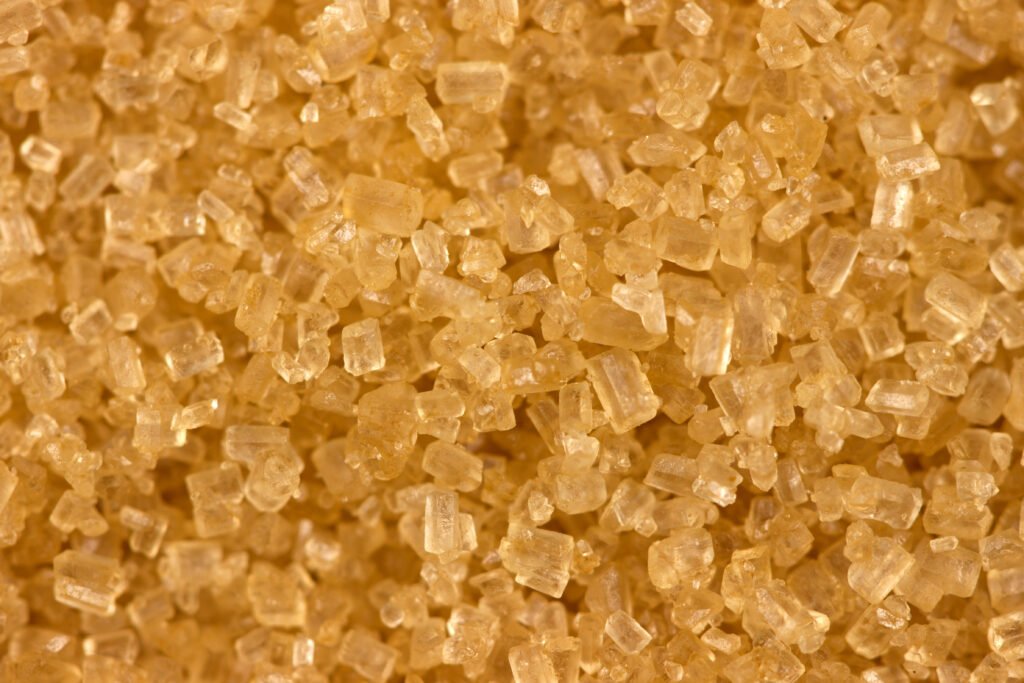
Raw sugar, sometimes called VHP (Very High Polarization) sugar, is the first-stage product of sugarcane processing — cane juice extracted, clarified minimally, and crystallized without the full refining and decolorization process that produces white sugar. It carries a golden-brown to tan color, a polarization typically between 99.0° and 99.4°, and an ICUMSA color rating well above 600, often in the range of 800 to 1,500 depending on the specific processing method. It’s not intended for direct retail food use in most markets — it’s feedstock for refineries, or in some regions, sold directly for specific industrial and food applications that don’t require a refined white product.
Typical Raw Sugar Specification
| Parameter | Typical Specification |
|---|---|
| Polarization | 99.0° – 99.4° min |
| Color (ICUMSA units) | 800–1,500 |
| Moisture | 0.10% max |
| Ash content | 0.15% max |
| Reducing sugars | 0.20% max |
| Grain size | Medium to coarse crystal |
| Foreign matter | Minimal, within trade-standard tolerance |
These numbers vary somewhat depending on the specific raw sugar grade and origin, so always request a certificate of analysis matched to the actual batch you’re buying rather than relying on generic industry averages.
Raw Sugar vs. Refined Sugar: Why the Distinction Matters
A buyer new to sugar sourcing sometimes assumes raw sugar is simply a cheaper version of white sugar. It isn’t a substitute — it’s a different stage of processing entirely. Refined sugars like ICUMSA 45 or ICUMSA 100 have gone through clarification, decolorization, and crystallization steps that remove the molasses coating and impurities present in raw sugar. Raw sugar retains that coating, which gives it the characteristic color and flavor, and in most cases it requires further refining before it’s suitable for direct food manufacturing use. If your business needs a finished, food-grade white sugar, raw sugar is the wrong product regardless of price — you’d need a refined grade instead, and a legitimate raw sugar supplier should tell you that plainly rather than selling you the wrong product for your application.
Who Actually Buys From a Raw Sugar Supplier
- Sugar refineries — the largest buyer category, purchasing raw sugar as feedstock to produce refined white sugar.
- Industrial processors — some fermentation, biofuel, and industrial chemical processes use raw sugar directly rather than refined sugar.
- Specialty food producers — certain markets and products call specifically for raw or minimally processed sugar as an ingredient, valued for its distinct flavor and color.
- Traders and distributors — buying raw sugar in bulk for resale to refineries or industrial buyers in secondary markets.
If you’re not sure which category your business falls into, or whether raw or refined sugar is the right fit for your process, it’s worth a direct conversation with a supplier before placing an order — the wrong grade can cost far more to correct after the fact than the few minutes it takes to clarify upfront.
Packaging and Bulk Shipping for Raw Sugar
Raw sugar is most commonly shipped in bulk given its typical end use as refinery feedstock:
- Bulk vessel shipments — the standard format for large-volume raw sugar trade, loaded directly without bagging.
- Jumbo bags (1,000 kg) — used for smaller volume orders or buyers without bulk unloading infrastructure.
- 50 kg bags — less common for raw sugar but available for smaller specialty orders.
Because raw sugar has a higher moisture tolerance than refined sugar, storage and handling requirements differ slightly, though the same core principles apply: dry storage, controlled humidity, and prompt processing or resale rather than long-term storage where possible.
Certifications and Documentation
A reliable raw sugar supplier should provide:
- Certificate of Analysis specific to the shipped batch
- Certificate of Origin
- Phytosanitary certificate where required by the destination country
- Bill of lading and packing list matching the actual shipped quantity
- Fumigation certificate for wooden pallets, where applicable
For raw sugar destined for further refining, some buyers also request additional testing on specific impurity levels relevant to their refining process — confirm this requirement with your supplier before the order is finalized.
Pricing Factors for Raw Sugar
- Global raw sugar futures — raw sugar pricing tracks commodity markets directly, often more closely than refined sugar due to its role as the base traded product.
- Polarization level — higher polarization within the raw sugar range can command a modest premium.
- Order volume — bulk vessel orders achieve significantly better per-ton pricing than smaller bagged shipments.
- Freight and destination — as with any international shipment, distance and current freight rates factor into CIF pricing.
How to Order From a Raw Sugar Supplier
- Confirm the correct grade — raw sugar for refining feedstock has different requirements than raw sugar for direct specialty use, so clarify your application first.
- Request a formal quote — including polarization range, color rating, packaging, and Incoterms.
- Request a sample — particularly important for refineries needing to test compatibility with their existing processing setup.
- Confirm documentation requirements — especially any additional testing needed for refining feedstock.
- Finalize terms and shipping — proforma invoice, payment structure, and delivery schedule confirmed before production and loading.
Related Reading
See also our guides on cane sugar supply, our page on sugar import and export logistics, and what to check with a sugar wholesaler for bulk international sourcing.
What to Verify Before Choosing a Raw Sugar Supplier
- Verifiable production source. A legitimate raw sugar supplier can explain where the sugar is grown and processed, not just quote a price with no origin detail.
- Consistent specification across shipments. Polarization and color rating shouldn’t swing wildly from one batch to the next.
- Realistic pricing relative to current commodity markets. An unusually low quote with no clear explanation is a warning sign rather than a bargain.
- Willingness to support a sample or trial order. Especially important for refineries testing a new supplier’s raw sugar against their existing processing parameters.
- Clear, complete documentation. Certificate of analysis, certificate of origin, and shipping documents should all match the actual shipment without discrepancy.
Common Mistakes When Sourcing Raw Sugar
- Confusing raw sugar with brown or turbinado sugar. These are different products with different specifications, applications, and price points. Be specific with any supplier about exactly which product you need.
- Not accounting for higher moisture tolerance in storage planning. Raw sugar isn’t as forgiving in long-term storage as refined sugar, and buyers who treat it the same way sometimes end up with fermentation or clumping issues.
- Ordering without confirming refining compatibility. Refineries switching to a new raw sugar supplier should test a sample batch against their existing processing parameters before committing to a large-volume order.
- Overlooking polarization variance. A supplier quoting “raw sugar” without specifying the polarization range could be offering anything from 98.5° to 99.4°, a meaningful difference for refining yield calculations.
- Assuming lowest price means best value. As with refined sugar, unusually cheap raw sugar quotes with no clear production source explanation deserve extra scrutiny before any payment is sent.
Raw Sugar Market Context
Raw sugar trades as a global commodity, with pricing benchmarked against futures markets and influenced heavily by major producing regions’ harvest yields, weather conditions, and government trade policy. Unlike refined sugar, where pricing includes a processing margin layered on top of the raw commodity price, raw sugar pricing tracks the underlying commodity market more directly. This means buyers sourcing raw sugar should expect more price volatility tied to harvest seasons and global supply conditions, and should build that into procurement planning rather than expecting the kind of price stability sometimes possible with longer-term refined sugar supply agreements.
A Practical Example
A mid-size refinery client of ours previously sourced raw sugar through a series of short-term spot purchases from whichever supplier offered the lowest price that particular month, with no consistency in polarization or moisture content from one shipment to the next. That inconsistency created real problems on their processing line, since their refining equipment was calibrated around a specific polarization range and each shipment outside that range reduced yield and increased processing time. After switching to a standing supply arrangement with a single raw sugar supplier committed to a consistent specification range, their refining yield stabilized and their processing planning became significantly more predictable, even though the average price per ton was only modestly different from their previous spot-market approach.
Storage Considerations for Raw Sugar
Raw sugar’s higher moisture content compared to refined sugar makes it more prone to fermentation and clumping if stored improperly for extended periods. Buyers receiving bulk raw sugar shipments should plan for prompt processing or controlled storage with adequate ventilation, rather than treating it the same as long-shelf-life refined sugar. Refineries with dedicated raw sugar storage silos typically manage this as part of standard operations, but distributors or industrial buyers without that infrastructure should factor storage limitations into their order volume and timing.
Frequently Asked Questions
Is raw sugar safe to eat directly?
Raw sugar as traded internationally (VHP sugar) is generally not intended for direct retail food use in most markets and typically requires further refining. Some regions do sell minimally processed raw or “turbinado-style” sugars for direct consumption, but that’s a distinct, further-processed product from bulk export-grade raw sugar.
What’s the difference between raw sugar and brown sugar?
Raw sugar is unrefined, straight from initial cane processing. Brown sugar sold at retail is typically refined white sugar with molasses added back in during a controlled process, giving a consistent color and flavor that differs from raw sugar’s natural variation.
Can a raw sugar supplier also provide refined grades?
Many suppliers, including us, offer both raw and refined grades, since the two are often sourced from related supply chains. Confirm with your supplier which grade fits your actual application before ordering.
How is raw sugar quality measured and verified?
Testing follows internationally recognized methods, with trade statistics and standards tracked by bodies including the USDA Economic Research Service, which publishes data on global raw sugar trade and specifications.
Working With Refineries and Large-Volume Buyers
Refineries in particular have needs that go beyond a standard specification sheet — consistent polarization within a tight tolerance, predictable delivery scheduling that lines up with their own production planning, and clear communication when global supply conditions shift pricing or availability. We work directly with refinery buyers to structure supply arrangements around those specific needs rather than forcing every raw sugar order through the same generic process built for smaller one-off purchases. If your operation has particular processing requirements that affect what raw sugar specification works best for your line, tell us early in the conversation so we can confirm we’re offering the right product before any sample or order moves forward.
Request a Quote From Our Team
We supply raw sugar in bulk to refineries, industrial buyers, and distributors worldwide, with documented specifications and shipping terms that hold up in practice. Send us your polarization requirement, volume, and destination port, and we’ll respond with a formal quote and a current certificate of analysis.
If you specifically need the unrefined grade, see our raw cane sugar page for full specifications and ordering details.
Buying container loads or more? Our wholesale raw sugar guide covers volume pricing, logistics, and standing supply agreements.