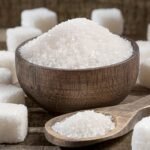
Buyers looking for demerara sugar for sale in bulk usually run into the same problem fast: half the suppliers who answer their inquiry don’t actually stock true demerara, they stock ordinary refined sugar with molasses sprayed back onto it and call it “demerara” because the color looks close enough. Global Sugar Supplies ships the real thing — large, golden-brown, partially-refined cane crystals with their natural molasses coating still intact — to specialty bakeries, coffee roasters, and beverage producers worldwide. This guide covers what demerara sugar actually is, how it’s specified in trade terms, and what to check before you commit to a container.
What Demerara Sugar Actually Is
Demerara sugar is a raw or lightly refined cane sugar. It’s made by crystallizing sugar cane juice and stopping the refining process early, before the molasses is spun off entirely. That’s the whole trick — the crystals keep a thin natural coating of molasses, which is what gives demerara its amber color, its slightly crunchy texture, and a flavor that leans toward toffee and caramel rather than plain sweetness.
In trade terms, what buyers call demerara sugar is what we list as Raw Brown Cane Sugar Grade E, ICUMSA 600–1200. That’s the spec name suppliers actually use on invoices and certificates of analysis — “demerara” is a market name, not a formal grading term, so when you’re sourcing at bulk volume, ask for it by ICUMSA color range and polarization, not just by the word demerara. Any serious mill or trading house will know exactly what you mean once you quote the numbers.
One thing worth clearing up early: demerara sugar and regular “brown sugar” sold in supermarkets are not the same product, even though they can look similar in a bowl.
On the production side, demerara starts the same way any cane sugar does — cane is crushed, the juice is clarified and boiled down, and the syrup goes through crystallization. Where it splits off is the centrifuge step. Fully refined sugar gets spun hard enough to strip nearly all the surface molasses away, then bleached and refined further to reach a near-white ICUMSA 45 grade. Demerara-style production stops earlier, leaving a thin molasses film on the crystal on purpose. That’s a deliberate processing choice at the mill, not a shortcut or a lower-effort product — it just targets a different result.
Because the molasses coating is thin and the crystal itself has already gone through clarification, demerara sugar for sale in the export market is food-safe and stable for long-haul shipping — it isn’t a “rough” or unfinished product, it’s a specific finish point in the refining process, produced to the same food-safety standards as any grade we ship.
Why It’s Called Demerara Sugar
The name comes from the Demerara region of what was then British Guiana, on South America’s northern coast, now part of Guyana. Sugar estates along the Demerara River exported large, golden, partially-refined cane crystals to Britain from the 1800s onward, and the sugar took the region’s name with it. Original Demerara-grown sugar is a fairly small niche crop today, and most of what’s traded globally as “demerara-style” sugar now comes from Brazil, India, Thailand, and a handful of other major cane-producing origins that can turn out the same crystal size, color, and moisture profile at real export volume.
That’s a normal thing in commodity trading — the name describes a style and spec, not a single country of origin, the same way “Dijon mustard” is made well outside Dijon. When someone asks us for demerara sugar for sale, we’re quoting them Brazilian, Thai, or Indian raw cane sugar milled to the demerara color and crystal profile, not sugar physically grown on the Demerara River.
Demerara Sugar vs. Regular Brown Sugar — The Real Difference
This trips up a lot of first-time buyers, including some who’ve been in food retail for years without ever sourcing sugar directly. Most “brown sugar” on grocery shelves starts life as fully refined white sugar — the kind we sell as Refined ICUMSA 45 Sugar — that a processor then coats with molasses syrup after the fact to get the color and flavor back. It’s an engineered product: strip the molasses out during refining, add a controlled amount back in later so the color and moisture are consistent batch to batch.
Demerara sugar skips that whole round trip. The molasses was never fully removed in the first place — the crystal is raw or minimally refined, so what you’re tasting is the actual residue of the cane juice, not a syrup added back afterward. That’s why demerara has a coarser, larger crystal and a drier, less sticky feel than commercial brown sugar, plus a more distinct caramel note that survives baking and roasting instead of flattening out.
Neither product is “better” in a nutritional sense — both are still sugar, and the mineral content difference between raw and refined cane sugar is small enough that it doesn’t meaningfully change the calorie or nutrition picture. The real distinction is flavor and texture, not health value, and we’d rather tell buyers that plainly than let a supplement-aisle marketing claim get repeated back to us. If a customer wants demerara sugar for sale, it’s because they want the taste and the crunch for a specific application, not because it’s a diet product.
Specifications for Bulk Demerara Sugar
When we quote demerara sugar for sale to a bulk buyer, this is the spec sheet we work from. It’s the same document that goes out with the certificate of analysis on every shipment, so buyers can check an incoming container against it directly.
| Specification | Value |
| Polarization | 96° – 98° minimum |
| Colour (ICUMSA) | 600 – 1200 |
| Moisture | 0.4% max |
| Ash Content | 0.15% max |
| Solubility | 100% free-flowing and dry |
| Magnetic Particles | 4 mg/kg max |
| SO₂ Content | 70 mg/kg max |
| Granulation | Fine to medium brown crystals |
| Origin | Brazil / Thailand / India (on request) |
The ICUMSA 600–1200 range is the part that matters most for demerara buyers specifically. That’s a wide color band on purpose — it covers the medium-to-dark amber crystal that reads as “classic demerara” to a baker or a coffee brand, without drifting so dark it starts looking like muscovado or turbinado, which are different products with their own moisture and crystal characteristics. If a supplier quotes you a color number well outside that band and still calls it demerara, ask them to run it again — the shade is the whole identity of the product.
Polarization of 96–98° tells you the sucrose purity is high enough for the sugar to be stable in storage and consistent in sweetness, even though it’s not fully refined. Moisture capped at 0.4% and ash at 0.15% max are the numbers that actually predict whether a shipment will clump, cake, or spoil in transit — those two matter more than color for a buyer worried about shelf stability across a long ocean voyage.
The other two figures — magnetic particles at 4 mg/kg max and SO₂ at 70 mg/kg max — are food-safety and processing-residue checks rather than flavor specs, but they’re the ones a customs lab or a buyer’s own QA team is most likely to test on arrival. SO₂ is used in small amounts during clarification at the mill, and a compliant shipment stays well under the 70 mg/kg ceiling; magnetic particle content reflects how clean the processing line and packaging environment were. Both numbers should show up on the certificate of analysis for every lot, not just the ones a buyer specifically asks about.
Granulation is listed as “fine to medium brown crystals,” which is intentionally a range rather than a fixed sieve size. Buyers ordering demerara sugar for sale for a visible-topping application — think crumble toppings or crusted cookies — usually want the coarser end of that range, while buyers blending it into a syrup or a packet-format sweetener care less about crystal size and more about consistent dissolution. It’s worth specifying which end of the range you need when you place the order rather than assuming “medium” means the same thing to every supplier.
What Separates a Good Demerara Sugar Shipment From a Mediocre One
Three things decide whether a demerara shipment performs well once it’s in a customer’s kitchen or production line: crystal size consistency, moisture control, and color uniformity. Get any one of those wrong and the buyer notices, usually at the worst possible time — mid-production run.
- Crystal size consistency — Demerara’s appeal is partly textural. A bag with a wide mix of fine dust and oversized clumps looks and pours differently than one with uniform medium-to-large crystals, and that inconsistency is the first thing a specialty bakery or a coffee shop buyer will flag.
- Moisture control — Sugar above spec on moisture clumps in the bag, resists free-flow dosing on packaging lines, and can develop mold risk on long shipments through humid ports. The 0.4% max figure isn’t arbitrary; it’s the line where storage stability starts to break down.
- Color uniformity — Buyers reordering demerara sugar for sale expect the same shade batch after batch, especially retail-facing brands whose packaging promises a specific golden-brown look. A shipment that swings from 700 to 1150 ICUMSA between bags reads as inconsistent even if every bag is technically within the 600–1200 range.
We run pre-shipment sampling and share lab results with the certificate of analysis before loading, and we’re glad to arrange third-party inspection for larger orders — that’s standard practice at container volume and it’s worth insisting on regardless of which supplier you use. If you want the fuller picture on how raw cane sugar like this gets from mill to export bag, our post on how raw brown cane sugar is made walks through the milling and crystallization steps in more detail.
It’s also worth asking a supplier how they store demerara before loading. Because the crystal retains surface moisture from its molasses coating, warehousing it near fully dried refined sugar or in a poorly ventilated shed can let it pick up ambient humidity and start clumping before it’s even left the country of origin. A supplier who can speak specifically to how they handle demerara sugar for sale — separate storage, moisture checks before bagging, proper liner selection — is usually one who ships it regularly rather than as an occasional side order.
Who Actually Buys Demerara Sugar for Sale, and Why
The demand for demerara sugar splits pretty cleanly across a handful of commercial uses, and it’s worth knowing which bucket your business falls into because it affects what crystal size and packaging you should be asking for.
Specialty bakery is the biggest volume driver. Demerara’s coarse crystal doesn’t dissolve as fast as fine sugar, so it holds its shape and gives a visible sparkle and crunch on top of muffins, scones, cookies, and crumble toppings — bakers use it specifically for that surface texture, not as a general sweetener swap.
Gourmet coffee and tea brands use demerara as a stir-in sweetener because the molasses note complements roasted coffee flavor better than plain white sugar does, and it’s become close to a default at specialty coffee bars for that reason. Some premium tea blenders use it in the same way, particularly for darker, more robust tea styles.
Cocktail and mixology use is smaller in volume but steady — demerara syrup is a standard ingredient in a handful of classic cocktails (the Old Fashioned and various tiki drinks lean on it) because it adds a caramel depth that simple syrup doesn’t. Bars and beverage manufacturers making bottled syrups or mixers order it specifically for that flavor profile.
Artisan confectionery producers use demerara in brittles, toffees, and caramel-adjacent candy where the partially-refined character adds complexity that refined white sugar can’t replicate on its own. And a growing segment is retail packaging positioned around “natural” or “less processed” branding — worth noting again that this is a marketing and flavor positioning, not a verified nutritional advantage, and we’d steer any buyer away from overstating health claims on pack copy.
If you’re weighing demerara against a fully refined alternative for a specific application, our post comparing raw brown cane sugar vs. white sugar breaks down where each one performs better, and our rundown of raw brown cane sugar uses across food manufacturing covers more application detail than we have room for here.
A fair number of our buyers order demerara alongside a refined white product for a blended product line — a coffee brand doing both a white sugar packet and a “raw sugar” packet, for instance. If that’s your situation, it helps to know how the two compare on the numbers, not just on marketing language.
Our Crystal White Sugar and Refined ICUMSA 150 White Sugar both sit at the opposite end of the color scale from demerara — ICUMSA 45 and 150 versus demerara’s 600–1200 — because they’ve gone through the full refining and bleaching process demerara deliberately skips. Same base crystal, different stopping point. Ordering both under one contract is straightforward on our end since they’re processed at the same mills; it just means two separate line items with two separate certificates of analysis.
Sourcing and Shipping Demerara Sugar Worldwide
Buyers searching for demerara sugar for sale rarely need it for one market only — a lot of our customers are supplying multiple countries from a single production run. Global Sugar Supplies ships demerara-style raw brown cane sugar to buyers across North America, Europe, the Middle East, Africa, and Asia, in standard export packaging — 25 kg or 50 kg PP/PE-lined bags on pallets, or bulk bags for larger container loads, depending on what the buyer’s receiving facility can handle. Origin is Brazil, Thailand, or India depending on the crop cycle and the volume ordered, and we confirm origin and lab specs before any contract is finalized so there’s no surprise at the destination port.
Grading and international trade in raw and specialty sugars generally follow conventions tracked by bodies like the International Sugar Organization, which publishes global market data and trade statistics that most exporters and importers reference when negotiating contracts. It’s a useful resource if you want context on how raw sugar pricing and global supply move independently of any single origin.
For packaging formats and how bulk sugar typically arrives at destination, our guide to sugar packaging types covers bag sizes, liners, and bulk container options in more depth than we can fit here. Payment terms, minimum order quantities, and lead times work the same way for demerara as they do for our other raw and refined grades — we quote per shipment based on current market pricing, since raw sugar tracks global commodity markets and doesn’t hold a fixed price list the way a retail product would.
Every shipment travels with a certificate of analysis matching the spec table above, plus the standard export paperwork — bill of lading, certificate of origin, phytosanitary certificate, and packing list. Buyers who need third-party inspection (SGS, Bureau Veritas, or a comparable surveyor) before loading can arrange it, and we cooperate with whichever inspector the buyer’s bank or contract requires. If your business is new to importing raw sugar specifically, our post on certifications and quality assurance covers what documentation to expect and how the inspection process typically runs from contract to arrival.
Common Questions About Buying Demerara Sugar in Bulk
Is demerara sugar the same as turbinado or muscovado? No, though they’re related. All three are less-refined cane sugars, but they sit at different points on the color and crystal scale. Turbinado is generally lighter and drier, muscovado is darker and stickier with a stronger molasses content, and demerara sits in between with its distinctive large, dry, golden crystal. When we quote demerara sugar for sale, we’re quoting the ICUMSA 600–1200 band specifically — a buyer wanting muscovado’s darker profile would need a different spec.
What’s the minimum order quantity for bulk demerara sugar? This varies by origin and by how the shipment is packed, but we typically work in container-scale volumes for export orders — reach out with your target quantity and destination port and we’ll confirm what’s workable for your route.
Does demerara sugar need special storage? It should be kept dry and away from temperature swings, the same as any raw sugar, since the residual molasses makes it slightly more moisture-sensitive than fully refined white sugar. At 0.4% max moisture and proper bag liners, it holds up well through normal warehouse conditions and typical shipping timelines.
Can I get a sample before placing a bulk order? Yes — we can send a small sample with the certificate of analysis so your team can check crystal size, color, and moisture before committing to a full container.
If you’re sourcing demerara sugar for sale at bulk volume, the fastest way to get an accurate quote is to tell us your target volume, destination port, and whether you need a specific ICUMSA color within the 600–1200 range or a broader spec is fine. We’ll come back with pricing, lead time, and a sample of our current certificate of analysis so you can see exactly what you’d be buying before committing to a contract. The full product listing and current specifications are on our Raw Brown Cane Sugar Grade E, ICUMSA 600–1200 page, and our team can walk through documentation, inspection options, and shipping logistics once you’re ready to move forward.