


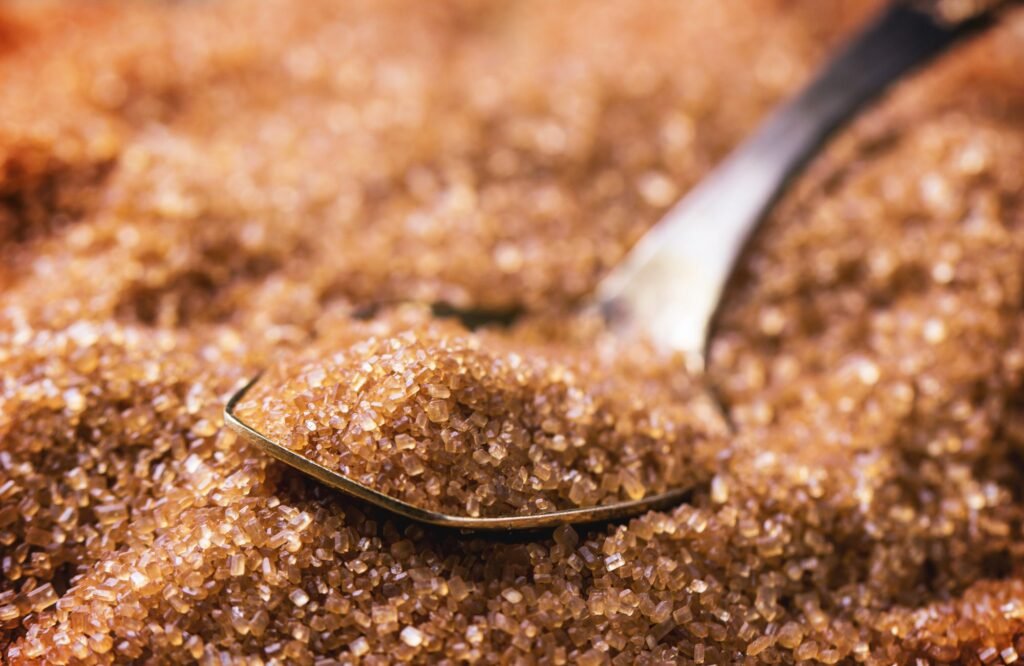
We supply raw brown cane sugar, Grade E, with an ICUMSA colour range of 600 to 1200, in bulk to refiners, brewers, bakeries and food manufacturers worldwide. It ships in 50 kg bags or 1 MT jumbo bags from our supply bases in Thailand and Brazil. This is sugar that has kept part of its natural molasses film, so it is golden to light brown, slightly sticky to the touch and carries a soft caramel flavour.
On this page you will find the specification, what Grade E means, who uses it and why, packing, documents, how ordering works and answers to the questions we hear most often.
Quick specs: raw brown cane sugar Grade E
- Colour: ICUMSA 600 to 1200, golden to light brown
- Polarization: 96° to 98° min
- Moisture: 0.4% max | Ash: 0.15% max
- Crystals: fine to medium brown
- Packing: 50 kg PP bags with inner coating, or 1 MT jumbo bags
- Origin: Brazil, Thailand or India (on request)
What raw brown cane sugar is
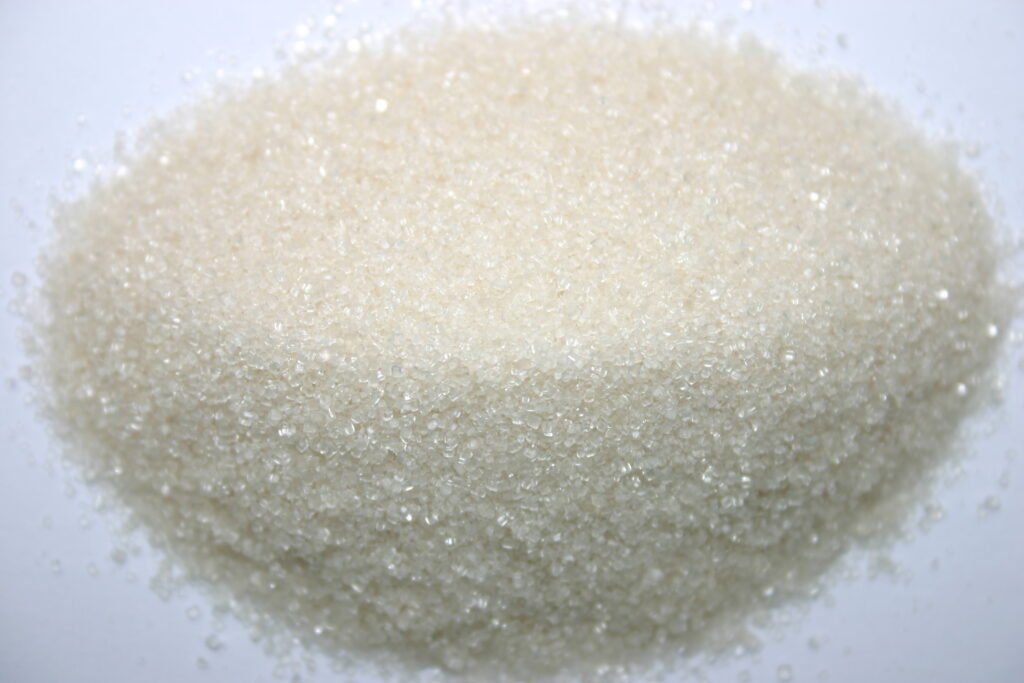
When cane juice is boiled down and crystallised, each crystal comes out coated in a thin layer of molasses. Fully refined white sugar has that layer washed and filtered away. Raw brown cane sugar keeps a good part of it. That film is where the colour, the moisture and the caramel taste come from.
The ICUMSA number tells you how much colour is left. White sugars sit at 150 IU or below. Raw brown cane sugar in the 600 to 1200 range is clearly brown in the bag and gives a light amber colour in solution. “Grade E” is a trade label buyers use for this colour band. Our article on what raw brown cane sugar Grade E is explains where the term comes from.
It is worth being clear on one point. Raw brown cane sugar is still about 96 to 98% sucrose. The molasses adds flavour and colour, and tiny amounts of minerals, but nutritionally it is still sugar. Anyone selling it to you as a health food is overselling.
Raw brown cane sugar specification
These are the contract figures for our raw brown cane sugar. Each lot is inspected against them before it leaves.
| Parameter | Specification |
|---|---|
| Grade | Grade E |
| Colour (ICUMSA) | 600 to 1200 IU |
| Polarization | 96° to 98° minimum |
| Moisture | 0.4% maximum |
| Ash content | 0.15% maximum |
| Solubility | 100% free flowing and dry |
| Magnetic particles | 4 mg/kg maximum |
| SO₂ | 70 mg/kg maximum |
| Granulation | Fine to medium brown crystals |
| Origin | Brazil / Thailand / India (on request) |
Polarization is measured with a polarimeter and gives the sucrose content in degrees. The moisture and ash limits are higher than on white sugar because of the molasses, and that is expected. For a closer look at this grade read our raw brown sugar ICUMSA 600-1200 buying guide.
Who buys raw brown cane sugar
Refiners and re-processors
A share of the raw brown cane sugar traded worldwide goes to refineries that turn it into white sugar near the market where it will be sold. For them, polarization and colour matter more than looks.
Brewers, distillers and fermentation plants
The molasses film gives yeast more to work with and leaves a rounder flavour in beer, rum and other fermented products.
Bakeries and food manufacturers
Gingerbread, dark cakes, cookies, granola, sauces, marinades and barbecue rubs all use brown sugar for flavour and colour.
Retail and catering
Cafes and restaurants offer raw brown cane sugar as an alternative to white at the table, and repackers sell it under their own brands.

Raw brown versus white: a quick comparison
| Raw brown cane sugar (Grade E) | Refined white sugar | |
|---|---|---|
| ICUMSA colour | 600 to 1200 | 35 to 150 |
| Sucrose | 96° to 98° pol | 99.8% min |
| Taste | Light caramel, molasses | Clean, neutral sweetness |
| Moisture | Higher, slightly sticky | Very low, dry |
| Typical use | Re-refining, brewing, brown sugar foods | Drinks, bakery, table sugar |
If you need white sugar instead, see our ICUMSA 45 sugar for sale, cane sugar ICUMSA 100 or ICUMSA 150 white sugar. Our post on raw brown cane sugar vs white sugar goes deeper into the differences.
Choosing a point in the 600 to 1200 range
The colour band is wide, and where your cargo lands inside it matters more for some buyers than others.
Refiners mostly care about polarization, because that decides how much white sugar they recover. A cargo nearer 600 IU is easier to decolourise, while one nearer 1200 IU needs more work in the refinery. If your plant has a limit, put it in the contract.
Food makers and brewers usually want the opposite: a fuller molasses taste and deeper colour, so the upper half of the range suits them well.
Repackers selling to shops tend to want an even, attractive light brown that looks the same from one batch to the next. Tell us what your customers are used to and we will match it as closely as the season allows.
Whatever you choose, ask for the colour reading on the inspection certificate and keep a retained sample from each delivery. Over a few shipments you build up your own record of what works in your process.
Packing and transport
- 50 kg polypropylene bags with an inner moisture-resistant coating
- 1 MT jumbo bags for bulk users
- Branded or custom bags on order
Because raw brown cane sugar holds more moisture than white sugar, good bags and a dry container matter even more. We load into clean, dry containers and recommend buyers avoid long storage in hot, damp port warehouses. A 20 ft container typically carries around 25 MT.
How an order for raw brown cane sugar runs
- Inquiry. Send the quantity, discharge port, packing and FOB or CIF. Refiners should also state the minimum polarization they need.
- Quote and contract. We issue a quote, then a pro forma invoice and sales contract with the specification above.
- Payment. By bank transfer, as set out in our billing policy.
- Loading and inspection. Normally within 2 to 4 business days of payment clearing. The sugar is checked by SGS or an equivalent inspector at loading.
- Shipping. You get the bill of lading and tracking by email. Sea freight usually takes 3 to 6 weeks. See our shipping policy.
For the export side in detail, read how raw sugar export works.
Documents with every shipment
Each cargo of raw brown cane sugar comes with a commercial invoice, packing list, bill of lading, certificate of origin and quality certificate. Duties and clearance at destination are paid by the buyer. Our sugar HS code guide helps your broker classify raw cane sugar correctly, since it is often coded differently from refined white sugar.
Price
Raw brown cane sugar is usually cheaper per ton than refined white, because it has been through fewer refining steps. The exact figure depends on the world raw sugar market, quantity, packing, freight and Incoterm, so we quote it fresh each time. The International Sugar Organization and the USDA sugar outlook are both useful for following the raw market.

Storage and arrival checks
Keep bags on pallets in a cool, dry store with some air movement, away from walls and direct sun. Brown sugar can harden if it dries out completely or cake if it gets damp, so keep the bags closed and use older stock first.
When the container is opened, check bags from the front and the back. Raw brown cane sugar should be loose to slightly clumpy, with an even brown colour and a sweet molasses smell. Soft lumps are normal. Wet bags, mould, sour smells or rock-hard blocks are not. Photograph any problem and report it to us and the carrier within 48 hours of receipt.
Why buy raw brown cane sugar from Global Sugar Supplies
- Supply from Thailand and Brazil, which helps keep cargo available across more of the year
- Specs on the contract and an inspection certificate with every lot
- One team from quote to bill of lading
- Trial containers welcome, with room to scale into a regular programme
- White grades available from the same supplier if your needs change
Before paying any supplier, run the checks in our guide on how to verify a sugar supplier. We expect serious buyers to do it.
Raw brown cane sugar FAQs
What is the minimum order?
Usually one 20 ft container, about 25 MT. Smaller trial orders can be discussed for some ports.
Is this the same as muscovado or demerara?
No. Those are specialty brown sugars with their own processing and crystal styles. Our raw brown cane sugar is a bulk Grade E product sold on ICUMSA colour and polarization, for industrial and food use. You can read more about the wider family on brown sugar.
Can I get a sample?
Yes. We courier samples of raw brown cane sugar so you can test it. Whether there is a charge depends on the destination.
How long does delivery take?
About 3 to 6 weeks by sea after loading, depending on the route and your port.
Do you ship worldwide?
Yes, to major ports in Asia, Africa, Europe, the Middle East, the Americas and Oceania.
Ask for a raw brown cane sugar quote
Tell us your tonnage, port and packing through the contact form, email info@globalsugarsupply.com, or call or WhatsApp +1 (559) 629 4830. You can also browse all our sugar products.
