
Most people who search “buy raw sugar” already know roughly what they want—they just haven’t found a supplier who’ll actually walk them through it instead of pushing them straight to a contact form. So let’s do that here: what raw sugar actually is, what it costs, how ordering works, and what to check before you commit to a supplier.
What You’re Actually Buying
Raw sugar is sugar extracted from sugarcane and crystallized, but stopped short of the bleaching and refining steps that produce pure white sugar. It keeps a natural molasses film on the crystal, giving it a tan-to-brown color and a flavor with more depth than refined white sugar. In the commodity trade, most buyers are looking at Very High Polarization (VHP) raw sugar, which is the standard export grade—stable for shipping, testable against consistent specs, and either used directly or refined further at the destination.
When you buy raw sugar from us, you’re buying a tested, documented commodity, not a bag off a shelf. Every order comes with a certificate of analysis so you know exactly what you’re getting before it ships.
Specifications
| Parameter | Typical Value |
|---|---|
| Polarization | 98.5° – 99.5° min |
| Moisture | 0.10% – 0.5% max, grade-dependent |
| Color (ICUMSA) | 800 – 1500 IU |
| Ash content | 0.15% – 0.4% |
| Granulation | Medium to coarse |
| Sulphur dioxide (SO2) | 20 ppm max |
These numbers shift depending on which grade you need and where it’s sourced from, so treat this as a starting reference rather than a fixed number. When you request a quote, tell us your intended use and we’ll confirm the exact range that fits.
Why Buyers Choose to Buy Raw Sugar Instead of Refined
A few reasons come up repeatedly. Cost is one—raw sugar generally runs cheaper than fully refined white sugar because it skips several processing steps. Flavor is another; some products genuinely benefit from the molasses character raw sugar carries, and refining it out would work against the recipe. And for refineries and repackagers, buying raw sugar as feedstock and finishing it in-house gives more control over the final product than buying pre-refined sugar from someone else.
That said, raw sugar isn’t the right call for everything. If your product needs a completely neutral color and flavor, you’re better off with a refined grade, and we’ll tell you that honestly rather than sell you the wrong product because it’s what you asked for by name.
Who Buys Raw Sugar From Us
- Refineries sourcing feedstock for their own white sugar production.
- Food and beverage manufacturers who use raw sugar directly in recipes where its flavor and color are part of the product.
- Distributors buying in bulk to resell in smaller lots to regional customers.
- Confectioners and bakers after a specific flavor profile that refined sugar doesn’t provide.
- Import/export traders moving raw sugar as part of a broader commodity portfolio.
How Much Does It Cost to Buy Raw Sugar?
Pricing tracks the ICE No. 11 raw sugar futures market as a baseline, then adjusts for origin, freight terms, packaging format, and order size. Larger orders generally get better per-ton pricing since fixed costs (documentation, inspection, freight booking) spread across more tonnage. We quote in FOB, CFR, or CIF terms depending on what suits your logistics setup, and we’ll break down exactly what’s driving the number rather than handing you a lump sum with no explanation.
If you’re comparing quotes from multiple suppliers, make sure you’re comparing like for like—same spec range, same packaging, same shipping terms. A lower headline price sometimes hides a wider moisture tolerance or a cheaper packaging format that costs more in handling losses down the line.
Packaging Options When You Buy Raw Sugar
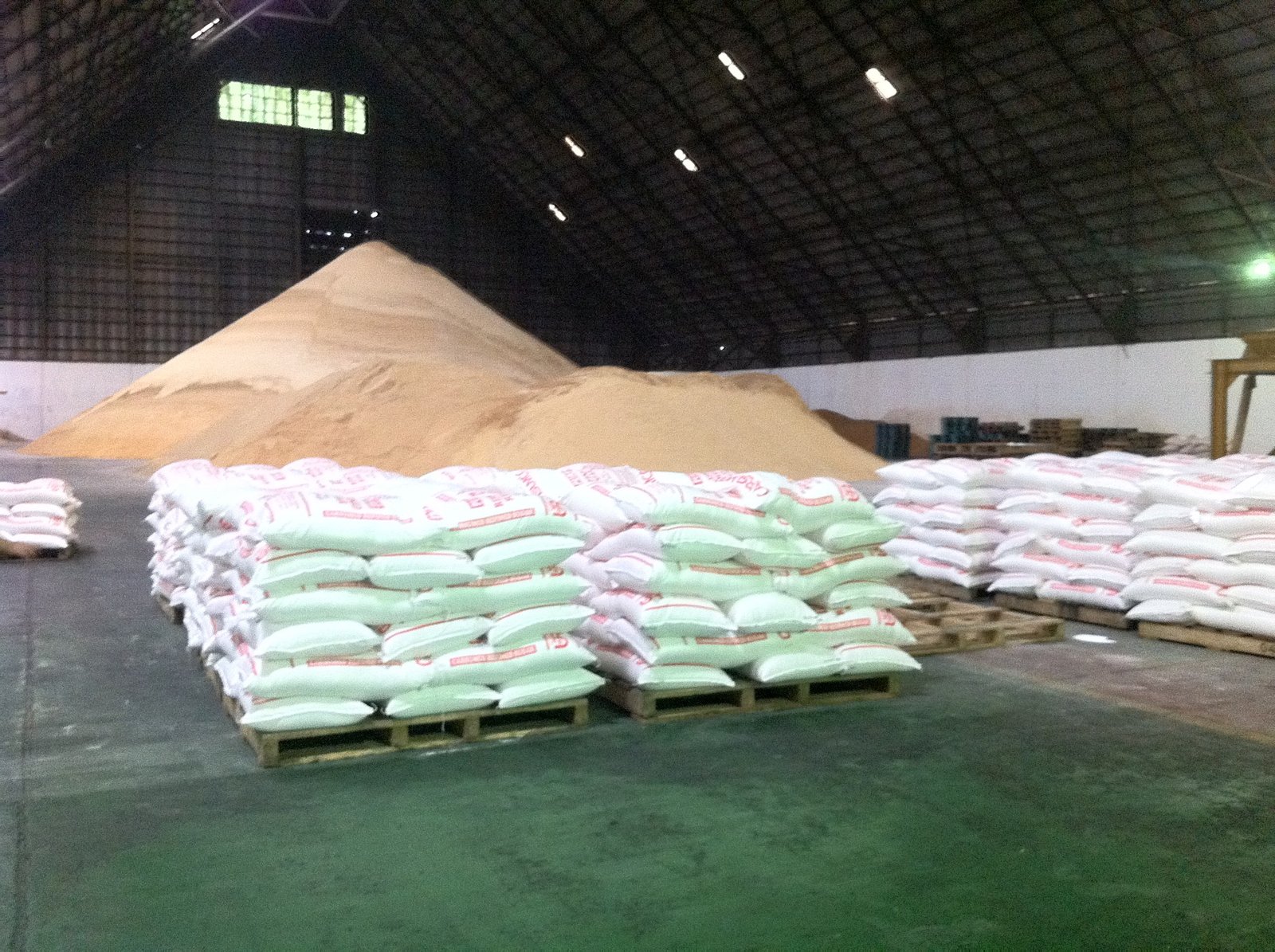
We offer 50kg polypropylene bags on pallets for buyers who need standard palletized handling, and 1-ton jumbo bags for buyers with bulk material handling systems already in place. Both formats load into standard 20ft or 40ft containers with moisture-control lining appropriate for the shipping route. Tell us your warehouse setup—pallet height limits, forklift capacity, storage racking—and we’ll match the packaging to what actually works on your end, not just what’s easiest to load.
Minimum Order Quantities
Most buyers start at a single 20ft container, which holds roughly 25 metric tons. We can discuss smaller trial quantities for first-time buyers who want to test the product before committing to a full container, though per-ton pricing on small orders runs higher since the fixed costs of documentation and freight don’t scale down proportionally. For buyers who need consistent, recurring volume, we also set up standing supply agreements with locked-in pricing windows, which can smooth out some of the market volatility that comes with spot-buying every time.
The Ordering Process, Step by Step
- Tell us what you need—quantity, destination port, spec requirements, and timeline.
- We send a quote covering current pricing, lead time, and payment terms.
- You confirm terms, typically with a deposit or LC depending on order size and buyer history.
- We lock the sourcing slot and begin pre-shipment quality testing.
- Documentation is prepared—certificate of analysis, certificate of origin, packing list, bill of lading, and any destination-specific paperwork.
- The container ships, and you get tracking updates through to arrival.
First-time buyers are welcome to request a physical sample before placing a full order, which we’d recommend if you haven’t worked with raw sugar from this particular origin before.
Payment Terms
We typically work with either a Letter of Credit (LC) or telegraphic transfer (TT), with the specific structure depending on order size, destination, and whether we’ve worked with you before. New buyers on larger orders should expect either a confirmed LC or a deposit-plus-balance structure; repeat buyers with an established track record often move to simpler TT terms. We’ll walk through the specifics at quote stage so there are no surprises once you’re ready to commit.
What to Check Before You Buy Raw Sugar From Any Supplier
- Ask for a current certificate of analysis or sample results, not just a generic spec sheet.
- Confirm whether third-party inspection (SGS, Bureau Veritas, or equivalent) is available and included.
- Check the supplier’s track record on delivery timelines—ask for references if you’re not already familiar with them.
- Clarify exactly what’s included in the quoted price—freight, insurance, documentation fees can all be bundled differently between suppliers.
- Confirm packaging format matches your handling equipment before the container ships, not after it arrives.
Where the Raw Sugar You Buy Actually Comes From
When you buy raw sugar through us, it’s sourced mainly from Brazil, with additional volume available from mills in Thailand and India depending on order size and timing. Brazilian VHP has become something of a benchmark in the export market because the large-scale mills there run consistent processing, which matters more than people expect—buyers who’ve dealt with inconsistent smaller suppliers know how disruptive it is when one delivery tests noticeably different from the last. Origin also has a mild effect on flavor: Brazilian raw sugar tends to run a touch milder, while some Asian origins carry a slightly more robust molasses note. If flavor consistency matters for your product, tell us at the quote stage so we can match the origin accordingly.
Quality Control Before You Take Delivery
Before any shipment leaves our warehouse, we pull samples and test them against polarization, moisture, and color specs. If your company requires an independent record, we arrange third-party inspection through SGS, Bureau Veritas, or a comparable local inspector at the load port. A lot of our repeat customers request this as a matter of course, and honestly, we’d rather buyers ask for it upfront than skip it and end up with an undocumented dispute later. When you buy raw sugar without any inspection step in the process, you’re trusting the paperwork alone—an independent inspection gives you something you can actually stand on if a question comes up after arrival.
Understanding Shipping Terms: FOB, CFR, and CIF
If this is your first time buying a commodity like raw sugar internationally, these terms are worth understanding before you compare quotes. FOB (Free On Board) covers the sugar loaded onto the vessel at origin, with the buyer arranging freight and insurance from there. CFR (Cost and Freight) rolls ocean freight into the price but excludes insurance. CIF (Cost, Insurance, and Freight) includes both, which tends to be the simplest option if you don’t already have an established freight forwarder relationship. We quote all three, and we’re happy to explain the trade-offs so you can pick whichever fits your logistics setup best.
Comparing Suppliers When You Buy Raw Sugar
Not every supplier quoting you raw sugar is offering the same thing, even when the numbers on paper look similar. Some quotes bundle documentation and inspection fees into the headline price; others tack them on later. Some suppliers can genuinely guarantee consistent quality shipment after shipment; others source opportunistically from whichever mill has stock that week, which shows up as inconsistency in your deliveries over time. Before you commit, ask direct questions: How many shipments have you handled to my destination port? Can I speak to an existing buyer as a reference? What happens if a shipment doesn’t meet spec on arrival? A supplier who answers these clearly and specifically is generally a safer bet than one who deflects with vague reassurance.
A Note on Sustainability
More buyers are asking about sourcing practices before they buy raw sugar than they were even a few years ago, and it’s a reasonable thing to want to know. Sugarcane farming carries a genuine environmental footprint through water use and, in some regions, pre-harvest burning practices that affect local air quality. The mills we work with have increasingly shifted toward mechanized, green harvesting that skips the pre-burn step, cutting emissions and returning more plant residue to the soil or bioenergy use. If sustainability documentation matters for your supply chain reporting, ask us at the quote stage and we’ll tell you honestly what’s available for the origin you’re considering.
How Order Size Affects What You Pay
The relationship between order size and price isn’t perfectly linear, but larger volumes generally get better per-ton pricing because fixed costs—documentation, inspection, freight booking—spread across more tonnage. Buyers placing recurring orders can sometimes lock in better terms through a standing supply agreement rather than negotiating fresh on every purchase. If you’re planning to buy raw sugar regularly rather than as a one-off, it’s worth discussing a longer-term arrangement upfront rather than treating every order as a fresh negotiation.
Common Mistakes When Buying Raw Sugar for the First Time
The most common one we see is not locking in specification tolerances clearly, then being surprised when a delivered batch tests at the edge of an acceptable range instead of the middle. Another is underestimating lead time and rushing an order, which usually means paying a premium for expedited freight that could have been avoided with a few extra weeks of planning. A third is skipping independent inspection to save a small fee, then having no documented record if a quality dispute comes up later. None of these take much effort to avoid—they just require asking the right questions at the quote stage.
Storage After You Buy Raw Sugar
Raw sugar holds up well in dry, sealed storage, away from strong odors since the molasses coating absorbs smells more readily than people expect. Once warehouse humidity climbs above roughly 65%, caking becomes a real risk over time, so plan for airtight storage or a faster inventory turnover if your facility runs humid. Most of our buyers move through their raw sugar stock within a few months of delivery, which is comfortably within its practical shelf life when stored properly.
International Standards
Raw sugar sold internationally is generally expected to meet the food safety benchmarks set out by the Codex Alimentarius, the joint FAO/WHO body responsible for international food standards, including limits on sulphur dioxide residues and heavy metals. If you’re importing into a market with stricter national requirements, such as the EU or US, check those specific rules too, since they can go beyond the Codex baseline. We build our documentation around these standards so your compliance team has something concrete to reference.
If you’re not sure raw sugar is the right grade for your needs, our raw cane sugar guide goes deeper into VHP specifications, and our ICUMSA 100 sugar page covers the fully refined alternative if that’s a better fit for your product.
Why Buyers Choose to Buy Raw Sugar From Us Specifically
There are plenty of traders out there who’ll quote you a number and disappear until the container ships, hoping nothing goes wrong in between. That’s not how we operate. When you buy raw sugar from us, you get a dedicated point of contact through the entire process, from the first quote to delivery confirmation, and we test every shipment ourselves rather than relying purely on the mill’s paperwork. If something in your order needs adjusting—packaging format, origin, spec range—we’d rather have that conversation before the container is booked than after. Buyers who’ve worked with less transparent suppliers tend to notice the difference quickly once they switch, mostly because they’re no longer chasing status updates or discovering surprise fees buried in the final invoice.
We also keep our documentation genuinely usable. A certificate of analysis that just says “meets spec” without actual test figures doesn’t help your own QA team verify anything. Ours includes the real numbers—polarization, moisture, color, ash content—so whoever receives the shipment on your end has something concrete to check against, not just a signature and a stamp.
Frequently Asked Questions
What’s the difference between buying raw sugar and refined sugar?
Raw sugar retains a molasses coating and hasn’t gone through full bleaching and refining, giving it a tan color and fuller flavor. Refined sugar has been processed to a neutral white color and flavor. Which one you should buy depends entirely on what your product needs.
Can I buy raw sugar in small quantities for testing?
Yes, we can arrange sample quantities for first-time buyers before committing to a full container order.
Do you ship raw sugar worldwide?
Yes, we’ve handled shipments into ports across Asia, Europe, the Middle East, Africa, and the Americas.
How long does it take to receive an order after I buy raw sugar?
Timelines vary by destination and current shipping schedules. We’ll give you a realistic window at quote stage rather than an optimistic one that slips later.
What documentation comes with the shipment?
A certificate of analysis, certificate of origin, packing list, and bill of lading as standard, with phytosanitary certification added where your destination country requires it.
Is there a difference in price between origins?
Yes, pricing varies by origin due to differences in production cost, freight distance, and market positioning. We can walk you through the trade-offs for the origins available for your target volume.
Ready to Buy Raw Sugar?
Send us your target quantity, destination port, and any specification requirements, and we’ll come back with a real quote and a realistic timeline—no generic sales pitch, just the numbers you need to make a decision.
Buying at larger volume? See our guides to wholesale raw sugar and bulk raw sugar for container and vessel-scale ordering.