
Finding a sugar import supplier is the easy part — a search engine will hand you a hundred options in seconds. Finding one whose spec sheet matches what actually lands in your warehouse, order after order, is the part that separates a smooth supply chain from a recurring headache. This guide covers the grades worth knowing, the documentation that should come standard, and the questions that tell you fast whether a supplier can actually support your import volume long-term.
What Makes a Good Sugar Import Supplier
A dependable sugar import supplier does three things consistently: hits the agreed specification on every lot, produces complete export documentation without being chased for it, and communicates honestly when something on their end shifts. None of these are complicated, but a surprising number of suppliers fall short on at least one once volume increases past a first trial order.
The suppliers worth building a long-term relationship with tend to own or have direct offtake agreements with specific mills, rather than sourcing opportunistically from whichever producer has stock that week. That difference shows up most clearly on your third or fourth order, when consistency either holds or starts to slip.
Grades a Sugar Import Supplier Should Carry
Buyers rarely need just one grade, so it’s worth knowing what a full-range supplier typically offers.
| Grade | ICUMSA Colour | Typical Use |
|---|---|---|
| Refined white (ICUMSA 45) | 45 IU max | General food manufacturing, bakery, beverages |
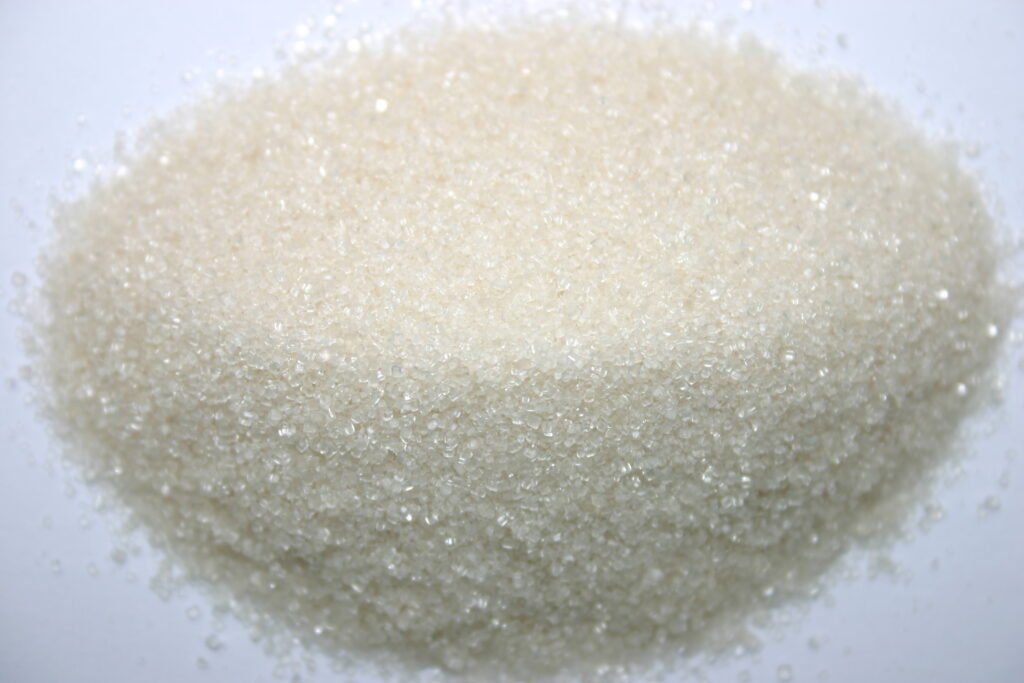
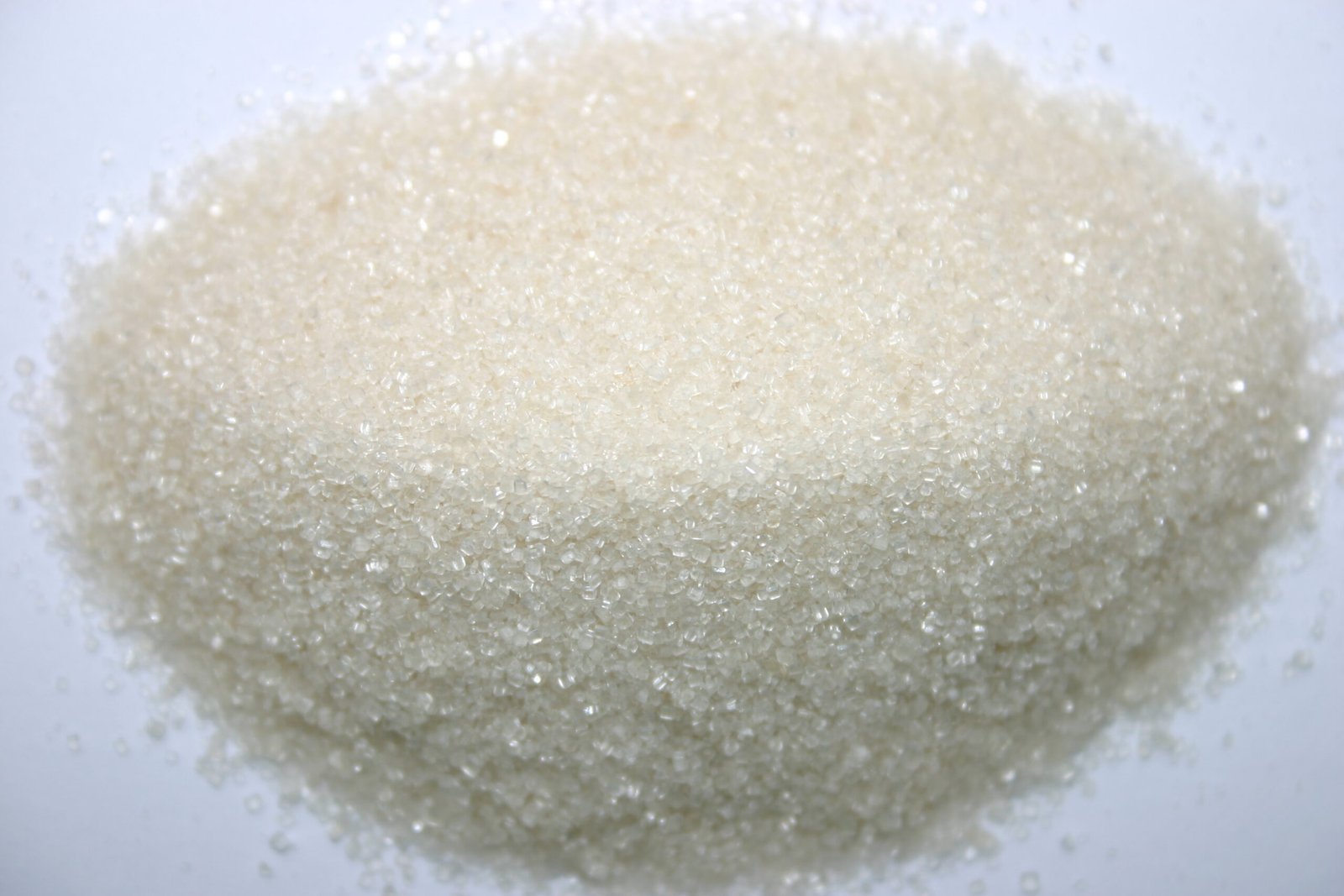
| Premium refined (ICUMSA 35) | 35 IU max | Carbonated drinks, clear syrups, pharmaceutical use |
| Standard white (ICUMSA 100–150) | 100–150 IU | General retail and bulk food packing |
| Raw cane sugar | 800–1500 IU | Further refining, brown sugar production |
If your own operation only ever needs one grade, a specialist supplier can be a perfectly good fit. If your needs shift by season or customer, a sugar import supplier carrying the full range saves you from managing two or three separate relationships.
The Specification You Should Request in Writing
| Parameter | Specification |
|---|---|
| Polarization | 99.7° – 99.9° min |
| Moisture | 0.04% max |
| Ash content | 0.03% – 0.05% max |
| Sulphur dioxide (SO₂) | 15 – 20 ppm max |
| Granulation | Fine to medium crystal, uniform |
| Magnetic particles | 4.0 mg/kg max |
| Solubility | 100% dry and free-flowing |
Every figure above should trace back to a Certificate of Analysis tied to your specific shipment. A sugar import supplier that can only offer a generic brochure spec, with no lab report behind it, hasn’t earned your full order yet.
Import Documentation That Should Come Standard
- Certificate of Analysis specific to the shipment
- Certificate of Origin
- Phytosanitary certificate
- Bill of Lading
- Packing list and commercial invoice
- Halal, Kosher, or other certification required in your market
- ISO 9001 and HACCP documentation from the producing facility
A supplier confident in its own process hands this over as a matter of course. If documentation only shows up after repeated requests, that’s a preview of how they’ll handle a real problem mid-shipment.
How to Vet a Supplier Before Your First Order
- Sourcing model — direct mill relationship or open-market reseller, and how that affects consistency.
- Import track record — evidence of shipments successfully cleared into your country or region.
- Sample availability — whether they’ll send a sample, and who covers the shipping cost.
- Inspection rights — confirm you can use an independent inspector like SGS or Intertek pre-shipment.
- Payment structure — what they expect on a first order versus an established one.
A sugar import supplier that answers these directly, without hedging, is usually one that’s handled the same questions from plenty of buyers before you.
Sample Policies and Trial Orders
Most established suppliers will send a sample before you commit to a full container, and many will also discuss a smaller trial order at a slightly higher per-ton price so a new relationship can prove itself before scaling. If a supplier resists both, that’s worth asking about directly — a confident supplier generally welcomes the chance to prove quality on a small scale first.
Private Labeling and Custom Packaging Options
Buyers reselling under their own brand often need packaging beyond a standard export bag — custom printing, private-label branding, and retail formats like 1kg and 5kg bags alongside standard 25kg, 50kg, and 1MT bulk options. Confirm minimum order quantities for custom packaging separately, since these tend to run higher than standard bulk minimums due to the extra production setup.
FOB, CFR, and CIF From the Importer’s Side
| Term | What It Means for You |
|---|---|
| FOB (Free on Board) | You arrange and pay for shipping once cargo is loaded at origin. |
| CFR (Cost and Freight) | Supplier pays freight to your port; you arrange insurance. |
| CIF (Cost, Insurance, Freight) | Supplier covers both freight and insurance to your port. |
These definitions follow the Incoterms rules maintained by the International Chamber of Commerce. First-time importers often start with CIF for simplicity; buyers with an existing freight forwarder relationship frequently shift to FOB once volume justifies controlling that piece directly.
Import Compliance: Duties, Permits, and Standards
Sugar entering international trade generally needs to meet the food safety benchmarks in the Codex Alimentarius, the joint FAO/WHO reference for international food standards, including limits on sulphur dioxide and heavy metals. Many countries layer additional national requirements on top — tariff-rate quotas, import permits, and licensing windows that shift by destination. A sugar import supplier that’s shipped into your market before should already understand these, but confirming duty rates and permit requirements with your own regulator directly is still worth the time, since a supplier can’t fix a permit issue on your end once the vessel has sailed.
How Pricing Actually Works
Quotes track the underlying commodity market, typically the ICE Sugar No. 11 futures contract for raw sugar, with adjustments for grade, packaging, freight terms, and order volume. A transparent sugar import supplier breaks out roughly how much of a quote is commodity cost versus freight, insurance, and margin — without that breakdown, comparing two quotes fairly is close to impossible.
Freight Delays and What Actually Causes Them
Port congestion is the most common disruption and can add one to three weeks with little warning during peak shipping periods. A booked container can also get rolled to a later sailing if the carrier overbooks the vessel. On the customs side, documentation mismatches — even a small discrepancy between the Bill of Lading and Certificate of Origin — account for a large share of the holds that catch importers off guard.
A supplier that flags a delay proactively, with a revised timeline, is a fundamentally different partner than one you have to chase for updates while your own downstream schedule sits waiting.
Insurance and Risk in Transit
Ask for the actual insurance certificate on your shipment rather than a verbal assurance that coverage exists, even under CIF terms where the supplier arranges it. A certificate with a verifiable policy number protects you far more than a line item on an invoice, and it clarifies exactly who absorbs the cost if cargo is damaged or delayed past a contractual window.
Quality Consistency Across Repeat Orders
The real test of any sugar import supplier isn’t the first order, it’s the fifth. Ask what QC process runs on every batch rather than just the first one, and whether lab results are shared proactively or only when requested. Suppliers who document every lot as routine practice, not as a special favor, are the ones whose specs hold steady over a long relationship.
Packaging, Labeling, and Storage on Arrival
Confirm packaging format before signing — 25kg and 50kg bags for manual handling, 1,000kg jumbo bags for buyers with forklift capability. Labeling rules vary by destination: some countries require origin printed directly on the bag, others require bilingual labeling or lot coding for traceability. Once sugar lands, store it in a dry, ventilated space away from direct sunlight and rotate stock first-in, first-out — poor storage can undo a spec that was perfectly correct on arrival within a matter of weeks.
Building a Simple QA Checklist as a Buyer
Buyers who import consistently tend to build a short internal checklist rather than relying purely on trust in a supplier relationship. At minimum this usually includes confirming the Certificate of Analysis against the agreed spec before the shipment loads, requesting photos or a short video from the loading site, cross-checking documentation numbers across the Bill of Lading, Certificate of Origin, and packing list, and scheduling a warehouse inspection promptly on arrival rather than letting bags sit in storage unopened.
None of this needs to be elaborate. A simple spreadsheet tracking shipment number, agreed spec, lab results, and arrival condition across every order makes it obvious, over time, whether a sugar import supplier is holding steady or starting to drift on quality.
What to Ask During a Facility or Video Audit
Larger buyers increasingly request a video walkthrough of the production facility, or an in-person audit once volume justifies the trip. Useful questions include how batches are tracked from raw material to finished bag, what testing happens on site versus at a third-party lab, and how a batch that fails internal QC is handled before it can reach a customer. The specificity of the answers tells you more about day-to-day discipline than any spec sheet.
Communication Across Time Zones
A sugar import supplier working with buyers on multiple continents needs to treat time zone gaps as routine, not an occasional inconvenience. Ask how quickly you can expect a reply outside your own business hours, and whether documentation comes in more than one language if that matters for your customs process. This matters most exactly when something has gone wrong — a same-day acknowledgment that a team is aware of a delay is a very different experience than radio silence for twelve hours while a shipment sits in limbo.
Regional Notes for Buyers Worldwide
- European Union — confirm HS code classification and any applicable tariff-rate quota tied to origin country.
- North America — confirm food facility registration at the exporting mill and customs broker requirements.
- Middle East and Africa — Halal certification is frequently required for the processing facility itself.
- Asia-Pacific — additional fumigation or phytosanitary paperwork is common depending on the destination country.
Traceability and Sourcing Transparency
More importers ask about origin traceability now than they did a few years ago. A sugar import supplier serious about this should be able to trace a shipment back to the originating mill and, where required, provide documentation supporting responsible sourcing claims — worth raising at the inquiry stage if your own company reports on supply chain metrics.
Red Flags Worth Taking Seriously
Be cautious of a supplier who won’t name their actual sourcing origin, who insists on full payment upfront with no inspection option on a first order, or who can’t produce sample documentation from a past shipment. None of these alone disqualifies a supplier, but together on a first order worth tens of thousands of dollars, they’re worth a second look.
Comparing Multiple Suppliers Before You Commit
Line up quotes by grade specification, packaging, and shipping term rather than price alone — a CIF quote from one supplier and an FOB quote from another look very different on paper even when the underlying product cost is nearly identical. Ask each supplier the same direct questions and note how specifically they answer; a supplier vague about sourcing during the sales process tends to communicate the same way once a real problem comes up mid-shipment.
Setting Up a Recurring Supply Agreement
Once a sugar import supplier has delivered a few consistent shipments, it usually makes sense to move to a structured agreement — fixed cadence, pricing tied to a market formula, and priority production and shipping slots in exchange for predictable volume. Most experienced buyers wait until specs and communication have proven steady across several orders before locking anything in long-term.
Comparing Quoted Price to Actual Landed Cost
The number on a quote is rarely the number you actually pay per ton once the sugar reaches your warehouse. Landed cost adds freight, insurance, duty, port handling fees, and inland transport to the base price, and these can shift meaningfully between routes even for the same grade and volume. A sugar import supplier that only ever quotes the base commodity price without walking you through the likely landed cost is leaving you to work out the real number yourself, usually after the fact.
Ask for a landed cost estimate specific to your destination port before comparing two suppliers on price alone. A quote that looks ten percent cheaper on paper can end up more expensive once freight and duty are factored in, particularly if the cheaper supplier ships from a origin with a longer or less direct route to your port.
A Quick Example
A confectionery producer we’ve supplied had been splitting orders across two brokers to hedge against stockouts, which meant two different specs landing in the same warehouse and inconsistent results depending on which batch went into a run. Consolidating to one supplier with dedicated production capacity solved the inconsistency without any change to their own process.
Common Mistakes First-Time Buyers Make
Chasing the lowest quoted price without asking what’s different about the sourcing behind it is the most common mistake — a number meaningfully below every competing quote usually has a reason worth understanding. Skipping independent inspection to save a small amount on a large shipment is the second. Not confirming packaging and labeling requirements before signing is the third, and it’s the easiest of the three to avoid with one upfront conversation.
Frequently Asked Questions
What’s a typical minimum order size? Most suppliers work at container-load minimums, usually around 25 metric tons for a single 20ft container, with some flexibility for smaller trial orders.
Can a sugar import supplier handle recurring shipments? Yes — most established suppliers can structure a recurring agreement with fixed cadence and negotiated pricing after a first order confirms quality and reliability.
Do I need my own customs broker? It depends on your shipping terms and internal setup. Some suppliers coordinate with a broker on your behalf; others expect the importer to manage clearance independently.
What happens if a shipment arrives off-spec? A properly structured contract includes a dispute mechanism referencing independent inspection results against the agreed Certificate of Analysis.
Can I request a specific country of origin? Most suppliers source from more than one origin and will tell you which options are realistic for your target grade and volume.
How quickly can I get a first quote? A responsive supplier should return a formal quote within one to two business days, since pricing shifts daily and a stale number helps no one.
Is organic-certified sugar available? It’s a separate certification from standard grading and isn’t universally available — confirm current availability for your target grade and destination directly.
What’s the real difference between raw and refined sugar for import purposes? Raw sugar carries a higher ICUMSA colour reading and typically needs further refining before most food use, while refined white sugar is ready for direct use in production or resale as soon as it clears customs.
Should I use a freight forwarder or let the supplier manage logistics? Both are workable. A forwarder gives you more direct control and often better rates at higher volumes; letting the supplier coordinate freight is simpler for smaller or first-time orders where managing an extra vendor relationship isn’t worth the effort yet.
Source From a Supplier Built for Import Buyers
Send your target volume, grade, and destination port, and you’ll get a quote built on real production capacity and a realistic timeline. Our wholesale raw sugar suppliers guide and wholesale white sugar suppliers page cover grade-specific sourcing in more depth, and our notes on the ICUMSA colour scale explain how grading works if you’re new to sourcing internationally. If your business runs the import side day to day, our guide on evaluating a sugar import company relationship covers the logistics and compliance side in more detail. On the sourcing side, our guide to choosing a sugar export supplier covers production capacity and certifications, and our notes on vetting a sugar export company cover the shipping and documentation side.