How is Raw Sugar Different from Refined Sugar?
Among all consumables in the world, sugar is perhaps one of the most consumed. Besides sweetening your morning coffee, sugar greatly enhances baking, cooking, and beverage manufacturing regarding flavor, texture, and sometimes preservation. Of course, not all sugars are created alike, but two common types of sugar include raw sugar and refined sugar. Raw sugar vs refined sugar
Such an understanding of the difference between raw and refined sugars will definitely help in making the right choice, be it referring to food, beverages, and manufacturing or simply a consumer who wants to make a healthier choice.
We pride ourselves on the quality of raw and refined sugar in our shop, catering to the needs of industries, consumers, and retailers all over the world. Be it for industrial consumption, for food production, or even for packaging at a retail level, each grain gives an assurance of consistency in purity and quality.
What is Raw Sugar?
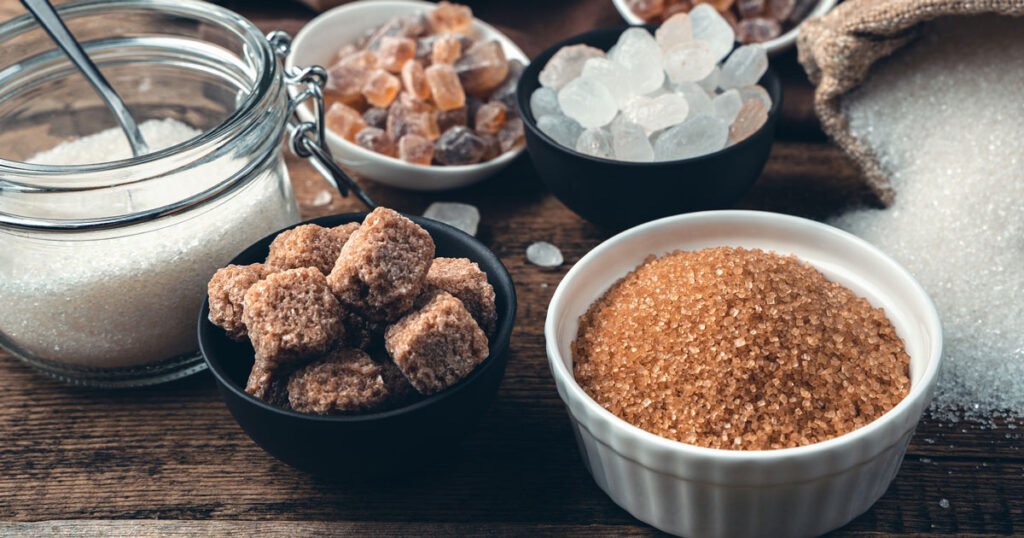
Raw sugar is less processed sugar derived from either sugarcane or sugar beet juice. Immediately after extraction, the juice is clarified, then boiled down for crystallization into crystals that are then separated out but not completely refined from the remaining molasses, hence leaving it with its natural golden or light brown color.
Characteristics of Raw Sugar
- Color: Golden brown or amber
- Texture: Coarse granules
- Flavor: Slightly caramel or molasses-like
- Process Grade: Lightly processed – keeps some of the natural molasses
- Moisture Content: Higher than refined sugar
- Applications: Range from baking to beverages and marinades, across natural sweeteners to artisan foods.
Why Choose Raw Sugar?
- Natural sweetness: Raw sugar imparts full flavor and sweetness, as it consists of some quantity of molasses.
- Less processed: Raw sugar is closer to its natural state and is intended for those who want something a little less refined.
- Aesthetic appeal: Golden brown in color, this is a product with coarse crystals, thus more pleasing on baked goods or atop other gourmet food items.
- Mineral content: Raw sugar is not a good source of minerals because the traces of calcium, potassium, and iron in raw sugar are contributed by the molasses residue.
What is Refined Sugar?
White sugar can be understood as refined sugar, refined through an extended process in which impurities and molasses are separated. Thus, it provides pure sucrose that comes out white, clean, and in a uniform texture and sweetness after the processing.
Characteristics of Refined Sugar
- Color: Snow white
- Texture: Fine and uniform crystals
- Flavor: Pure, neutral sweetness
- Processing Level: Highly refined
- Moisture Content: Very low
- Typical Uses: Baking, confectionery, beverages, dairy products, pharmaceuticals, and food manufacturing
Why Refined Sugar?
- High Purity: Refined sugar provides uniform sweetness and quality in lots for food product manufacture.
- Easily Dissolves: This is fine crystal that dissolves easily and, hence, is good in drinks, syrups, and desserts.
- Long-Term Stability: Due to low moisture content, there is long-term stability with no clumping.
- Versatile Applications: It has a clean flavor and stability, and hence, it finds many applications industrially and domestically.
Key Differences: Raw Sugar versus Refined Sugar
| Feature | RAW SUGAR | REFINED SUGAR |
|---|---|---|
| Color | Golden brown | Pure white |
| Processing | Lightly processed | Fully refined |
| Flavor | Light molasses undertone | Neutrally sweet |
| Texture | Rough | Smooth |
| Purity | Light molasses content | 99.9% Sucrose |
| Dissolution Rate | Slower | Fast |
| Uses | Bakery, beverages, health foods | Industrial, household, beverages, food confectionery |
| Shelf Life | Moderate | Long |
| Aesthetic Visual Appeal | Rustic, natural | Clean, bright |
How Raw and Refined Sugar Are Made
1. Extraction
The extraction is from sugarcane or sugar beet in both cases. Extraction of juice is either by mechanical crushing or by diffusion.
2. Clarification
The heat, together with the addition of some clarification agents, removes impurities that comprise plant fibers, dirt, and proteins.
3. Crystallization
This juice is further purified and concentrated to a syrup. It is then boiled down until sugar crystals are formed.
4. Separation
These crystals are then separated from the molasses. In the case of raw sugar, this is typically where the processing ends.
5. Refining (for Refined Sugar)
Further washing and bleaching in refined sugar make the crystals recrystallize, meaning all residues of molasses are taken out and the pure white crystal remains.
Health Comparison
Still, they are both forms of sucrose and therefore contain about the same number of calories. Raw sugar still contains trace minerals from the small amount of molasses that remains in it, although not enough to make much nutritional difference.
Nutritional and Energy Content (per 100g)
| Nutrient | Raw Sugar | Refined Sugar |
|---|---|---|
| Calories | 380 | 387 |
| Carbohydrates | 98g | 99.9g |
| Minerals | Trace | Negligible |
| Fiber | 0g | 0g |
These are both foods to be consumed in moderation. Actually, it is the processing and flavor that differentiate the two foods, not the health benefits.
Industrial Applications
We are aware that sugars are required by various types of industries in manifold ways, and hence we supply raw and refined sugar in many specifications and varied packings.
Raw Sugar Uses
- It brings added depth and natural color to the beverage industry, from artisanal sodas to juices and cocktails.
- Baking & Confectionery: It is suitable for bakery items, in glazing, and on toppings, as it has a coarse texture.
- Organic/Natural Food Products: These are preferred by brands positioning themselves on minimal processing.
- Production of Molasses: It can be reprocessed into molasses.
Refined Sugar Uses
- Production of Food and Beverages: It ranges from carbonated drinks, sweets, sauces, and other preparations obtained from milk.
- Pharmaceutical Industry: Especially in the preparation of syrups and medicinal formulations.
- Confectionery: Imparts uniform sweetness, crystalline in nature.
- Domestic Consumption: This is used daily in cooking and beverages.
Our Sugar Specifications
Raw Sugar Specifications
- Color: Golden to light brown
- Polarity: 96–98° minimum
- Moisture: 0.10–0.25% max
- Ash Content: 0.30% max
- Solubility: 99.5% minimum
- Granulation: Coarse (0.5–1.0 mm)
- Origin: Pure cane sugar 100%
- Packaging Options: 25 kg/50 kg bags, 1-ton jumbo bags, or bulk shipment
White Refined Sugar Specifications ☑
- Colour (ICUMSA): 45–150 units
- Polarity: Minimum 99.8–99.9°
- Moisture: 0.04% max
- Ash Content: 0.04% max
- Grain Size: Fine, 0.2–0.8 mm
- Solubility: 100%
- Sulphur Content: ≤ 20 mg/kg
- Packaging Options: 25 kg/50 kg bags, in bulk, or with custom packaging
Our sugars are all of international standards for food safety — ISO certified, HACCP certified, and SGS certified — assuring purity right from farm to factory.
Why Buy from Us?
Philosophy of the Shop
Our shop should be a reliable, stable, and transparent global supplier of sugar.
Quality Assurance
Our sugar is obtained from trusted producers, and every lot of product is tested for purity, color, and moisture.
Worldwide Shipping
Operating worldwide, we can offer timely services at very competitive pricing for bulk and wholesale orders.
⚙️ Custom Solutions
Need a specific grade, granulation, or packaging? We will customize according to your production needs.
🌿 Sustainability Commitment
We support sustainable farming of sugarcane that protects natural ecosystems and local communities.
Storage & Handling Recommendations
Proper storage keeps sugar in good condition and free-flowing.
- Store in a cool, dry place.
- Avoid moisture, which causes clumping.
- Store in airtight containers and keep them away from humidity and pests.
- Avoid direct sunlight exposure, as it promotes discoloration and degradation.
Shelf Life:
- Raw sugar: up to 18 months
- Refined sugar: up to 3 years
Overview of the Global Sugar Market
The world sugar industry is expected to continue further growth, and demand from the various segments of food, beverages, and pharmaceuticals has gone up. Raw and refined sugars each have their special role in meeting these diverse needs.
- Organic and Natural Product Manufacturers: Have increased demand for raw sugar.
- Refined Sugar Demand: Dominant in large-scale food manufacturing and international trade.
- Trend to Watch: A shift towards sustainably sourced and traceable sugars.
Your Brand Name is committed to quality and sustainability in meeting the growing global demand as a reliable exporter and supplier of sugar.
How to Choose Between Raw and Refined Sugar
As you choose what sugar to buy, bear in mind the following:
- Purpose of Use: Industrial, retail, or home use?
- Flavor Profile: Caramel tone or pure sweetness — which would you want it to be?
- Aesthetic Needs: Golden vs. white appearance.
- Solubility Requirements: Quick dissolving or coarse crystals.
- Regulatory Compliance: Must meet food-grade standards for your region.
Not sure about the type of sugar to use? Let our sugar experts help you make an informed decision on the best kind for your business or household application.
Order Premium Raw or Refined Sugar Today
Whether it is raw sugar for natural products or refined sugar for mass production, our shop has just the right solution.
Available Grades:
- Raw Cane Sugar 96° – 98°
- Refined White Sugar ICUMSA 45 – 150
- Brown sugar – light and dark
- Fine and Coarse Crystals
Available Packaging:
- 25 kg / 50 kg PP bags
- 1 MT jumbo bags
- Bulk container shipments
Available Shipping:
Worldwide delivery by sea, land, or air.
Final Words
It’s not just raw sugar versus refined sugar when it comes to health; it’s also about purpose, flavor, and application. While raw sugar has this rustic charm and natural note of molasses, refined sugar ensures purity, consistency, and versatility.
At our company, we supply both types to meet the needs of every client, from bakeries and beverage companies down to large-scale food manufacturers. Our commitment to quality, transparency, and timely delivery cements our position among the leading global suppliers of both raw and refined sugar.
Choose the sweetness that fits your world: naturally rich or perfectly pure.
Place an order with us today or request a quote for a custom order.
Refined Sugar Export to South Africa – Buy in Bulk – Sugar export South Africa