
Refined Sugar in 25 kg, 50 kg & 1-Ton Packaging – What’s Best?
Whether you manufacture food, beverages, or baked goods, or whether you are an export distributor, the choice of the right packaging format is equally important as determining the specification of sugar to be sourced. The article below will outline three of the most popular options — 25 kg bags, 50 kg bags, and 1-ton (jumbo) bags — showing how to select the best option for your particular needs, highlighting key specifications of high-quality refined sugar, and explaining why we are offering this product across the globe. Sugar packaging options
1. Why Packaging Size Matters
1.1 Logistics & Handling
The size of packaging will determine just how easily the sugar will be transported, stored, handled, and dispensed within a facility. For example:
- A bag of 25 kg is light and easily carried by two workers: suitable for smaller plants, bakeries, or repackers.
- The 50 kg bag offers much better economy per unit weight and consolidates handling by reducing the bag count for larger operations.
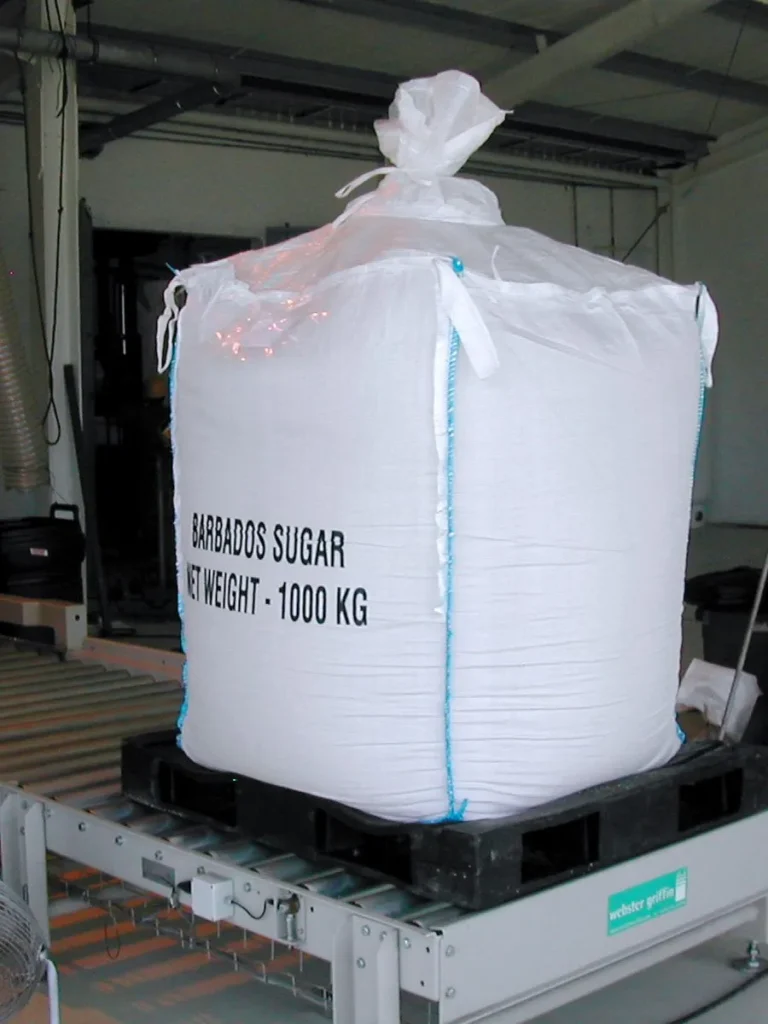
- It consists of a 1-ton bag, otherwise known as jumbo or bulk. This is highly suitable for users with high volumes. It is very efficient in storage; the number of bags can be kept at a minimum. It’s great for export through a container load or central warehousing.
Larger sizes reduce labor and bag-waste but they also require suitable forklift or material-handling equipment, and storage space must accommodate the bulk dimensions.
1.2 Cost Efficiency
Cost-wise, this means fewer bags per tonne, lower packaging cost, less wasted space, and fewer handling points. But of course, with that, you would need the scale to justify such costs, and you may have to face higher minimum order quantity or specialized storage.
1.3 Inventory Turnover & Shelf Life
You use just a small quantity every day in your operation, and buying in 1-tonne bags risks inventory not being used and possibly getting exposed to humidity, clumping or spoilage — sugar is hygroscopic. You have better and quicker turnover in smaller bags of, say 25 kgs, and the rotation is easier.
1.4 Flexibility in Export and Distribution
Twenty-five kg or 50 kg bags are more convenient for selling to small customers or distributing it locally. For direct use by the industry — for example, beverage plants or confectionery factories — volume efficiency can be provided by 1-ton bags. Export-wise, many refineries and traders pack refined sugar in 25 kg, 50 kg, or jumbo bags depending on the market.
2. Specification Requirements for Refined Sugar
2.1 Common Refined Sugar Grade: ICUMSA 45
One world standard is a white sugar refined to ICUMSA 45, or similar grade — meaning of very high purity with very low ash and moisture, with bright white crystals.
Typical specifications include:
- Polarization (Pol) ≥ ~99.8%: very high sucrose concentration.
- Ash content (sulfated) ≤ ~ 0.04% – the lower the ash, the fewer impurities there are.
- Crystal size / uniform granulation – for example, mean aperture ~0.45 – 0.75 mm in one spec.
- Colour / ICUMSA rating ≤ 45 IU for extra white refined sugar.
2.2 Why These Specs Matter
- Purity & colour: Food, beverage, and pharmaceutical industries require sugar that will not affect taste, colour, or clarity.
- Solubility & flowability: Low moisture + uniform crystals = better process performance — mixing, dissolution.
- Storage & stability: Low moisture prevents caking; low ash offers fewer residues and improved shelf life.
- Compliance & export: Many customers and regulators require documented specifications, certification and traceability.
2.3 Packaging & Labelling Requirements
Packaging shall be food-grade, moisture-resistant, well-labeled showing weight, batch, grade, and date; it shall be suitable for transport. Common packages for sugar include PP bags or PP with a PE liner.
3. Detail of Packaging Options
3.1 25 kg Bags
Advantages:
- Flexible for smaller operations, repackers, bakeries, food service.
- These processes are less cumbersome and can be managed by hand with no large machinery/equipment.
- Faster turnover means less risk of long-term storage and, consequently, clumping and spoilage.
- Easier to store in small warehouses.
Considerations:
- Several bags should fit onto the shelf space.
When Best:
- When you supply small to medium customers.
- When your daily or weekly consumption is only at a moderate rate, so that the bag can be used up faster.
- Whenever flexibility in shipment to diversified customers is needed.
3.2 Bags of 50 kg
Advantages:
- Better cost efficiency per kilo than 25 kg.
- Common size for export and industrial sugar supply (e.g., 50 kg PP bags with liner for ICUMSA 45 sugar).
Considerations:
- If your operation is very large (hundreds of tonnes/month), you may still prefer jumbo bag packaging.
- The storage requires more space per bag, and the weight may require sturdy shelving.
When Best:
- Large bakery, confectionery, and beverage plants with medium to high consumption whose logistics are still based on bags.
- When a trade-off must be achieved between lower costs and operational flexibility.
- When you are selling regionally and you need a standard generally accepted bag size.
3.3 1-Ton (Jumbo) Bags
Advantages:
- Highest economy per tonne: just 1 bag instead of 20 or 40 smaller bags.
- Perfect for containerized export or centralized warehousing, this minimizes bag waste and handling.
- Less packaging material per tonne, less palletising effort and more efficient shipping logistics — in particular for global export.
Considerations:
- Industrial handling: forklift/truck, appropriate storage space, safety with respect to large bag weight.
- In this case, full containers may be required, so the MOQ is higher.
When Best:
- This is desirable in cases where an individual can handle only one bag at a time with machinery and proper warehouse layout.
4. Selecting the Best Packaging for Your Business Needs
The ideal package size can be determined with the following:
- My consumption is how much monthly/annually?
- Small (< 100 tonnes/year) → 25 kg or 50 kg bag may be enough.
- Medium to large (> 500 tonnes/year) → 50 kg or 1-ton bag becomes more economical.
- Manual storage by rack/forklift → 50 kg bags.
- Do I sell to smaller customers or use it within?
- It allows flexibility if you have to repack or supply many smaller clients.
- That makes sense in bulk format, supplying it directly to big plants.
- What are my logistic/shipping constraints?
- These are small-sized bags that can easily be fitted into mixed shipments, smaller truck loads.
- You can go bulk if the turnover is fast.
- If slower, smaller bags reduce risk of caking or spoilage.
- What is my budget & cost sensitivity?
- Bulk packaging reduces the per kilogram price, whereas for smaller packaging, it is increased, though the latter does give flexibility.
The most appropriate format of packaging can be selected in relation to your usage, storage, handling, and logistics profile.
5. Refined Sugar Offering and Packaging Specifications
5.1 Typical Product Specifications
- Grade: Refined white cane sugar, ICUMSA 45 max
- Polarization: ≥ 99.8%
- Crystal Size: Fine to medium uniform granulation, such as 0.45 – 0.75 mm typical.
- Appearance: Brilliant white crystals without the presence of foreign particles or off-tastes.
- Solubility: 100% soluble, free-flowing.
- Shelf Life: Up to 24 months in cool, dry conditions.
5.2 Packaging Options
Other sizes include 50 kg bags: PP bag with liner, often palletized, moisture-proof, strong for industrial supply lines.
The package is in food-grade condition, properly labeled to show net weight, grade, batch number, production date, and handling instructions.
These bags are specially designed for export shipment, stacking in the warehouse, palletisation, and protecting against moisture ingress, contamination, and damage during transport.
5.3 Why Buy From Us
We export worldwide, taking care of all the logistics and arrangements: export documentation, container-load, or smaller shipments.
Our sugar is in conformity with the most demanding food-grade specifications demanded by global beverage, confectionary, and manufacturing industries.
We offer a range of packaging sizes to suit your needs, from small bags for distribution to bulk bags for the large users.
Excellent for private-label sugar, industrial food manufacturing supply, large-scale ingredient supply, and export to distributors.
6. Packaging Size & Cost-Benefit Analysis
Refer to the table below for size comparison of packages:
| Smaller Package Size | Suitability | Advantages | Trade-Offs |
|---|---|---|---|
| 25 kg Bag | Small/medium use, regional distribution | Easy handling, flexible distribution, quick turnover | Higher cost per kg, more bags to manage |
| 50 kg Bag | Medium to large use, industrial supply | Good balance between cost and handling, common in industry | Requires forklift/pallet equipment, more weight per bag |
| 1-Ton Bag | High-volume use, export, central warehousing | Lowest packaging cost per kg, efficient shipping/logistics | Requires heavy handling equipment, needs high usage rate, larger storage area |
Cost-Benefit Highlights:
- For a plant that consumes 300 tonnes/month: the use of 1-tonne bags (~300 bags/month) greatly reduces bag inventory, packaging cost, and even freight cost per tonne — fewer palletised units, more efficient container fill.
- If your turnover is slower, say 5–10 tonnes/month, going to a 1-ton bag may mean long storage time, possibly increased risk of moisture or caking — in that case 25 kg or 50 kg is wiser.
Other Factors to Include:
- Stacking & space: 1-ton bags need strong floors and forklifts; 25 kg bags can be stacked manually or on simple racks.
- Material handling: Larger bags need hoists or bag-discharging equipment; 25 kg bags can be managed manually or semi-automatically.
- Logistics & shipping: For export, bulk bags maximise container fill; for local trucking, smaller bags fit mixed loads.
- Risk & spoilage: Bigger bags once opened must be used quickly; smaller bags hedge usage risk.
- Branding & distribution: If you serve many small customers, branded 25 kg bags may work better; for industrial supply, plain bulk is sufficient.
7. FAQs
Q1. Is there a minimum order quantity?
It depends on both the size of packaging and the shipment destination. For example, many suppliers are listing 25 kg or 50 kg bags available and for jumbo bags, container-loads may apply.
Q2. Can you provide various sizes of packaging in one shipment?
Yes, you can mix some 50 kg and some 1-ton bags depending on your needs at your facility and how you will use/distribute.
Q3. How should refined sugar be stored?
It must be kept in a clean, dry, and well-ventilated warehouse away from direct sunlight and moisture. Sugar is hygroscopic, meaning it absorbs moisture along with strong odors. Proper packaging coupled with the right environmental conditions can extend shelf life.
Q4. What about its shelf life?
It can last for as long as 24 months without losing quality if well packed and stored under cool dry conditions.
Q5. What documents are supplied together with the sugar?
Typical: Certificate of Analysis (COA) showing ICUMSA, moisture, ash etc.; export/import documentation; traceability; packaging and batch labels.
Q6. Can I private label or brand the bags?
Yes, most of the suppliers have the possibility of custom printing and labeling, especially for 25 kg and 50 kg bags.
Q7. What shipping options?
Exporting usually in container loads (20′ or 40′), palletized for 25 kg/50 kg bags, or big-bags for 1-ton format. Domestic trucking is also common for regional supply.
Q8. Is the sugar suitable for beverage/confectionery use?
Yes, our high-grade refined sugar (ICUMSA 45) is ideal in beverages, confectionery, bakery, dairy, and pharmaceuticals, where purity, color, and solubility are critical.
8. Best Practices in Handling & Usage
- Check incoming bags: seal integrity, no water ingress, correctly labelled and weight within limit.
- Rotate stock: first-in first-out, especially for the smaller bags.
- Maintain warehouse environment: relative humidity < 70 %, temperature < 30 °C to avoid caking.
- Avoid contamination: sugar absorbs odours, so store away from strong smells (chemicals, cleaning agents).
- Use proper equipment: for 1-ton bags, use a bag-discharger and forklift; for smaller bags, ensure safety in manual handling.
- Re-bag or re-pallet as required: for non-industrial customers you may want to re-bag from 50 kg or 1-ton to smaller retail packs.
- Label usage: Record batch code, grade and date so that you can trace any quality issues.
9. Conclusion: What’s Best for You?
In other words, there is no single “best” packaging format; it all depends on your business model, the volume of consumption, logistics, storage, and distribution network.
- If you are a small user or service many small customers, go for 25 kg bags.
- For medium to large-scale manufacturers where consumption is steady, 50 kg bags give great value and flexibility.
- If you work at high volume — hundreds of tonnes per year — or handle centralized warehousing or export, then 1-ton jumbo bags offer the best economies of scale.
Whatever the size of packaging you choose, make sure the sugar itself meets high specifications for today’s food/beverage/industrial applications: high polarization, low moisture, low ash, and uniform crystals.
Our offering provides exactly that — global supply of refined sugar in 25 kg, 50 kg, and 1-ton packaging tailored to your business.
Contact us today to discuss your needs and take a quote to secure your supply. We can help you optimize cost, logistics, and product quality by choosing the right size of packaging for your refined sugar supply so that your business can scale more confidently.
Refined Sugar Export to South Africa – Buy in Bulk – Sugar export South Africa